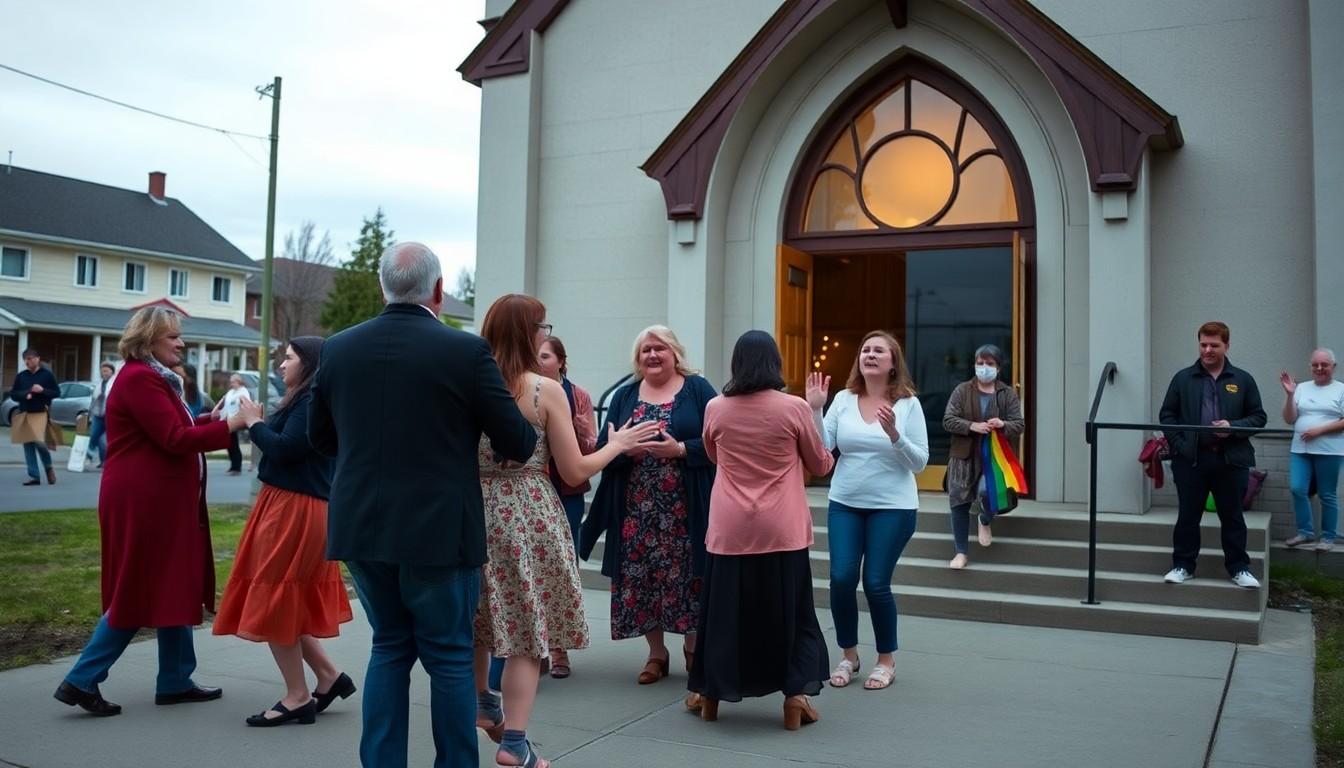
When anti-LGBTQ+ protesters turn up at churches and Pride events in Wenatchee, Washington, an interfaith rainbow response team answers with music, movement and a calm presence. The approach aims to lower the temperature without confrontation, offering a practical example of how communities can stand up for LGBTQ+ dignity while keeping public spaces welcoming.
A tense moment can change with one song
A loudspeaker and a dance party aren’t the usual image of a church response to protesters. But in Wenatchee, the interfaith rainbow response team uses music to soften tense encounters and make sure people can still gather in peace. (FāVS News; Stonewall News) [2], [4]
The group formed after anti-LGBTQ+ protesters arrived at a clothing swap at Sunnyslope Church, bringing a microphone and preaching at attendees. Church education chair Zoe Jaspers recalled that leaders chose to put on music rather than let the confrontation set the tone. (FāVS News) [3]
How the rainbow response team got started
The first track was Jack Johnson’s “Banana Pancakes”. Jaspers said dancing helped turn a frightening moment into one the community could handle together, with compassion rather than a direct clash. (FāVS News; Stonewall News) [3], [4]
The team now has about 25 members, including people from different faith communities. They coordinate through a group chat and can bring speakers, friends and a ready-made plan when a protest is expected. (FāVS News; Sunnyslope Church) [3], [7]
From church gatherings to Wenatchee Pride
The group later showed up when a protest was expected outside New Song Community Church in East Wenatchee, giving worshippers a visible, peaceful show of support. The protester didn’t appear, but the response team had already begun putting its approach into practice. (FāVS News; Stonewall News) [3], [4]
At Wenatchee Pride, protesters set up near the food court with signs and a camera. The team played ABBA, and other festival-goers joined in; the protesters eventually left, according to FāVS News. (FāVS News; Stonewall News) [3], [4]
Why a nonviolent response matters
The team’s aim isn’t simply to drown out a message. Its members describe the dance parties as a way to avoid escalation, support people attending church or Pride, and put their commitment to nonviolence into action. (FāVS News; Interfaith Justice Coalition of North Central Washington) [3], [5]
That sits within broader work by the Interfaith Justice Coalition of North Central Washington, which supports de-escalation, relationship-building and efforts to counter anti-LGBTQ+ sentiment. More than 140 people have been involved in the coalition’s work, according to the report. (FāVS News; Thriving Together) [3], [6]
A little preparation makes a big difference
For communities considering a similar response, the practical lesson is to talk through roles and boundaries before tensions rise. The Wenatchee team has discussed its approach in advance, so members aren’t trying to invent a plan in the middle of a stressful scene. (FāVS News; Interfaith Justice Coalition of North Central Washington) [3], [5]
It’s a strikingly simple idea, but not a trivial one: a familiar song can give a crowd something joyful to join, while a prepared team helps keep the focus on care rather than conflict. And sometimes, making room for people to dance is a way of making room for them to belong. (FāVS News; Sunnyslope Church) [3], [7]
A thoughtful plan, a welcoming crowd and the right song can help keep a difficult moment peaceful.
Source Reference Map
Story idea inspired by: [1]
Sources by paragraph: