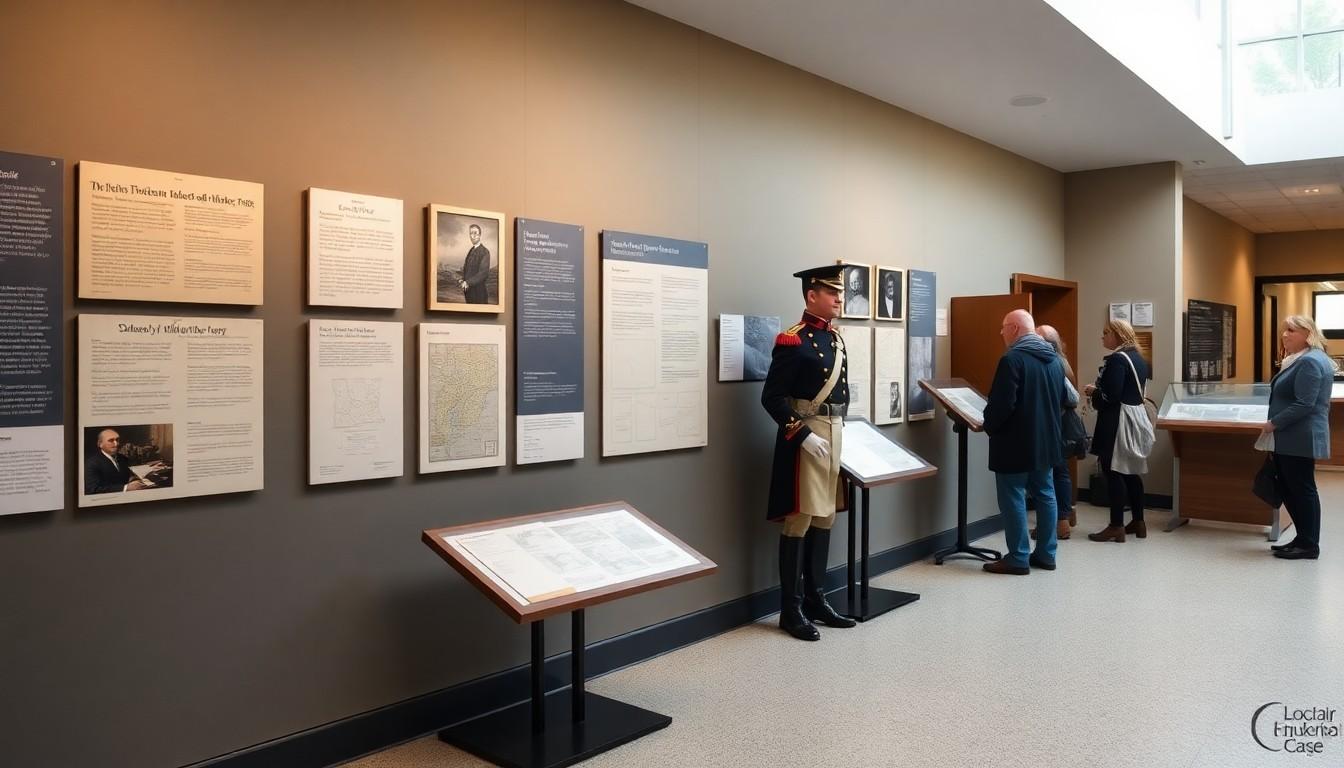
A travelling exhibition from Florida’s Stonewall National Museum is bringing Friedrich von Steuben’s story to Washington, D.C., and beyond. The Prussian-born military strategist helped turn the Continental Army into a more disciplined force, while his relationships with men form part of the historical record. His story offers a vivid reminder of whose lives get included in America’s past.
Essential takeaways
- A military turning point: Von Steuben trained Continental Army soldiers at Valley Forge and helped strengthen their discipline and battlefield skills.
- A lasting manual: His Regulations for the Order and Discipline of the Troops of the United States, known as the Blue Book, set out drills and military duties.
- A life with men: Historical accounts describe his close relationships with military officers Benjamin Walker and William North, whom he later adopted as his heirs.
- A travelling exhibition: Stonewall National Museum’s exhibition explores von Steuben’s military career alongside his personal history.
- A broader question: His story invites visitors to consider how LGBTQ lives and contributions are represented in American history.
The strategist behind a more disciplined army
At Valley Forge, von Steuben faced a Continental Army that needed structure as well as courage. He brought military expertise to the job, training troops in drills and helping create a more coordinated fighting force. The National Park Service describes his work as an important part of the army’s development. [3]
The results were designed to last. Von Steuben wrote the Blue Book, a manual covering subjects from marching and firing to camp hygiene and the responsibilities of different ranks. The American Revolution Museum at Yorktown has also explored his life and military influence through an exhibition of its own. [4]
His personal history belongs in the story, too
Von Steuben came to the American colonies after building a military reputation in Prussia. Accounts of his life describe his departure from Europe amid accusations involving relationships with younger men, and note that he arrived with Peter Stephen du Ponceau, who was rumoured to be his lover. [5]
In America, von Steuben formed close bonds with fellow officers Benjamin Walker and William North. He later adopted both men and named them as his heirs. The historical record does not settle every question about his private life, but it makes clear that his relationships with men are part of the story worth examining. [5]
That wider context is central to Stonewall National Museum’s travelling exhibition, Von Steuben: Architect of American Independence. The museum lists the exhibition among its past projects, presenting his military achievements alongside questions of identity and historical memory. [2]
Why LGBTQ history changes the picture
A military biography can explain what von Steuben did. Looking at his life more fully also raises questions about how identity, migration and social attitudes shaped his path. New York Public Library’s guide to queer history in the American Revolution points readers towards resources for exploring LGBTQ lives in the period, rather than treating them as absent from the era. [7]
That matters because history often feels settled until someone looks more closely. Von Steuben’s reputation as a military organiser has endured, while details of his personal life have been easier to overlook. Bringing those threads together gives visitors a richer account of the people who helped shape the country. [5]
A travelling exhibition with a present-day resonance
The exhibition has travelled beyond its home institution, including a stop at the Human Rights Campaign’s Washington office, as reported by the Miami Herald. Its format uses historical material to connect von Steuben’s life with the way his legacy has been remembered. [6]
Stonewall National Museum’s exhibition record offers a useful place to check its project history, while the museum’s travelling format can help bring LGBTQ history to audiences outside Florida. For visitors, it’s a chance to see a familiar Revolutionary War figure from a less familiar angle. [2]
Where to start exploring von Steuben’s legacy
If you’re interested in the military story, the National Park Service’s Valley Forge material explains von Steuben’s role in training the Continental Army. For a museum perspective, the American Revolution Museum at Yorktown’s feature adds another way to explore his career and legacy. [3] [4]
For the personal and cultural context, History.com and the New York Public Library’s queer-history guide offer starting points for further reading. Taken together, these accounts show why a fuller history needs both the battlefield and the lives behind it. [5] [7]
Remembering von Steuben means recognising both the army he helped build and the history his life asks us to see.
Source Reference Map
Story idea inspired by: [1]
Sources by paragraph: