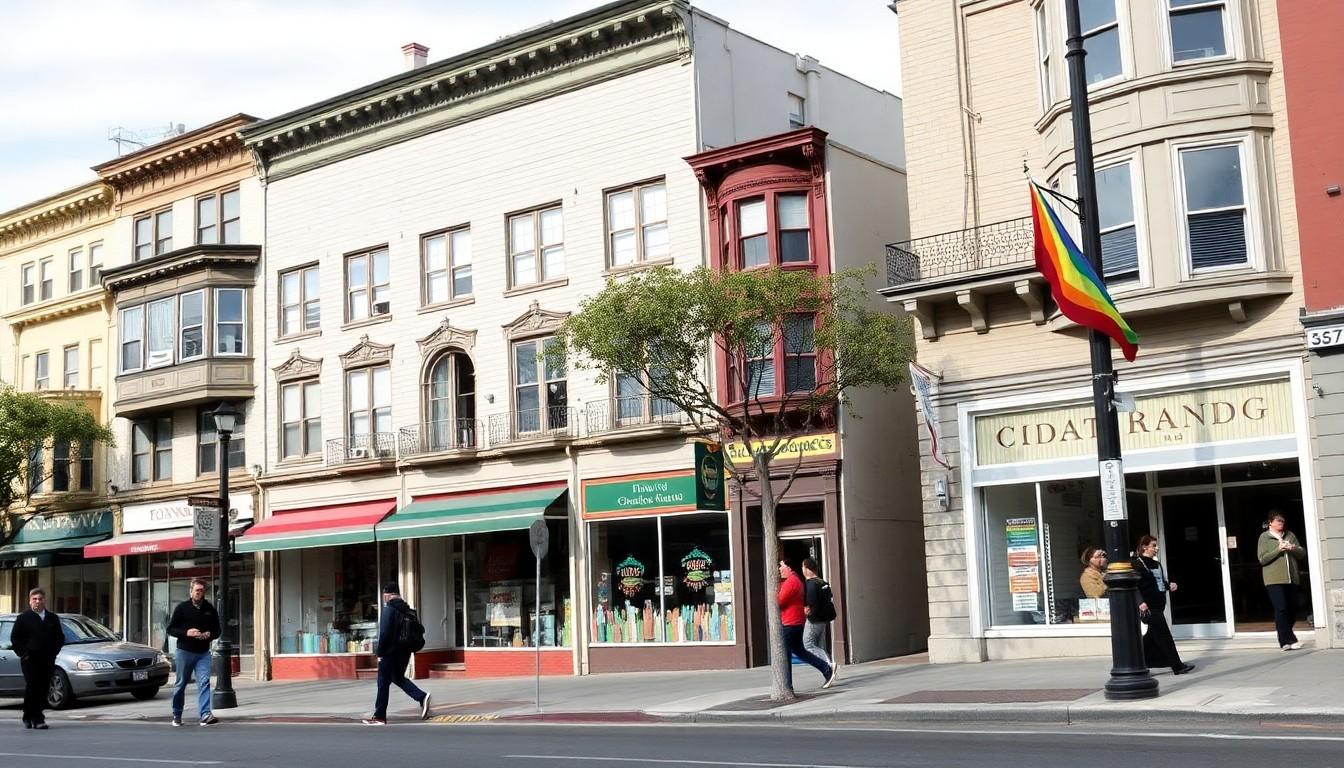
San Francisco’s proposed Castro Historic District has cleared an early committee hurdle, putting protections for a small but historically rich stretch of the LGBTQ neighbourhood closer to a full Board of Supervisors vote. The plan covers about 90 buildings, from bars and community spaces to homes, and is intended to preserve the area’s character without ruling out new housing.
The Castro preservation plan moves forward
The proposal advanced with a unanimous 3-0 vote at a San Francisco Board of Supervisors committee meeting, receiving a positive recommendation for consideration by the full board. There was no public opposition at the meeting, a notable contrast with earlier concerns that preservation might turn the neighbourhood into a kind of “theme park”. (Sources: Bay Area Reporter; San Francisco Legistar) [2], [3]
The proposed boundary includes the 400 and 500 blocks of Castro Street, as well as nearby streets. Planning staff outlined a district of about 90 buildings, spanning Castro Street between 17th and 19th streets and 18th Street between Collingwood and Noe streets. (Sources: San Francisco Planning; Bay Area Reporter) [4], [2]
A neighbourhood shaped by LGBTQ history
The Castro’s story stretches well beyond its best-known gay bars. It began as a working-class neighbourhood with many Irish and German residents, then became a home for LGBTQ people; lesbian pioneers Del Martin and Phyllis Lyon moved there in 1953. The Missouri Mule, often identified as the Castro’s first gay bar, opened in 1963. (Sources: Bay Area Reporter; San Francisco Planning) [2], [4]
The area also carries painful memories. Harvey Milk, elected to the Board of Supervisors in 1977, was assassinated alongside Mayor George Moscone the following year, and the AIDS crisis brought profound loss in the 1980s. For many residents, preserving the Castro means keeping visible not only its lively social history, but also the places and stories tied to grief, care and community. (Source: Bay Area Reporter) [2]
What historic designation would protect
San Francisco’s landmark programme can give designated buildings additional scrutiny before demolition or redevelopment, and may require features such as façades to be retained. It doesn’t automatically prevent new homes from being built, though preservation requirements can make projects more complex and costly. (Sources: San Francisco Planning; Bay Area Reporter) [6], [2]
That distinction matters as the city pursues denser housing. At the committee meeting, supporters argued that protecting historic buildings and building more homes needn’t be opposing goals. One longtime resident backed more affordable housing on Market Street while also supporting safeguards for the Castro’s distinctive character. (Source: Bay Area Reporter) [2]
The next steps, and the housing debate
The committee vote is an early milestone, not the finish line. The proposal is due to go before the full Board of Supervisors, then the Historic Preservation Commission, and return to the board before reaching the mayor for final approval. (Sources: Bay Area Reporter; San Francisco Legistar) [2], [3]
The plan’s political future may also depend on who represents District 8 next. At the time of the report, candidate Michael Nguyen was the only contender noted as offering full support for the proposed district. San Francisco’s LGBTQ Cultural District, established in 2019, has a broader remit that includes supporting the neighbourhood as a place for LGBTQ people to live and gather. (Sources: Bay Area Reporter; Castro LGBTQ Cultural District) [5], [7]
The choice isn’t simply between keeping old buildings and making room for new residents. The harder, more interesting question is how a city can do both without losing the places that give a neighbourhood its meaning. (Sources: Bay Area Reporter; San Francisco Planning) [2], [6]
It’s a small stretch of streets with a history that deserves more than a plaque.
Source Reference Map
Story idea inspired by: [1]
Sources by paragraph: