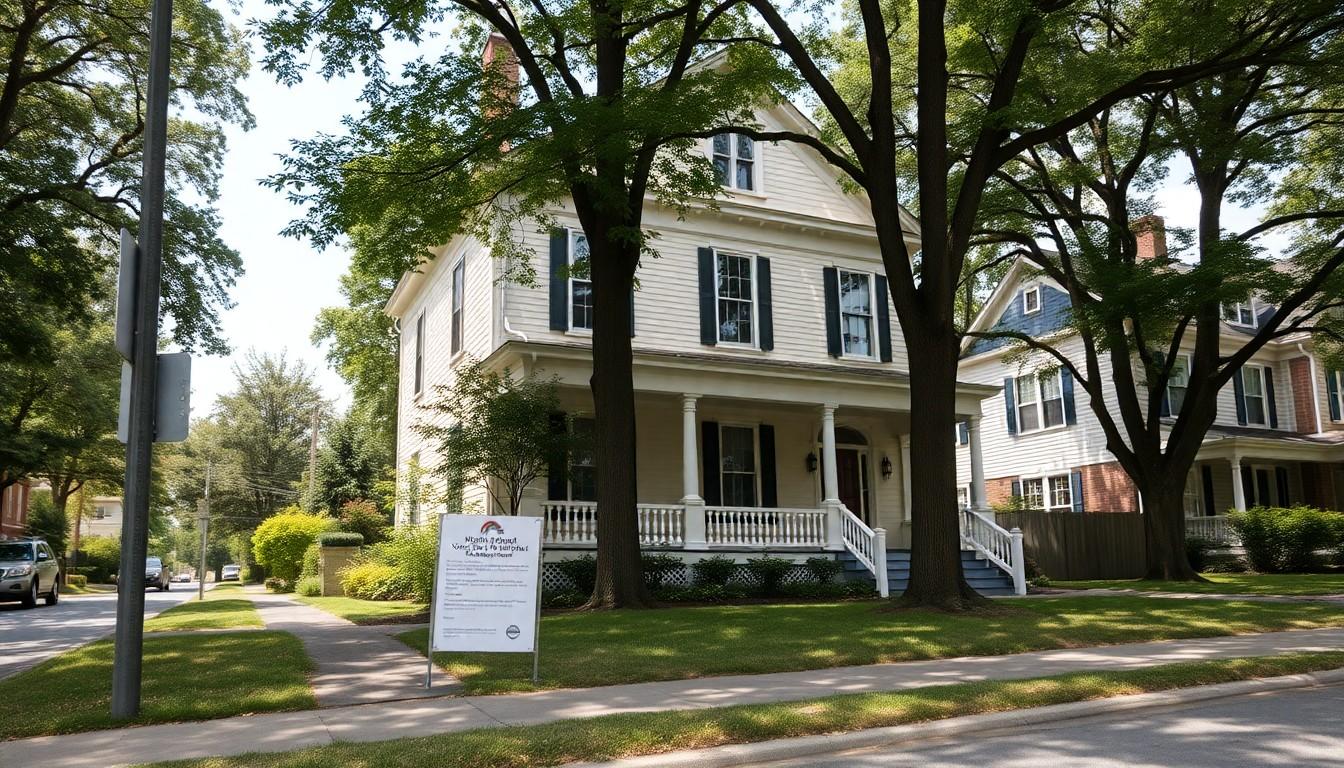
Atlanta has unanimously backed the first step towards considering a Virginia-Highland home as a city landmark, bringing fresh attention to a small house with a weighty place in LGBTQ+ history. The move follows plans to demolish the property, where Michael Hardwick was arrested in 1982, and opens a formal review rather than settling its future.
Atlanta backs a landmark review
The Atlanta City Council has unanimously approved a resolution to begin assessing whether the home at 811 Ponce de Leon Place should receive city landmark status. The vote also sent the resolution to Mayor Andre Dickens’ office, while the city’s planning and design bodies prepare to evaluate the property. (Atlanta News First; Rough Draft Atlanta)
The building is connected to the 1982 arrest of Michael Hardwick, whose case over Georgia’s anti-sodomy law reached the US Supreme Court. For a modest Virginia-Highland house, that history carries consequences far beyond its front door. (Justia; New Georgia Encyclopedia)
Why this address matters to LGBTQ+ history
Hardwick challenged Georgia’s law on privacy grounds, but the Supreme Court ruled in the state’s favour in 1986. The decision was overturned in 1998, seven years after Hardwick died. (Justia; New Georgia Encyclopedia)
Atlanta’s 2023 LGBTQ+ Historic Context Statement identifies sites with significance to the community and offers a basis for considering their preservation. The home is included in that work, which documents places and stories that might otherwise slip out of public view. (Georgia Public Broadcasting; Atlanta LGBTQ Historic Context Statement)
Demolition plans put the house at risk
The owners want to demolish the existing house and build a new single-family home with a swimming pool. A neighbourhood planning group deferred a vote on the demolition application in October, leaving the proposal unresolved as the landmark process begins. (Atlanta News First; Rough Draft Atlanta)
Councilmember Kelsea Bond introduced the resolution with co-sponsors Alex Wan and Matt Westmoreland. Bond said the house has a significant connection to LGBTQ+ history, while Westmoreland credited local advocates and historians with alerting the council to the risk. (Rough Draft Atlanta; Atlanta News First)
What happens next?
The house is to remain intact while the Department of City Planning’s Office of Design and the Atlanta Urban Design Commission assess its potential designation. The process includes notices to the owners and community, followed by public hearings before a final decision. (Rough Draft Atlanta; Atlanta LGBTQ Historic Context Statement)
A city landmark review is not the same as a final preservation decision, and the council vote doesn’t by itself answer what will happen to the demolition application. The practical next step is to follow the city’s public notices and hearing schedule; that’s where residents can learn how to weigh in. (Rough Draft Atlanta; Atlanta News First)
A small house, a wider conversation
The case puts a familiar preservation question in sharper focus: what deserves protection when a building’s significance lies less in its appearance than in the events it witnessed? Atlanta’s historic context research helps make that case visible, but the outcome will depend on the formal review still to come. (Georgia Public Broadcasting; Atlanta LGBTQ Historic Context Statement)
For LGBTQ+ history, preserving a place can offer more than a marker on a map. It can keep a difficult chapter tangible, and give future generations somewhere to begin asking questions. (New Georgia Encyclopedia; Atlanta LGBTQ Historic Context Statement)
A landmark review is only the beginning, but it gives this important address a chance to be heard.
Source Reference Map
Story idea inspired by: [1]
Sources by paragraph: