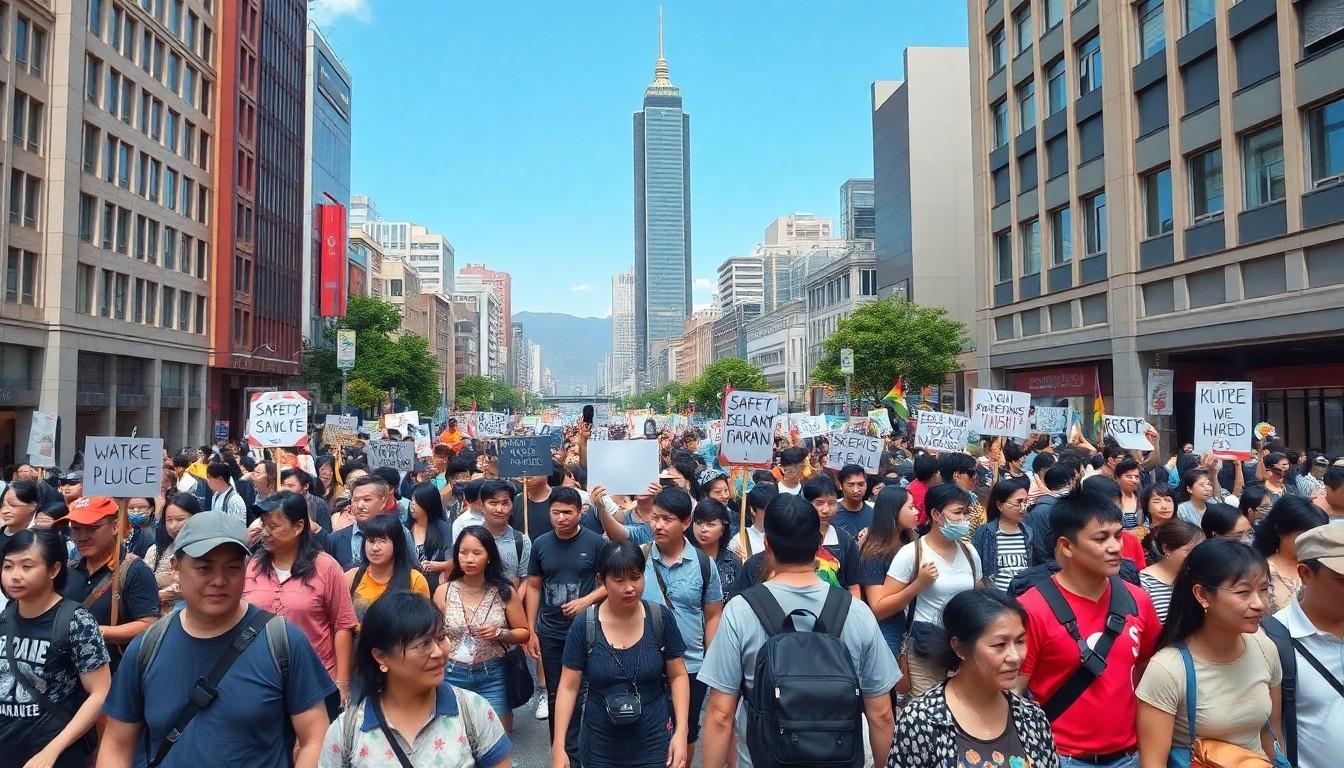
Taipei’s Taiwan Pride parade drew an estimated 150,000 people on 31 October, celebrating LGBTQIA+ visibility just weeks after a controversial police raid on a gay bar. The 24th annual march brought colour and energy to the city, but its message was about more than celebration: many participants also called for stronger protections and accountability.
Essential Takeaways
- Big turnout: An estimated 150,000 people joined the parade, with more than 180 groups registered.
- A timely theme: “Our Voices, Our Journey” centred LGBTQIA+ visibility and the experiences behind it.
- A raid still in focus: The October search of Taipei’s Commander D bar prompted protests and renewed questions about police conduct.
- Accountability measures: Six officers were disciplined, and Mayor Chiang Wan-an apologised to people affected.
- Equality is ongoing: Taiwan legalised same-sex marriage in 2019, but community leaders say everyday prejudice remains.
Taipei Pride celebrated visibility, but carried a sharper message
The parade filled Taipei with a bright, bustling show of solidarity, but this year’s Taiwan Pride had a particularly urgent edge. Organisers said the event was a chance to celebrate LGBTQIA+ life while pressing for greater protection from discrimination.
More than 180 groups registered for the 24th annual march, held under the theme “Our Voices, Our Journey”. Participants came from Taiwan and overseas, making the gathering both a celebration and a public reminder that visibility matters. (Sources: Focus Taiwan; Associated Press; TaiwanPlus)
Why the gay bar raid changed the mood
The march came just weeks after police searched Commander D, a gay bar in Taipei’s Ximending district. Officers took 51 people to a police station for statements; customers were later released, while the person in charge was referred to prosecutors over suspected public indecency.
Witnesses alleged excessive force, procedural failures and degrading remarks towards people with disabilities. Police said the operation was lawful and conducted under a court-issued warrant after complaints about suspected public morality offences. (Sources: Associated Press; The Guardian; Central News Agency)
Marriage equality hasn't ended everyday prejudice
Taiwan became the first place in Asia to legalise same-sex marriage, in 2019. That milestone remains significant, but it hasn't removed the prejudice LGBTQIA+ people can face in daily life, Taiwan Rainbow Civil Action Association chair Tai Yu-hsun told reporters, according to Focus Taiwan.
Tai also said the raid had brought back memories of state oppression and could prompt people to voice their anger. It’s a reminder that legal recognition and feeling safe in public aren't always the same thing. (Sources: Focus Taiwan; Associated Press; ILGA Asia)
What happened after the raid?
Six officers were disciplined following the operation. Four received reprimands over inappropriate language, while the lead investigator and precinct chief faced discipline over failures to intervene or supervise. Mayor Chiang Wan-an apologised to those affected, and police said they would provide further diversity and cultural awareness training.
Before the parade, Tai called for a transparent investigation and binding guidelines for police conduct. The city government said prosecutors were investigating and that guidelines would be developed with community input. For LGBTQIA+ visitors, the episode also prompted wider regional concern about safety when travelling. (Sources: The Guardian; TaiwanPlus; ILGA Asia; Central News Agency)
A packed parade, and more work ahead
Taiwan Pride showed the scale of public support for LGBTQIA+ visibility, but the crowds didn't make the questions raised by the raid disappear. Organisers' call to listen across differences feels practical as well as hopeful: trust depends on how people are treated when the cameras aren't there.
The next test will be whether investigations and proposed policing guidelines lead to clearer safeguards. A parade can make a powerful statement; lasting confidence takes follow-through. (Sources: Focus Taiwan; Associated Press; ILGA Asia)
It's worth celebrating how far Taiwan has come while paying attention to the protections still being sought.
Source Reference Map
Story idea inspired by: [1]
Sources by paragraph: