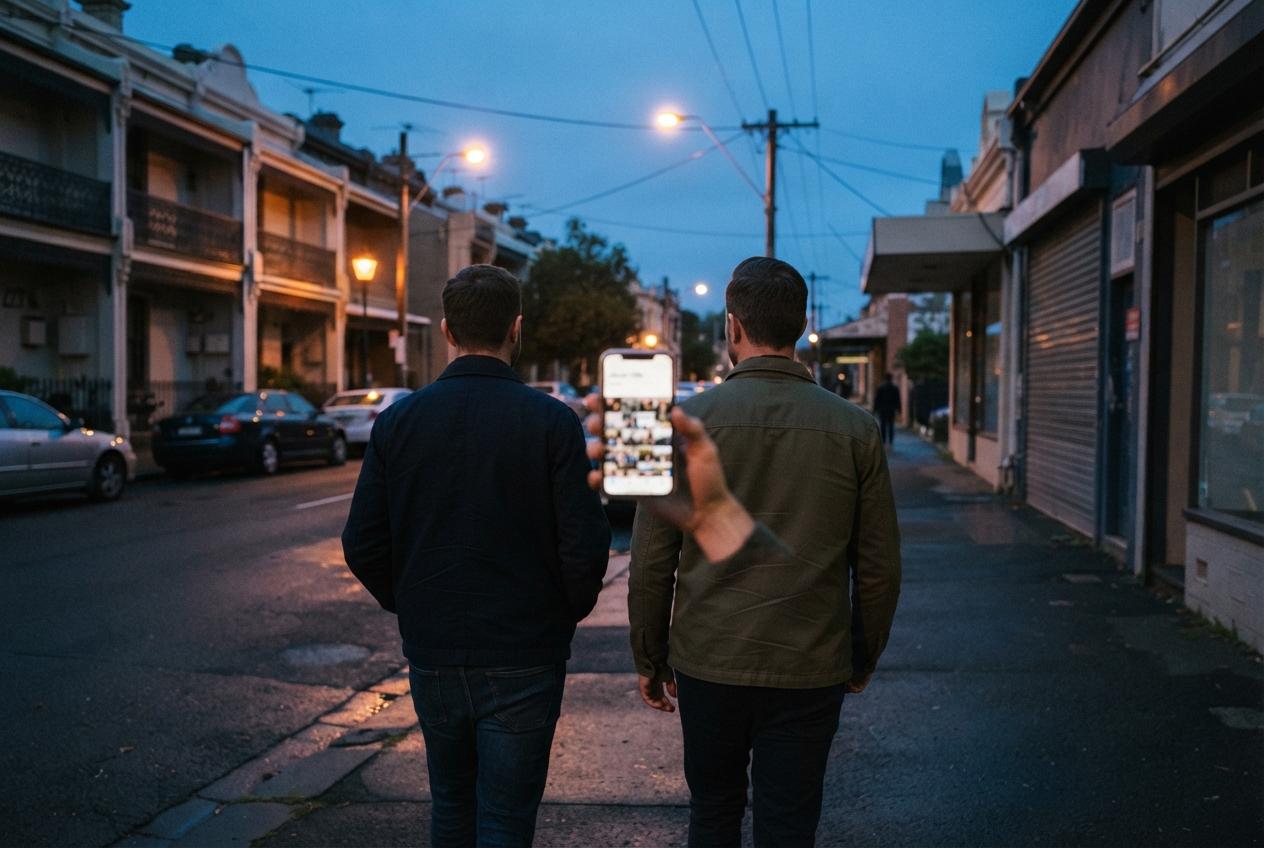
A phone’s photo album can seem to make an innocent mistake when it files a same-sex couple’s affectionate pictures under “best friends”. But that small, irritating label points to a bigger question about how technology reflects assumptions about relationships, and why visibility still matters for LGBTQ+ people in Australia.
Essential Takeaways
- A familiar frustration: Writer Patrick Lenton says his phone grouped pictures of him and his boyfriend as “best friends”.
- A wider issue: Australia’s 2026 Human Rights Assessment covers concerns affecting people of diverse sexual orientations, gender identities and sex characteristics.
- Marriage equality is established: Same-sex couples have been able to marry in Australia since December 2017.
- The climate still matters: New South Wales police data reported by the ABC recorded hate incidents targeting LGBTQ+ people.
- Some phone services filter content: Radiant Mobile says it offers tools to restrict access to LGBTQ+ material.
When “best friends” feels like more than a glitch
The phone album’s label is almost funny at first: two men kissing, filed away as “best friends”. In a Guardian Australia commentary, writer Patrick Lenton describes his phone repeatedly placing photos of him and his boyfriend in that category, despite images that make their relationship clear.
It’s a small piece of digital awkwardness, but it can land with a thud. Photo software organises images by recognising patterns, yet labels also shape how people interpret what they see. When a couple’s affection is routinely recast as friendship, the mistake can feel less like a clever bit of automation and more like an old assumption wearing a new interface.
A marriage right doesn't erase every barrier
Australia’s Parliament passed marriage equality legislation in December 2017, allowing same-sex couples to marry under federal law. That was a major change, but a legal right and everyday acceptance aren't the same thing.
The Australian Human Rights Commission’s 2026 assessment considers issues affecting people across sexual orientation, gender identity and intersex status. Meanwhile, the ABC reported on New South Wales police data concerning hate incidents directed at LGBTQ+ people. Taken together, the picture is more complicated than a simple story of progress completed.
Why visibility still feels complicated
A phone assigning the wrong label is not equivalent to discrimination or violence. Still, it can echo a familiar social habit: treating heterosexual relationships as obvious while making queer relationships seem less legible.
That tension can shape ordinary decisions, too. Holding hands, sharing partner details or posting a couple’s photo may feel effortless in one setting and risky in another. There's no single rule for being visible; people have to weigh their own comfort and safety, which is precisely why a seemingly silly phone montage can strike a nerve.
Can phone settings make a difference?
Some mobile services give users more control over the material they see. Radiant Mobile, for example, describes content-filtering options in its FAQ, while the Advocate has reported on the company’s Christian positioning and its approach to LGBTQ+ content.
For anyone reviewing a phone’s photo albums, it’s worth checking whether the app lets you edit a collection title, correct a suggested grouping or hide a montage. Those tools may not change how the software recognises a relationship, but they can make the experience less irritating. And if the pictures are private, check who can access shared albums before making changes.
Small labels, bigger assumptions
Lenton’s story resonates because technology doesn’t float above culture; it’s built and used within it. An automated label can be trivial in isolation, but repeated misreadings have a way of reminding people who is treated as the default.
A photo app may never understand a relationship as well as the people in it. For now, “best friends” might be a clumsy label, but the conversation it sparks is anything but trivial.
A little digital housekeeping can help, but recognition should never depend on an algorithm getting the label right.
Source Reference Map
Story idea inspired by: [1]
Sources by paragraph: