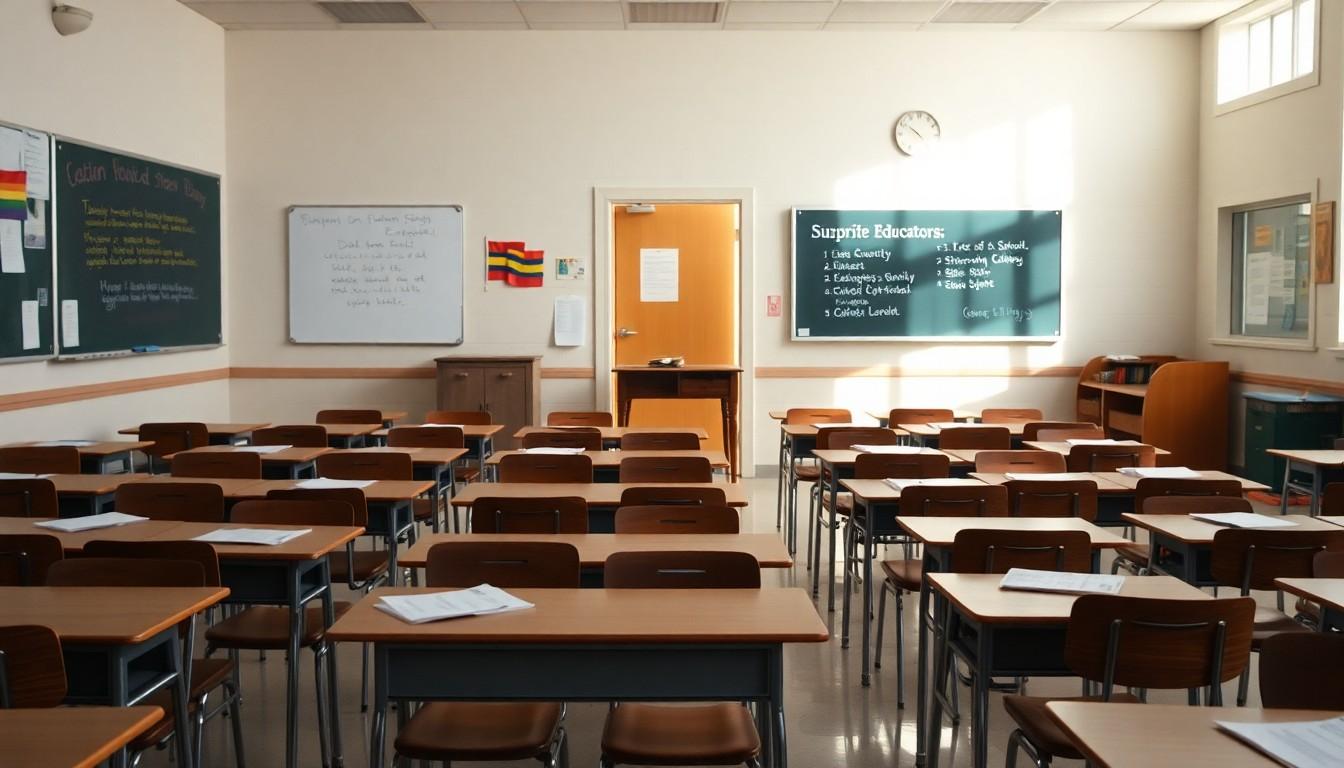
Teachers who can be open about being LGBTQ can offer students something textbooks can’t: a trusted adult and a reassuring example of everyday queer life. But amid political pressure and restrictive school policies, some educators are hiding parts of themselves or leaving the classroom altogether, with consequences for students and already-stretched schools.
When teachers feel unsafe, students lose too
One former Ohio English teacher says she left the classroom after threats and public scrutiny made teaching as an openly gay woman feel unsafe. She had removed photos of her wife, cut a book by gay playwright Oscar Wilde from her lessons and scaled back what students could see of her life. The quiet loss is hard to miss: a teacher’s personal safety had become tangled up with what she felt able to teach.
Her experience reflects a wider concern for LGBTQ students, who may seek out a teacher they trust. Research from the Trevor Project has found an association between having caring teachers and better mental health among LGBTQ young people. That doesn’t make educators a substitute for specialist support, but it helps explain why representation and a reliable adult at school can matter. [2], [3]
School policies can reshape classroom conversations
The pressure isn’t limited to individual complaints. In January 2025, a White House executive order called for ending what it described as “radical indoctrination” in K-12 schools, including claims about schools discussing gender identity. Such rhetoric can add to educators’ anxiety about how lessons, classroom books or everyday conversations might be interpreted.
State rules can also affect what teachers feel able to say. Ohio law sets out parental-notification requirements in certain circumstances involving a student’s request to identify as a gender different from their sex, while Florida’s 2022 law restricted classroom instruction on sexual orientation and gender identity in specified grades. The details differ, but the practical result can be a more cautious classroom, especially when teachers are unsure how a rule applies. [4], [6], [7]
Why queer teachers can make a difference
A teacher doesn’t need to make their identity the subject of a lesson to have an impact. Simply being a known, ordinary adult in students’ lives can challenge stereotypes and help queer pupils imagine a future in which they’re accepted. For classmates with little personal contact with LGBTQ people, that everyday familiarity can also make a difference.
The Trevor Project’s research brief links caring teachers with the wellbeing of LGBTQ students, underlining the value of supportive school relationships. It’s a reminder that representation isn’t a classroom gimmick; it can be part of the human connection that helps a young person feel less alone. [3]
Teacher shortages make every departure count
There’s another reason to pay attention: schools already face staffing gaps. The Learning Policy Institute reported that in 2025, one in eight teaching positions nationally was either unfilled or filled by someone who wasn’t certified for the role. When experienced educators leave, pupils lose subject knowledge and continuity, while remaining staff may have to shoulder more work.
Keeping teachers in the profession means more than filling vacancies. Schools also need environments where staff can teach without fearing that their identity alone will make them a target. That’s a practical workforce issue as much as a question of inclusion. [5]
What supportive schools can do
Families and educators can start by learning what local policies actually require, rather than relying on social media summaries or rumours. School leaders can explain reporting rules clearly, make support pathways visible and ensure students know which trusted adults are available to talk. Where a student needs urgent or specialist help, staff should follow the school’s safeguarding procedures and seek appropriate professional support.
For parents, a useful question at a school meeting is how the school supports LGBTQ students while following state law. A calm, specific conversation can reveal more than a slogan on a poster. And for educators, clear guidance from administrators can reduce the uncertainty that turns ordinary student interactions into a source of fear. [3], [6], [7]
The cost is measured in trust, too
A school can lose more than a teacher when someone feels they have to leave. Students may lose a trusted adult, colleagues lose an experienced member of staff, and the classroom becomes a little narrower. That’s a heavy price for any community to pay.
Policies and political arguments will keep changing, but students’ need for safe, supportive adults doesn’t. [2], [3], [5]
It's worth asking whether school rules protect students while allowing good teachers to do their jobs.
Source Reference Map
Story idea inspired by: [1]
Sources by paragraph: