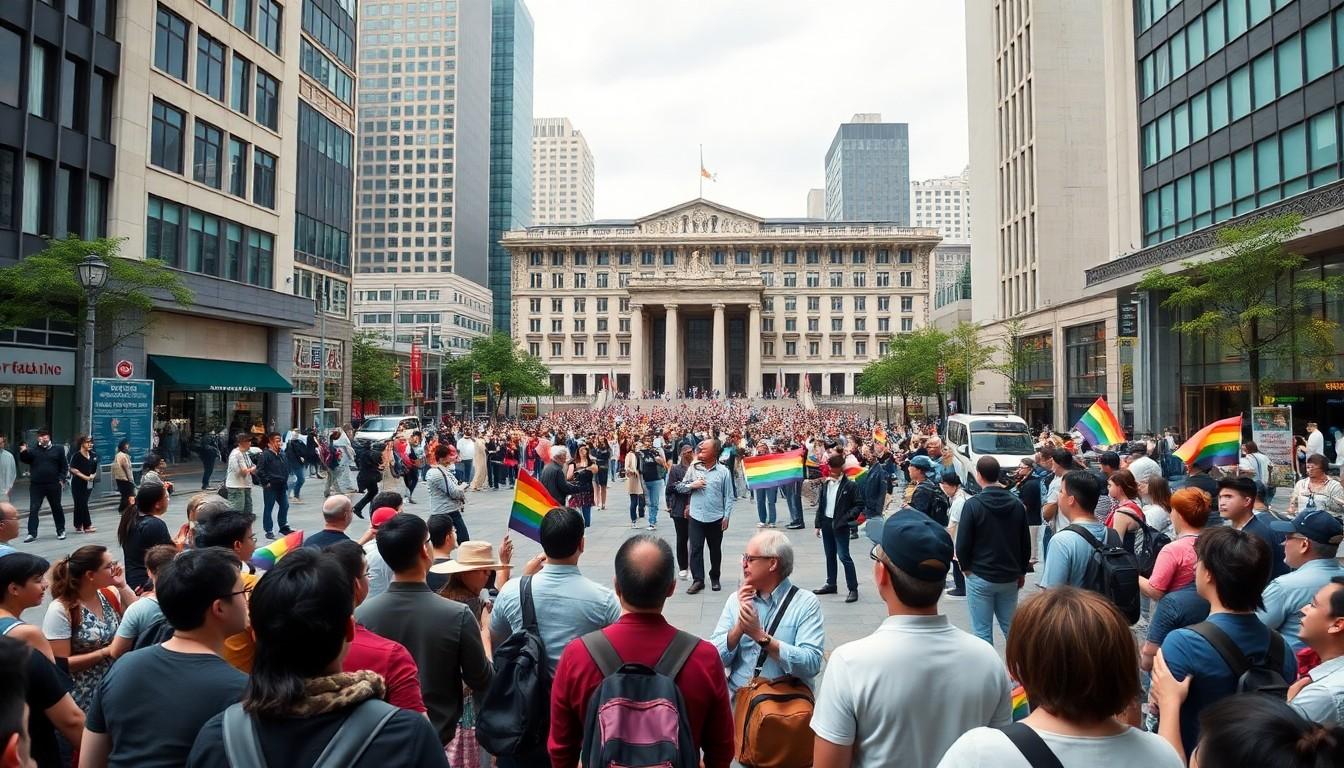
Taiwan's 24th Pride parade set off from Taipei City Hall Plaza with a message of solidarity, while politicians urged action on equality beyond the colourful streets. The Taiwan People's Party joined under the theme "Rainbow, Pause and Listen; Love, Walking Together", as recent concerns about a Taipei bar search renewed questions about how public services treat LGBTQ+ people.
Taipei Pride puts solidarity in the spotlight
The 24th Taiwan Pride parade began outside Taipei City Hall Plaza at 2pm, bringing politicians and supporters into the streets under a rainbow of banners and flags. The Taiwan People's Party framed its participation around listening and walking together, echoing the parade's call for people to hear one another and share the road. (Central News Agency; Taiwan Pride)
That message was about more than showing up for a photograph. Taipei city councillor Chen You-cheng said his party should help reduce division rather than turn the parade into another contest over political loyalties. (Central News Agency; Focus Taiwan)
Why the Taipei bar search raised concerns
Discussion at the march also turned to a search of a Taipei LGBTQ+ bar earlier in October. Councillor Lin Zhen-yu said some remarks associated with the incident had caused alarm, and argued that public officials need proper gender-equality training. (Central News Agency; Taipei City Government)
Lin said she'd pushed for gender equality to be a dedicated, in-person part of civil servants' training. The point is practical: public policy can look progressive on paper, but people's everyday experience of public services depends on how those rules are understood and applied. (Taipei City Government; Focus Taiwan)
Pride is more than a once-a-year gesture
Chen said his party had supported marriage equality and anti-discrimination work since its formation, including through engagement with equality-focused organisations and scrutiny of issues such as adoption by same-sex couples and gender-inclusive toilets. Those areas show how broad the work can be, stretching from family law to the facilities people use every day. (Central News Agency; Taiwan Pride)
Taiwan is often viewed as a regional leader on LGBTQ+ rights, but speakers at the parade warned that progress can feel fragile when enforcement or public language falls short. Taipei candidate Wu Yi-hsuan said authorities should be able to carry out their duties lawfully while treating everyone with respect. (Focus Taiwan; Central News Agency)
What the parade's theme asks of the city
This year's parade theme called for people to listen together and walk together. The organisers' statement presents those ideas as an invitation to share public space and make room for different voices, rather than treating equality as a debate that only matters during Pride season. (Taiwan Pride; Taiwan Pride)
For visitors, that can mean thinking beyond the march itself: notice who feels welcome in public spaces, and whether services are accessible and respectful. A parade can make a city feel generous for an afternoon; the harder test is what happens on an ordinary Monday. (Taiwan Pride; Taipei City Government)
Turning public support into everyday practice
Training for public servants is one concrete proposal raised at the event. Clear, consistent instruction can help officials handle sensitive situations with care, while inclusive policies on facilities and family matters give people a clearer sense of what equal treatment looks like in practice. (Central News Agency; Taipei City Government)
The broader message is that political differences needn't crowd out shared responsibilities. As the city reflects on the parade, the measure of its welcome will be found not only in the colours on the streets, but in how people are treated once the banners come down. (Focus Taiwan; Taiwan Pride)
A more inclusive city is built in everyday encounters, as much as on parade day.
Source Reference Map
Story idea inspired by: [1]
Sources by paragraph: