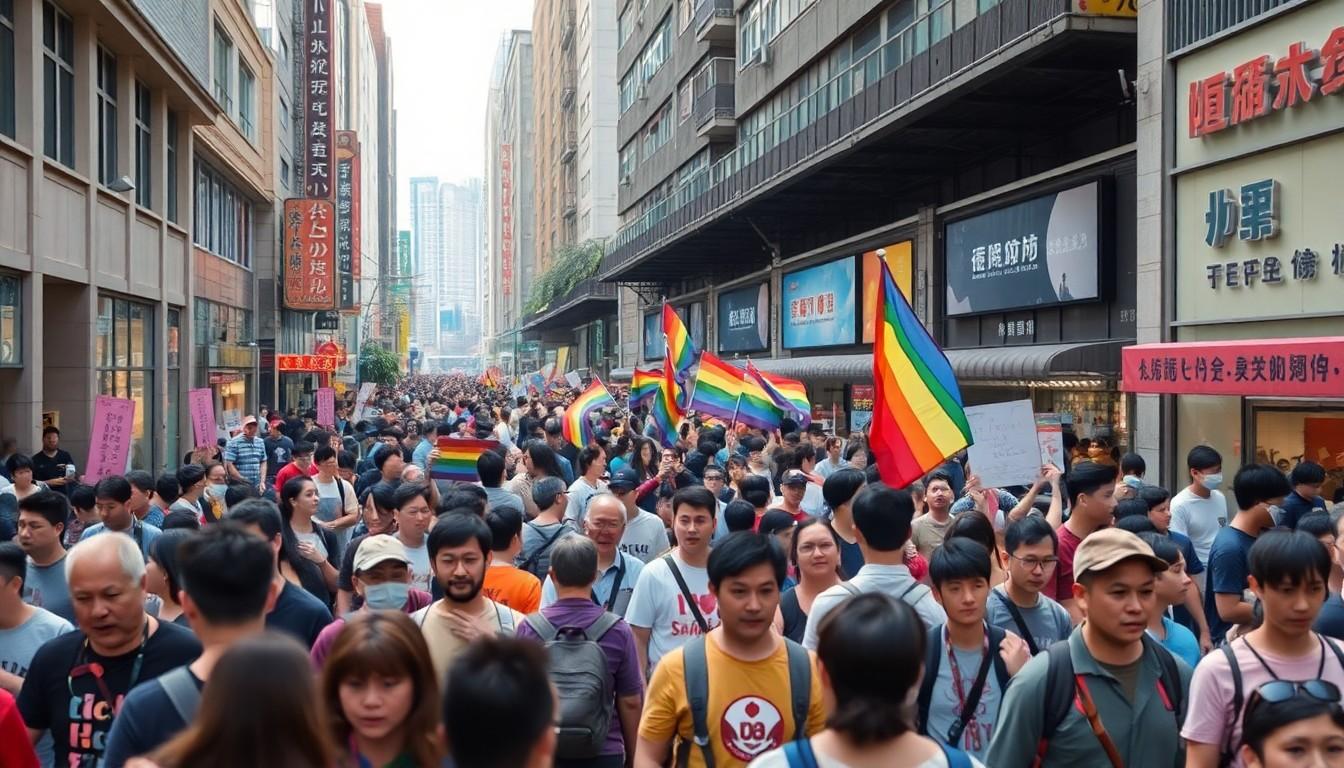
Taipei's annual Pride parade brought colour and calls for equal rights to the city streets, as political figures joined marchers and a recent police raid on a gay bar remained in focus. Vice-President Hsiao Bi-khim said progress has taken time, but Taiwan's LGBTQ+ community and its supporters still have work to do together.
Key takeaways
- A colourful show of support: The parade took place outside Taipei City Hall under the theme "Hear our voices together, walk the road together".
- A message about lasting progress: Vice-President Hsiao Bi-khim said equality has advanced over two decades, while stressing that the path is not finished.
- A police conduct issue followed the event: Taipei Mayor Chiang Wan-an apologised to those affected by officers' conduct during a search at a gay bar.
- Transparency remains a question: Chiang said the city would disclose as much as possible about its administrative investigation, while respecting the judicial process.
Taipei Pride puts equality back in the spotlight
Rainbow colours filled the area outside Taipei City Hall as marchers gathered for Taipei's annual Pride parade. The upbeat scene carried a serious message too: supporters said equality needs defending beyond a single day of celebration.
Vice-President Hsiao Bi-khim joined the event and reflected on the long campaign for equal rights. She said efforts that began about two decades ago had eventually led to meaningful change, even after an early legislative proposal was rejected.
Why the march's theme matters
This year's theme, translated as "Hear our voices together, walk the road together", framed the parade as a shared effort. Hsiao said more people have joined the march over the years, helping make Taiwan's public life feel more colourful and welcoming.
But visibility alone doesn't guarantee lasting progress. New Taipei mayoral candidate Su Chiao-hui said rights and democratic freedoms cannot simply be won once and then taken for granted. That's a reminder that social change needs both public support and follow-through.
A police raid casts a shadow
The parade came weeks after reports that Taipei police had conducted an improper search at a gay bar. Mayor Chiang Wan-an attended the event and said he had made clear his position on officers' conduct, apologising to people affected.
Asked about the city's administrative investigation, Chiang said it would be made as transparent as possible while the judicial process continued. His appearance was brief, with reports saying he left after spending less than ten minutes at the venue.
Political appearances, and what they signal
Several Democratic Progressive Party figures attended, including Hsiao and Su. Taipei mayoral candidate Shen Po-yang wore a rainbow-themed shirt designed for the parade and handed out colourful streamers, saying a supportive environment should be part of everyday life, not limited to Pride.
The mix of celebration and scrutiny is part of what makes Pride politically significant. Public figures can show support by appearing, but people affected by discrimination are likely to judge that support by what happens afterwards.
What comes after Pride?
For visitors, the parade offered a vivid display of community and solidarity. For city officials, the police investigation leaves a more practical test: whether concerns are addressed openly and whether people feel safer as a result.
That gap between a joyful march and the work of changing institutions may be the clearest message of the day. Pride can bring people together, but lasting equality takes effort long after the flags are put away.
A colourful day matters; the everyday protections that follow matter even more.
Source Reference Map
Story idea inspired by: [1]
Sources by paragraph: