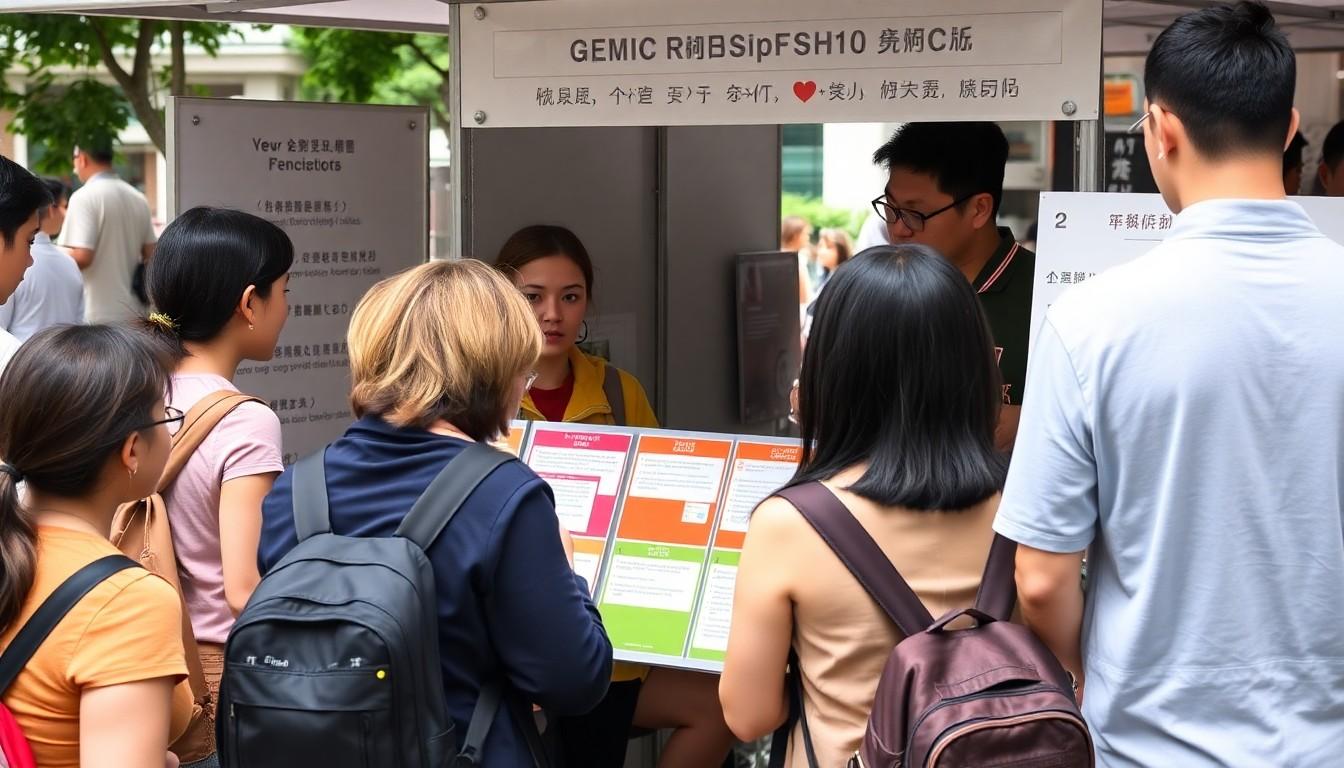
A brightly coloured red, amber and green activity at Taiwan Pride invited visitors to think about what healthy intimacy looks like, and when a partner's behaviour may cross a line. The New Taipei City event paired scenario cards with practical advice on getting help, making a difficult subject easier to discuss in a welcoming, everyday setting.
A simple game tackles a serious subject
At Taiwan Pride's Rainbow Market, New Taipei's Domestic Violence and Sexual Assault Prevention Centre used a traffic-light game to help visitors recognise possible abuse in intimate relationships. People drew scenario cards, then placed a red, yellow or green sticker on a board to show whether they saw violence, a possible warning sign or healthy interaction. (Source: CNA)
The format was deliberately hands-on, but the conversations behind it were serious. Visitors could talk through why a behaviour might be troubling and consider what support could look like, without needing to arrive with all the right words. (Source: New Taipei City Social Welfare Department)
Control can be disguised as concern
Harm doesn't always begin with an obvious threat. New Taipei's centre director, Hsu Chih-chi, said controlling behaviour may be presented as proof of affection, while pressure to give up privacy or comply out of fear deserves attention. (Source: New Taipei City Social Welfare Department)
For LGBTQ+ people, the threat to reveal someone's sexual orientation or gender identity can also be used as a means of control. Taiwan Pride's theme called for listening to different voices and supporting people to express their identity freely, making the festival a fitting place to discuss safety as well as celebration. (Sources: New Taipei City Social Welfare Department; Taiwan Pride)
A visitor's experience shows why the signs matter
One participant, identified as Xiao Hua, said a former partner had once put them in a chokehold. At the time, they hadn't recognised the act as a possible form of relationship violence, and had assumed it was simply something their partner liked. (Source: New Taipei City Social Welfare Department)
The activity helped them reconsider what had happened and learn where to turn for help. That shift matters: a person shouldn't have to settle whether a partner "meant it" before taking their own discomfort seriously. (Sources: New Taipei City Social Welfare Department; Ministry of Health and Welfare)
What to do if a partner is pressuring you
Start by noticing how the relationship affects your ability to say no. Feeling afraid, being pushed to share private information, or having your choices restricted can be reasons to speak with someone you trust or seek professional support. A conversation doesn't have to begin with a label; describing what happened is enough. (Sources: New Taipei City Social Welfare Department; RAINN)
If intimate images are being used to threaten you or shared without consent, keep relevant messages, account details and web addresses, and contact police for help. In Taiwan, the 113 Protection Hotline is available for support, while 110 is the police emergency number. (Sources: New Taipei City Social Welfare Department; Ministry of Health and Welfare)
Small, clear resources can open the door
The centre also had community violence-prevention educators on hand to discuss warning signs, and offered rainbow-themed badminton charms that proved popular with visitors. It's a reminder that an approachable activity can make space for conversations people might otherwise put off. (Source: New Taipei City Social Welfare Department)
No colour-coded board can decide what a person should do next, and everyone's circumstances differ. But if fear is making it hard to refuse, or a partner is using identity, privacy or physical force to control you, seeking confidential advice is a reasonable next step. (Sources: New Taipei City Social Welfare Department; RAINN)
It's OK to ask for help before you're certain what to call what happened.
Source Reference Map
Story idea inspired by: [1]
Sources by paragraph: