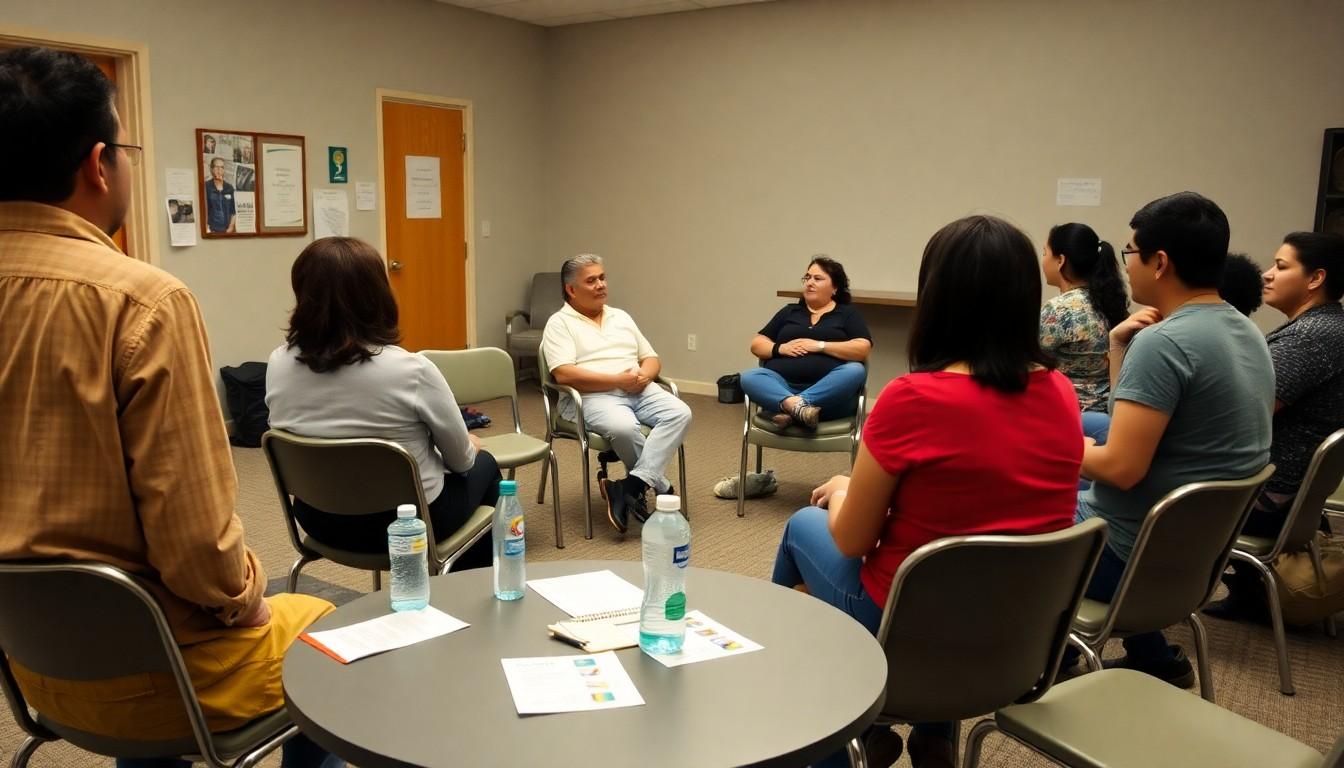
In Los Angeles, gay Latino men may feel at home with family and in LGBTQ+ spaces, yet still struggle to feel fully seen in either. The words available in Spanish, English and Indigenous languages can carry affection, history and painful expectations, making language a powerful part of how people express identity, build relationships and find a sense of belonging.
Essential Takeaways
- Family ties can be strong: Shared meals, celebrations and traditions help sustain relationships across generations, but some men feel pressure to conceal their partners or identity.
- Words carry history: Terms associated with sexuality can feel very different depending on who says them, how they’re used and the memories attached to them.
- There’s no single language experience: Some men find it easier to discuss sexuality in English; others feel Spanish better conveys tenderness, humour and desire.
- Indigenous identities add another layer: Muxes of the Isthmus of Tehuantepec have a culturally specific identity that may not fit neatly into English or standard Spanish categories.
- Support is available in both languages: PFLAG Los Angeles offers Spanish-language resources for families seeking help with LGBTQ+ topics.
Between family and community, words matter
In a family home, a partner can be introduced as “a friend” or “the person who came with you”. The words sound ordinary, but they can carry a quiet agreement: everyone knows more than anyone says. For gay Latino men, that gap between recognition and open acknowledgement can make family gatherings feel warm and uneasy at the same time.
The pressure isn’t simply about whether a family is accepting. Ideas about masculinity, religious tradition, family reputation and respect can shape what relatives feel able to discuss. Even a reassuring phrase such as “I love you as you are” may come with an unspoken request to keep that part of life private.
Research on language, gender and sexuality helps explain why everyday words can carry such weight. In Los Angeles, multilingual speech is also shaped by relationships and setting, with people adjusting how they speak as they move between home, work and community spaces.
Spanish can hold affection and old hurts
For many people who grew up speaking Spanish, it’s the language of family jokes, childhood reprimands and familiar terms of endearment. It can feel intimate in a way that English doesn’t. But the same language may also bring back warnings about how a boy should behave, or memories of insults first heard before the speaker understood their meaning.
That history can make a neutral word like “gay” difficult to say at home, even when it feels comfortable elsewhere. Context matters: a term reclaimed among close friends may still sting when used as an insult by someone else. It’s a reminder that vocabulary doesn’t arrive in a vacuum; it brings along the voices and moments in which it was first heard.
Research on multilingual communities in Los Angeles examines how language can signal connection, identity and power. For anyone trying to talk across generations, a useful first step may be to ask what words feel respectful, rather than assuming that one label will work for everyone.
Muxes show why identity doesn’t always translate
Among Zapotec people of the Isthmus of Tehuantepec, muxes have a culturally specific place in community life. The term is not simply a direct equivalent of “gay” or another familiar English identity label, which makes it important not to flatten different experiences into one category.
Migration can add further complexity. Someone who moves between an Indigenous language, Spanish and English may find that each offers different words, while none quite captures the whole of who they are. That’s not a failure of translation so much as a reminder that identity is shaped by culture as well as vocabulary.
A University of Toronto resource on gender diversity across cultures explores muxes in the context of Zapotec communities. It offers a useful starting point for understanding why identities should be discussed on their own terms, rather than treated as interchangeable labels.
Switching languages can change the emotional distance
Some people can say “I’m gay” with ease but hesitate over “soy gay” in front of their parents. English may feel more distant, especially if it became the language of school or adult life; Spanish may feel closer to family, with all the tenderness and tension that closeness brings. For others, Spanish is the language that makes affection and humour sound most like themselves.
Grammar can also shape a conversation. Spanish often requires speakers to choose gendered words, while expressions such as “mi pareja” offer a more neutral option. But the most technically suitable phrase may not feel natural to the person saying it. The aim isn’t to find a perfect script; it’s to make space for words people can use comfortably and honestly.
Scholar and writer Gloria Anzaldúa wrote about the close ties between language, identity and belonging. Her work resonates with people who feel judged for how they speak, whether that means using Spanglish or feeling less fluent in the language spoken at home.
Make room for a conversation that takes time
When parents and adult children don’t share the same vocabulary, a conversation about identity can be hard to begin. Some children understand Spanish well but don’t have the words for relationships or sexuality; some parents have had little access to affirming language. That can make silence look like indifference when the real obstacle is uncertainty about what to say.
A gentle approach can help: choose a calm moment, use the words that feel true to you, and allow time for questions. If language is a barrier, writing a note or speaking with a bilingual support group may make the first conversation feel less daunting. PFLAG Los Angeles provides Spanish-language information and support for families navigating LGBTQ+ questions.
No one has to choose between family and community, or between Spanish and English. Sometimes belonging begins with finding a way to speak that leaves room for every part of your story.
Source Reference Map
Story idea inspired by: [1]
Sources by paragraph:
- Stand-first: [2], [6]
- Essential Takeaways, bullet 1: [2]
- Essential Takeaways, bullet 2: [4]
- Essential Takeaways, bullet 3: [6]
- Essential Takeaways, bullet 4: [3]
- Essential Takeaways, bullet 5: [7]
- Between family and community, words matter, paragraph 1: [2]
- Between family and community, words matter, paragraph 2: [2], [4]
- Between family and community, words matter, paragraph 3: [4], [6]
- Spanish can hold affection and old hurts, paragraph 1: [4]
- Spanish can hold affection and old hurts, paragraph 2: [4]
- Spanish can hold affection and old hurts, paragraph 3: [6]
- Muxes show why identity doesn’t always translate, paragraph 1: [3]
- Muxes show why identity doesn’t always translate, paragraph 2: [3], [6]
- Muxes show why identity doesn’t always translate, paragraph 3: [3]
- Switching languages can change the emotional distance, paragraph 1: [4], [6]
- Switching languages can change the emotional distance, paragraph 2: [4]
- Switching languages can change the emotional distance, paragraph 3: [5]
- Make room for a conversation that takes time, paragraph 1: [2], [6]
- Make room for a conversation that takes time, paragraph 2: [7]
- Make room for a conversation that takes time, paragraph 3: [5], [6]