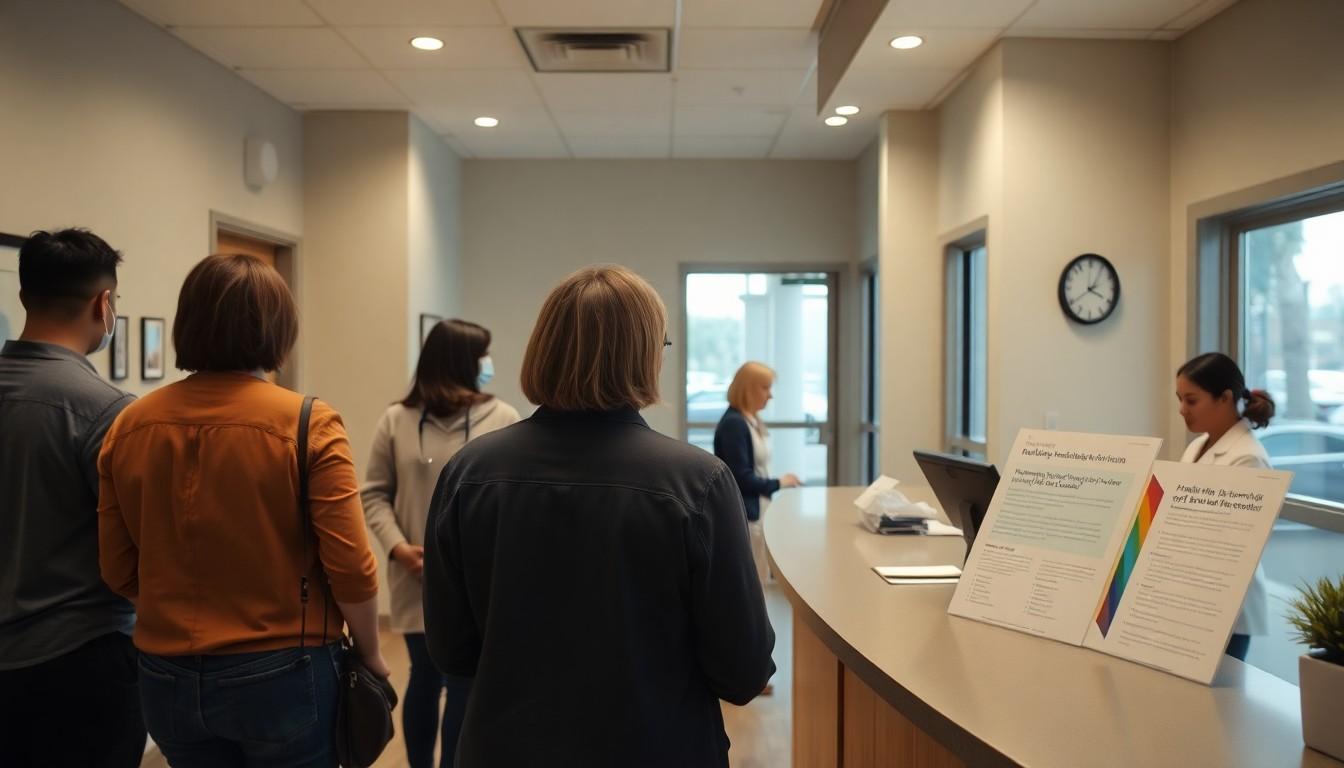
A new Houston LGBTQ+ survey is putting local experiences into sharper focus. Released at the Montrose Center during LGBTQ+ History Month, the pilot study gathered responses from 1,193 people across more than 100 Greater Houston ZIP codes, highlighting concerns about healthcare costs, workplace advancement and unequal experiences within the community.
What the Houston LGBTQ+ survey found
Nearly half of respondents reported annual household incomes above $100,000, yet financial stability didn’t erase concerns about fairness at work. Forty-four per cent believed LGBTQ+ employees faced unequal opportunities for promotion, according to the survey findings.
Healthcare costs were also frequently identified as a barrier. The results point to a familiar tension: even where some households are doing well financially, access to care and equal treatment can remain difficult.
A broad look at life across Greater Houston
The Houston Area L.O.V.E. Survey - short for LGBTQ+ Opinions, Voices & Experiences - examined education, healthcare, housing, employment, finances and discrimination. It was developed by the Greater Houston LGBTQ+ Chamber of Commerce, Rice University’s Kinder Institute for Urban Research and the Montrose Center.
Responses came from 1,193 participants in more than 100 ZIP codes. That gives the pilot study a wide local reach, although researchers cautioned that people chose whether to take part, so the results shouldn’t be treated as statistically representative of every LGBTQ+ resident in the region.
Why transgender respondents stand out
The findings showed disparities within the LGBTQ+ population, with particularly pronounced challenges reported by transgender respondents. That matters because a broad headline about LGBTQ+ experiences can sometimes hide the different pressures faced by people within the community.
The survey’s value, then, isn’t just in counting responses. It can help employers, service providers and policymakers ask more specific questions about who is being left behind and where support is falling short.
What employers and policymakers can do with the findings
The public report release brought together Chamber president and CEO Tammi Wallace, Montrose Center CEO Avery Belyeu, and Kinder Institute researchers Daniel Potter and Kishan Bhakta. The discussion focused on turning research into practical action, rather than letting the results sit quietly on a shelf.
For employers, the promotion finding is a prompt to look closely at how advancement decisions are made and whether staff have equal access to opportunities. For organisations working in healthcare or community support, the reported cost barriers suggest that affordability deserves attention alongside availability.
A starting point, not the final word
Because the survey was a voluntary pilot, its findings offer a useful starting point rather than a complete measure of Greater Houston’s LGBTQ+ population. Further research will be needed to track how experiences vary across neighbourhoods and groups over time.
Still, gathering local voices across so many ZIP codes gives community organisations a more grounded basis for conversation. The complete report is available through Rice University’s survey coverage.
It's a first step towards making local experiences harder to overlook.
Source Reference Map
Story idea inspired by: [1]
Sources by paragraph: