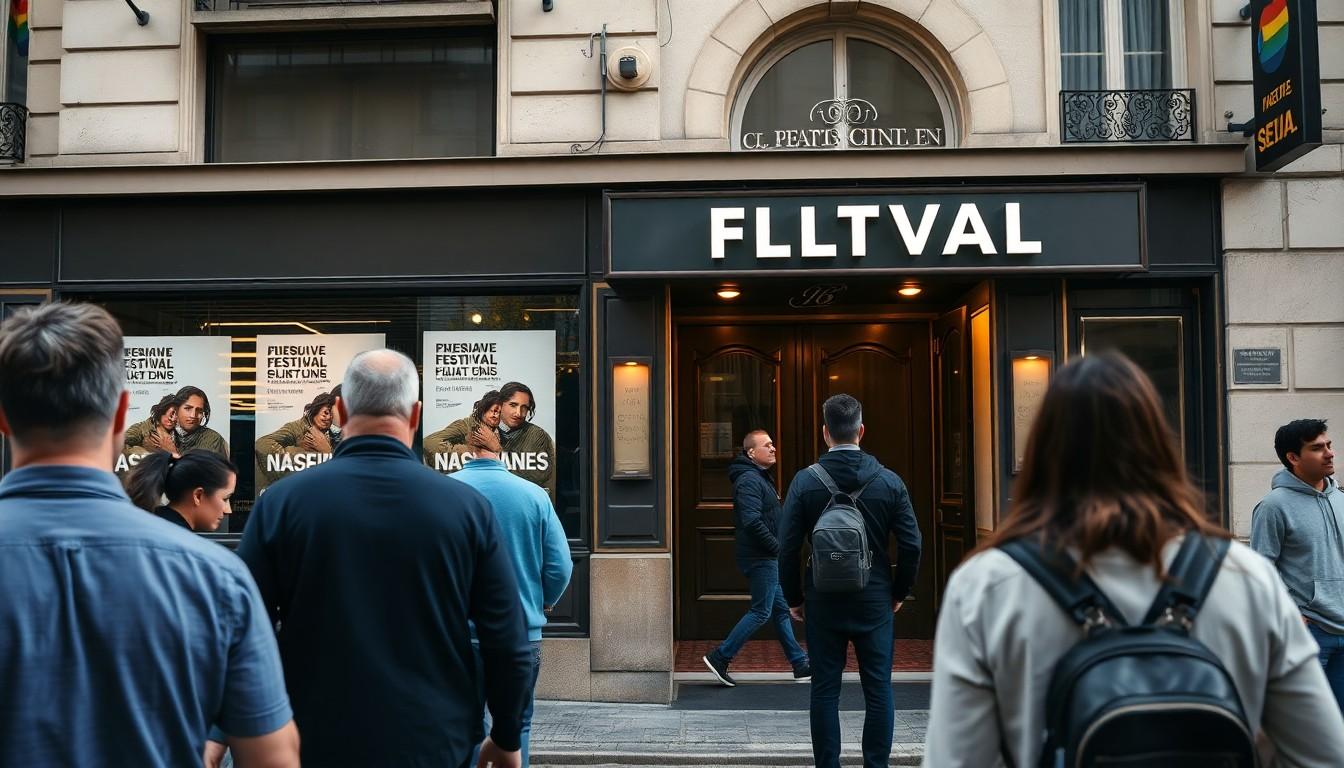
Paris’s Chéries-Chéris festival returns for its 32nd edition with contemporary LGBTQIA+ cinema, archival discoveries and conversations about creative freedom. With The Blood Countess opening the programme and La Bola Negra closing it, the line-up moves from fresh films to influential queer history, giving audiences plenty to explore beyond the screen.
Essential Takeaways
- Two films frame the festival: Ulrike Ottinger’s The Blood Countess opens, while La Bola Negra, directed by Javier Calvo and Javier Ambrossi, closes.
- The programme spans formats: Fiction, documentaries and short films feature across competitions, themed selections and special screenings.
- Queer film history gets attention: A Rosa von Praunheim tribute includes Survivre à New York and L’Einstein du sexe.
- There’s more than cinema: A discussion explores lived experience and creative freedom, alongside a screenwriting workshop.
A bold opening sets the mood
The Blood Countess gives the 2026 Chéries-Chéris festival a striking opening, while La Bola Negra brings the event to a close. The two selections bookend a programme built around LGBTQIA+ cinema, with competition titles and special screenings in between.
That framing gives the festival a pleasingly broad shape. Rather than treating queer cinema as one narrow category, the line-up brings together fiction, documentary and short films, inviting audiences to move between different forms and perspectives.
Contemporary queer cinema meets film history
Alongside new work, the festival makes space for filmmakers whose work has helped shape queer cinema. Its tribute to Rosa von Praunheim includes Survivre à New York and L’Einstein du sexe, offering a chance to encounter two titles within a wider retrospective.
Special screenings also turn towards Norbert Terry and François About, directors associated with French gay pornographic cinema. It’s a reminder that LGBTQIA+ film history includes work from across the medium, not just the titles that have found a place in mainstream retrospectives.
The programme continues beyond the screen
Chéries-Chéris also gives audiences ways to engage with the ideas behind filmmaking. A round-table discussion looks at how lived experience relates to freedom in fiction, while a screenwriting workshop focuses on the craft of building stories.
That combination makes the festival feel less like a run of screenings and more like a meeting place for film and conversation. For viewers who enjoy hearing how stories are shaped, the events offer a useful companion to the films themselves.
How to make the most of the festival
With competitions, panoramas, special sessions and heritage screenings in the mix, it’s worth looking beyond the opening and closing films when planning a visit. Pick a title that’s new to you, then pair it with a retrospective or discussion for a fuller sense of the programme’s range.
And if you’re unsure where to start, the tribute screenings offer a clear route into queer film history, while the contemporary selections promise a snapshot of current filmmaking. The best festival day may be the one that leaves room for a surprise.
A festival built for discovery
The 32nd edition brings together new LGBTQIA+ films, historical works and events that make room for discussion. That balance gives Chéries-Chéris a lively point of view: cinema can entertain, preserve history and open up conversations, sometimes all in the same afternoon.
Explore the programme and choose a screening that takes you somewhere unexpected.
Source Reference Map
Story idea inspired by: [1]
Sources by paragraph: