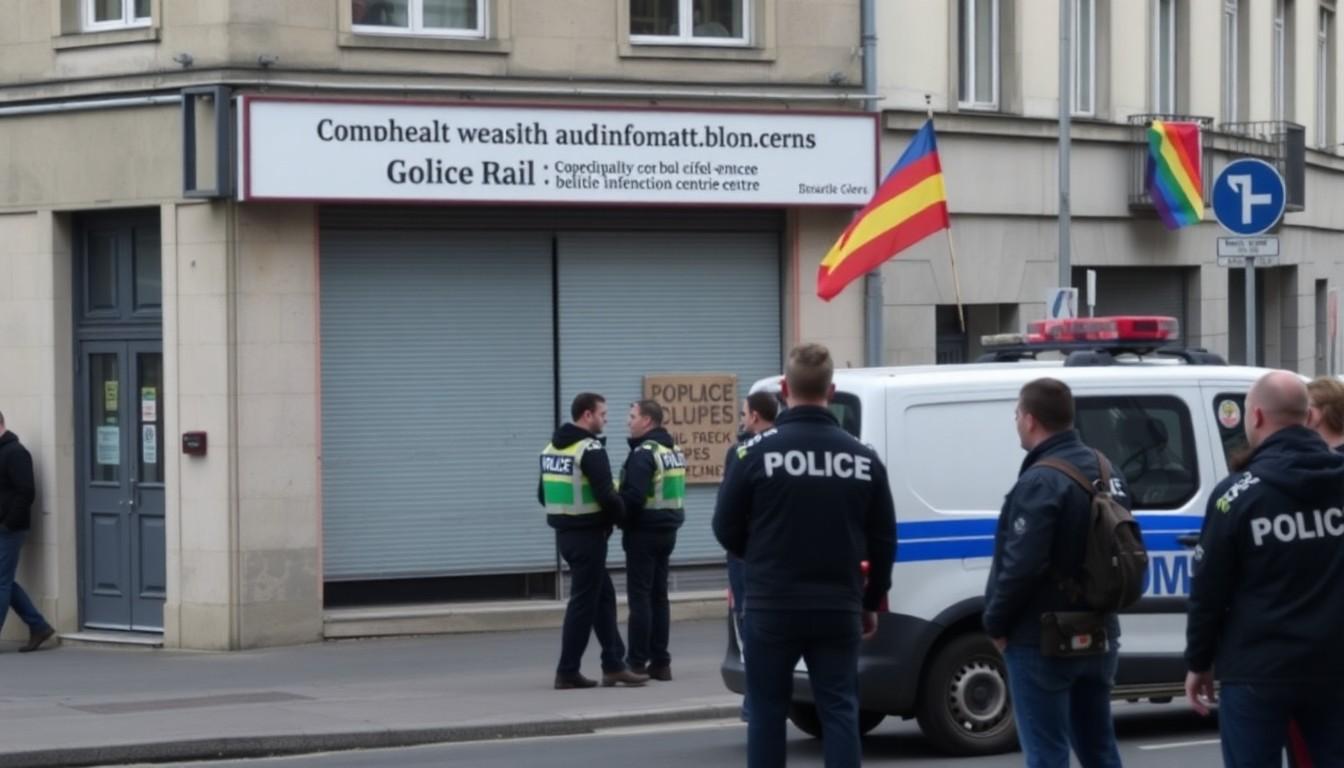
A police raid on Berlin’s Casa Kuá has prompted an international show of solidarity and renewed questions about access to trans healthcare. The community centre supports queer people seeking information and connection, and its case highlights how legal and practical barriers can make essential care harder to reach, especially for people already facing discrimination.
Essential Takeaways
- The raid: Police searched Casa Kuá on 18 October as part of an investigation into a suspected breach of medicines law, according to nd.
- The community response: Around 2,500 people gathered in Berlin-Kreuzberg for a protest under the slogan “Hands off trans lives”.
- The international appeal: About 200 researchers, artists and activists signed an open letter calling for planned charges to be dropped and for trans community spaces not to be criminalised.
- Healthcare access matters: The LSVD describes dignified, self-determined trans healthcare as a human right.
- A wider pattern: Human Rights Watch has reported arrests and pressure on LGBT organisations in Türkiye, while regional reporting has documented a raid on a queer venue in Taipei.
A community centre becomes the focus of a wider debate
A police search can feel especially unsettling when it takes place in a space people rely on for support and information. At Casa Kuá, a queer community centre in Berlin, police searched the premises on 18 October while members of the transfeminine collective Dolls of Berlin were present. The operation was linked to a suspected breach of medicines law, nd reported.
The raid quickly prompted a public response. Around 2,500 people gathered at Mariannenplatz in Berlin-Kreuzberg for a demonstration called “Hands off trans lives”, while an open letter attracted about 200 signatures from scholars, artists and activists. The signatories called for planned charges against Casa Kuá to be dropped and for the criminalisation of trans community spaces to end.
Why accessible trans healthcare is part of the story
The dispute reaches beyond one search because community centres can help people find information and peer support when formal services feel difficult to navigate. The German Council for Migration says self-determination is not negotiable in the Casa Kuá case, while the LSVD frames self-determined, dignified trans healthcare as a human right.
That access can be shaped by more than appointment availability. Money, insurance, legal status and experiences of racism may all affect whether someone can obtain care, including hormone treatment or psychological support. The practical point is simple: trusted local spaces can help people work out where to seek reliable support, even though they can't replace qualified medical advice.
Raids and pressure on queer spaces aren't confined to Berlin
The open letter places the Casa Kuá raid in a wider international climate of pressure on LGBT communities. Human Rights Watch has reported on a crackdown in Türkiye involving LGBT organisations and other venues, with arrests raising concerns about both rights and the rule of law.
There have also been reports of police action at a queer venue in Taipei. ILGA Asia's reporting offers regional context for that incident, while the Berlin case shows why community groups may view the safety of gathering places as closely connected to wider questions of access, visibility and belonging.
What the response says about community support
Solidarity has taken both public and practical forms, from the Berlin demonstration to the open letter's call for support for Casa Kuá's work. The Migration Council's statement on the case adds to calls for self-determination and for community support to be recognised as part of the wider conversation about trans rights.
For readers who want to help, a sensible first step is to follow updates directly from the organisations involved and check their own guidance before donating or sharing information. In a fast-moving story, reliable updates matter. And for anyone seeking healthcare, a community group can be a useful starting point for finding support, but individual medical decisions belong with qualified professionals.
A political backdrop, and a very human need
The letter's authors argue that attacks on queer and trans people sit within a broader rise in authoritarian politics. Germany's political backdrop has also drawn international attention: the OSW Centre for Eastern Studies reported on the AfD's landslide victory in Saxony-Anhalt.
Political analysis can help explain why a local raid resonates far beyond the people directly affected. But the everyday stakes are less abstract: people need places where they can ask questions, share experience and feel safe. That's why the Casa Kuá case matters to communities well beyond Berlin.
Small, trusted spaces can make a real difference when navigating care and finding community.
Source Reference Map
Story idea inspired by: [1]
Sources by paragraph: