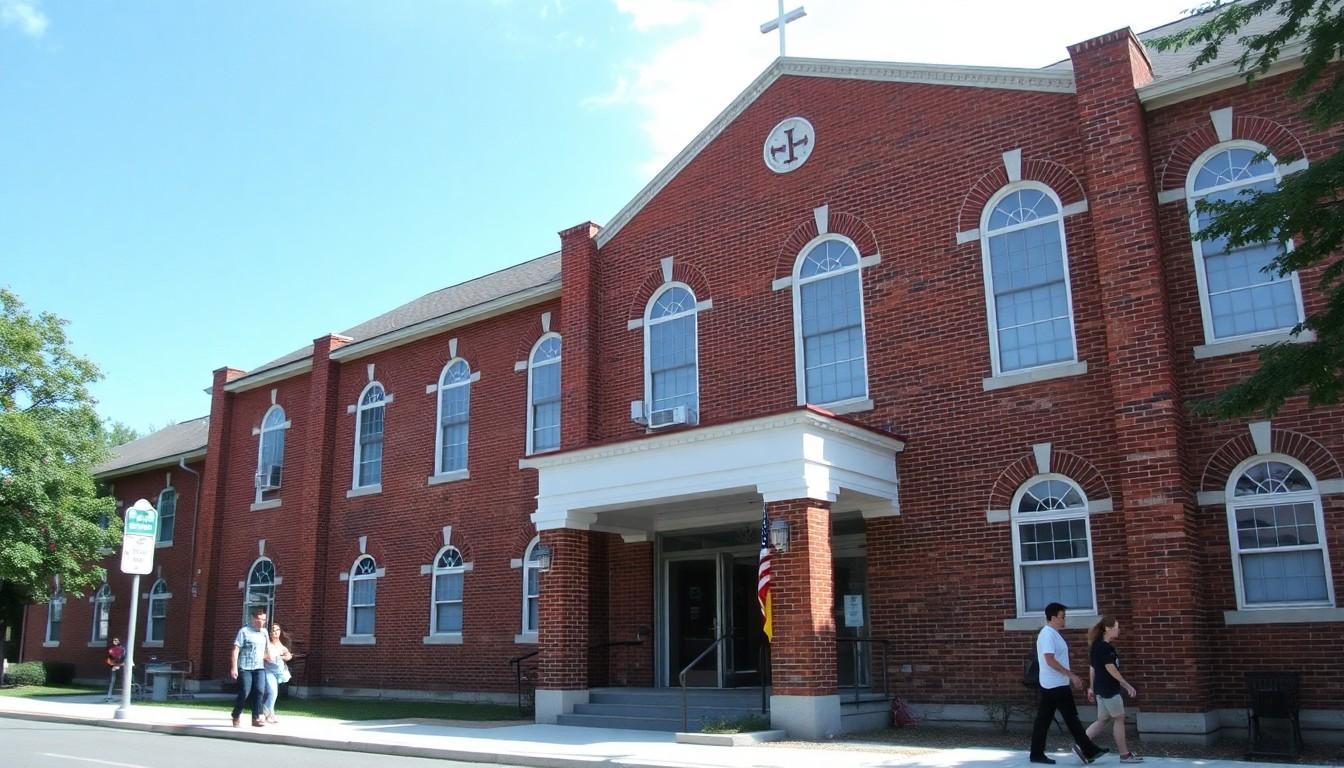
Catholic schools and LGBTQ+ families are watching a major US Supreme Court case that could decide whether religious schools may sidestep Colorado’s anti-discrimination rules while receiving public funding. But beyond the courtroom, the dispute is forcing a broader question: what should a Catholic school welcome really mean?
Essential Takeaways
- The case: The Supreme Court is considering whether a Catholic preschool can claim a religious exemption from Colorado’s protections for LGBTQ+ families.
- The wider stakes: The ruling could affect public funding, religious liberty and anti-discrimination protections beyond one school.
- The central debate: Critics question why LGBTQ+ families are singled out when schools rarely apply every Catholic teaching as an admissions test.
- The pastoral question: Whatever the legal outcome, Catholic communities will still have to decide how welcoming they want to be.
A preschool dispute with consequences far beyond the gates
At first glance, this is a fight over admissions paperwork. In reality, it reaches into some of the most contested territory in American public life: religious freedom, LGBTQ+ equality and the limits of government funding.
The case, St. Mary Catholic Parish v. Roy, concerns a Colorado Catholic school that wants to reject families with same-sex parents while continuing to participate in a state-funded universal preschool programme. The Human Rights Campaign says the dispute could affect important protections for LGBTQ+ families across Colorado.
That combination is what makes the case so combustible. A private religious institution may hold distinctive beliefs, but once public money enters the picture, the question becomes harder to sidestep: should public funding come with public obligations?
What the Supreme Court is being asked to decide
The legal argument turns on whether Colorado’s non-discrimination rules improperly burden the school’s free exercise of religion. The plaintiffs say they should be able to require parents to support Catholic teaching and exclude families they believe do not meet that standard.
Court records show that the justices are considering the relationship between religious exercise and a state programme designed to make preschool available more widely. The dispute therefore sits at the intersection of constitutional rights and the practical rules attached to government support.
The Daily Signal has framed the case as a question of whether Catholic families were excluded from a universal preschool scheme because of their views on LGBTQ+ relationships. Supporters of Colorado’s protections, meanwhile, see a potential route for publicly funded organisations to deny services to same-sex parents.
That difference in framing matters. One side sees a threat to religious autonomy; the other sees a threat to equal access. The eventual ruling could clarify how those principles coexist, or sharpen the conflict between them.
Why the inclusion argument is broader than admissions
The most searching criticism of the school’s position is that it appears to focus on LGBTQ+ families while leaving many other departures from Catholic teaching unexamined. Parents are not routinely asked about remarriage without annulment, fertility treatment or sterilisation, even though Catholic doctrine addresses those issues too.
That inconsistency raises an awkward but important question. Is the aim genuinely doctrinal uniformity, or has LGBTQ+ identity become a particularly visible line of exclusion?
The issue also complicates the idea that Catholic opinion is neatly divided into those who belong and those who do not. Catholic communities vary considerably, and attitudes towards LGBTQ+ people have shifted in some parts of the Church. New Ways Ministry and Jesuit priest James Martin are often cited as examples of a more welcoming pastoral approach.
The Associated Press has reported on the dispute as part of a wider national argument over the boundaries of religious exemptions. For families, though, the policy language eventually becomes personal: a child either receives a place, or doesn't.
What families should watch as the case develops
The practical details matter. Families affected by the case should look closely at a school's admissions policy, enrolment declarations and funding arrangements, rather than relying on broad statements about being faith-based.
It is also worth checking whether a school participates in a state-funded programme and which protections apply to that programme. The legal answer may depend not only on the institution's religious identity but also on the specific service being provided and the conditions attached to funding.
Parents considering a Catholic school may want to ask direct questions before applying: Are same-sex parents eligible to enrol? Is there a written family policy? Who handles disputes? Clear answers are far kinder than discovering a school's position after a child has formed friendships and settled into the classroom.
The court's docket and filings will provide the most reliable updates as the case moves forward. Headlines may make the dispute sound abstract, but for families, clarity is the useful currency.
Whatever the ruling, the Church still faces a choice
A Supreme Court decision could determine what Colorado law permits, but it cannot settle what Catholic hospitality ought to look like. A legal victory for either side would leave schools, dioceses and families navigating the same moral and pastoral tensions.
The argument for inclusion is not simply that every dispute disappears when a child is admitted. It is that children should not carry the consequences of adult disagreement into the classroom. That feels like a modest principle, yet this case shows how difficult it remains to apply.
As the November hearing approaches, the most revealing question may not be who wins the exemption. It may be whether Catholic schools see welcome as a principle that applies broadly, or as an invitation with conditions attached.
The courtroom can define a right, but communities still decide what kind of welcome they want to offer.
Choose schools that make their admissions policies clear before you apply.
Source Reference Map
Story idea inspired by: [1]
Sources by paragraph:
- Paragraph 1: [2], [5]
- Paragraph 2: [3], [4]
- Paragraph 3: [2], [6]
- Paragraph 4: [5], [7]
- Paragraph 5: [3], [4]
- Paragraph 6: [2], [6]
- Paragraph 7: [5], [7]
- Paragraph 8: [3], [4]
- Paragraph 9: [2], [6]
- Paragraph 10: [3], [4]
- Paragraph 11: [2], [5]
- Paragraph 12: [6], [7]
- Paragraph 13: [3], [4]
- Paragraph 14: [2], [5]
- Paragraph 15: [3], [6]
- Paragraph 16: [2], [4]