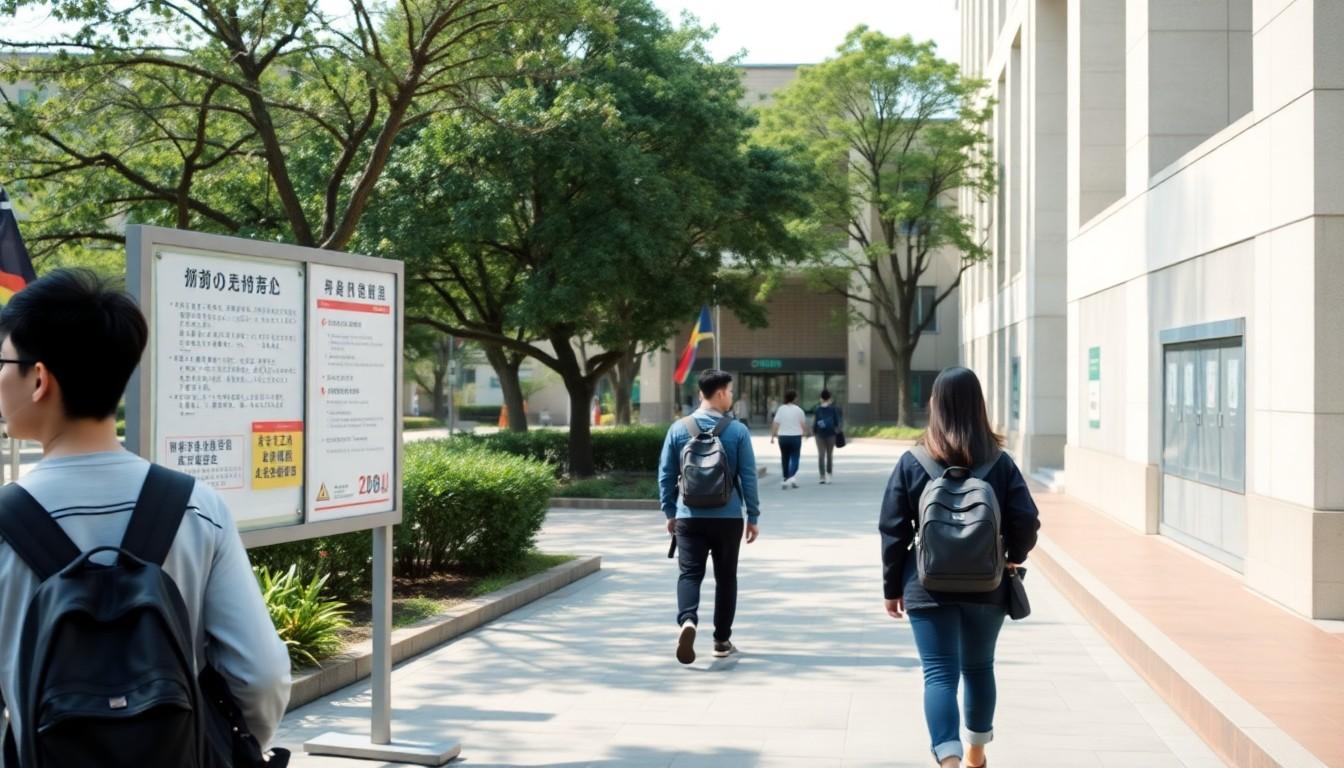
Rainbow flags are going up across National Chengchi University in Taipei, where students are using a campus-wide display to show support for LGBTQ+ rights ahead of Taiwan’s annual Pride parade. The move comes amid fresh debate about discrimination and policing, and has drawn praise from staff as well as attention to the importance of fairness and student-led action.
Essential Takeaways
- A campus-wide gesture: National Chengchi University students’ union organised rainbow flags across the university.
- Student-led action: The union says the idea was developed before a recent police raid controversy.
- Pride support: The student body also planned to attend Taiwan’s annual LGBTQ+ parade.
- University backing: The university said the display followed campus procedures and respects student self-governance.
Rainbow flags make a visible statement
Bright flags across a university campus are hard to miss, and that is precisely the point. National Chengchi University’s student union arranged the display ahead of Taiwan’s annual Pride parade, signalling support for LGBTQ+ people and their right to fair treatment.
The student union’s president, Tsao Tun-min, said the university has a diverse student population, including people with different sexual orientations and gender identities, as well as international students. He said the union had begun discussing the flag display in August and had spoken with the university about it. (Sources: CNA; National Chengchi University Office of International Cooperation.)
A police raid sharpened the debate
The flag campaign drew added attention after police searched a well-known LGBTQ+ bar in Taipei’s Ximending district. The operation prompted allegations of discriminatory enforcement and concerns about inappropriate remarks towards disabled people and sexual minorities.
The controversy has brought questions about equal treatment into sharper focus just before the parade. The student union’s president said he welcomed the increased public interest in equality, while making clear that the flag idea pre-dated the raid. (Sources: Taiwan LGBTQ+ rights reporting; Taipei City Police Department.)
Students and staff put pride into action
The student union also registered as a group for the parade, with its president saying he would attend alongside union members. That turns the campus display into more than a colourful backdrop: it connects a local gesture with a wider public event.
A National Chengchi University communications professor praised the students’ decision to act. He recalled being asked where to find affordable flagpoles and said the students wanted to make Pride Month more visible rather than stay quiet amid rising hostility. (Sources: Newtalk; National Chengchi University Office of International Cooperation.)
What the university says about the display
The university said the flag activity was initiated by the student union, with applications for locations and flag installations handled under campus rules. It added that the union would remove the flags and restore the sites as approved once the activity ended.
That response matters: the flags are student-organised, while the university’s role is to respect the approved activity and students’ right to participate in public issues. For students, the school said, expressing views, listening and discussing differences are also part of learning. (Source: National Chengchi University Office of International Cooperation.)
A simple display, with a wider message
A rainbow flag cannot settle arguments about discrimination on its own, but a campus-wide display makes it harder to pretend the issue is distant or abstract. It gives students a visible way to show solidarity, while inviting others to consider what fairness looks like in everyday life.
As the parade approaches, the university’s flags offer a clear reminder that public support can begin with a small, shared action. And sometimes, being seen is part of the point. (Sources: CNA; Newtalk.)
It's a simple gesture, but one that keeps equality in view.
Source Reference Map
Story idea inspired by: [1]
Sources by paragraph: