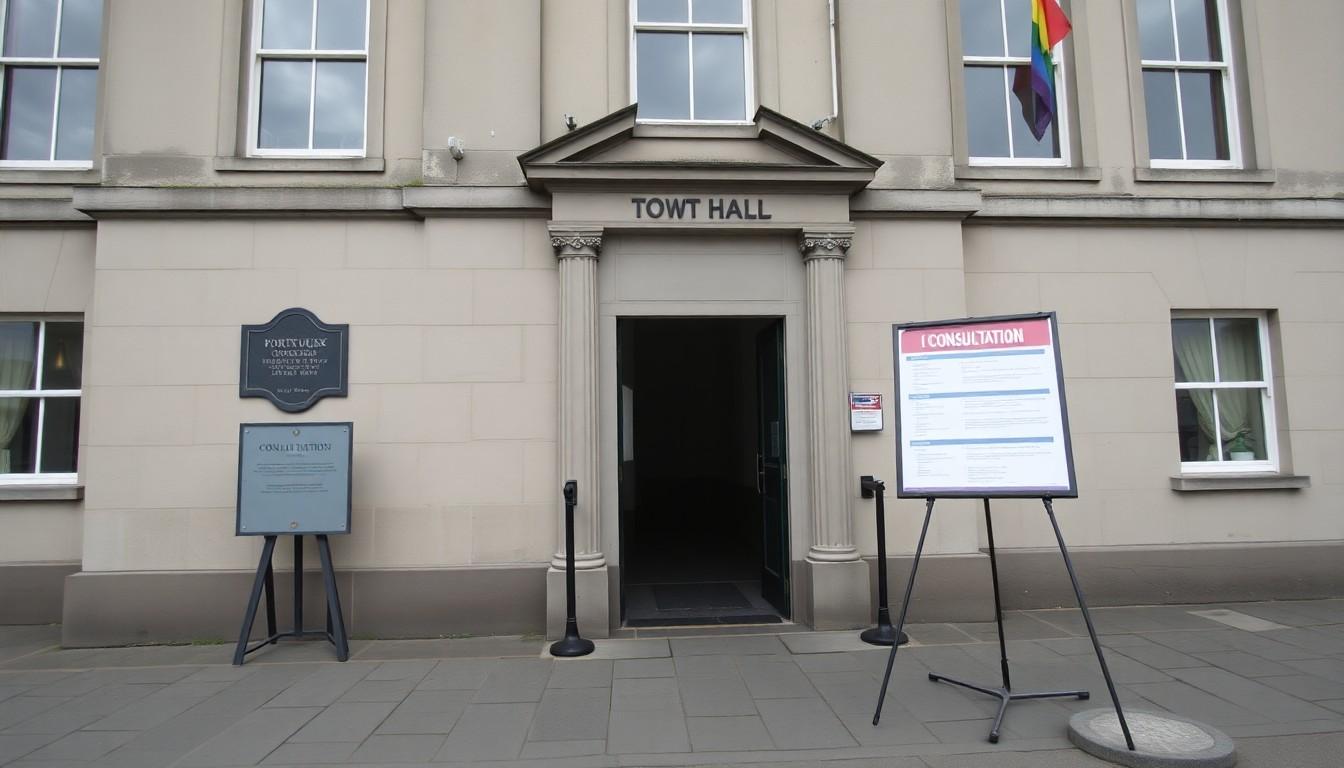
Causeway Coast and Glens Council is asking residents to comment on a proposed plaque for Mark Ashton, the Portrush-raised LGBTQ activist who linked gay-rights campaigning with support for striking miners. The memorial could be installed at Portrush Town Hall, giving the north coast town a lasting reminder of his work. Here’s what the consultation covers and how to take part.
Essential Takeaways
- Proposed location: The plaque is planned for a suitable spot inside Portrush Town Hall.
- Public consultation: The council is seeking views on a Draft Equality Impact Assessment, including possible effects and ways to strengthen the proposal.
- Why Ashton is remembered: He founded Lesbians and Gays Support the Miners during the 1980s miners’ strike.
- How to respond: Comments can be submitted through the council’s consultation page or by email to [email protected].
Portrush could honour a campaigner who brought communities together
A plaque at Portrush Town Hall would commemorate an activist whose story connects the north coast with a defining period in British labour and LGBTQ history. Mark Ashton grew up in Portrush before moving to London as a young man, where he became involved in campaigning and community support work. The council says the proposed memorial is intended to recognise his contribution and invite reflection on its local significance.
Ashton founded Lesbians and Gays Support the Miners, known as LGSM, during the 1984-85 miners’ strike. The group raised money and built links between LGBTQ campaigners and mining communities, a partnership later brought to a wide audience through the film Pride. The miners’ strike and its supporters remain an important subject in labour history, with Ashton’s work illustrating how solidarity can travel across very different communities.
What the council is asking residents to consider
The consultation focuses on a Draft Equality Impact Assessment, or EQIA, for the proposed plaque. The council wants views on equality and good-relations effects already identified, as well as any potential impacts that may have been missed. It is also asking for suggestions on reducing adverse effects and making the proposal’s positive contribution stronger.
The location is proposed as Portrush Town Hall, but the exact position hasn’t been settled. The council says practical matters, including available space and accessibility, will help determine where it goes. That makes feedback about how the plaque can be seen and reached a useful part of the discussion.
How to respond to the Mark Ashton plaque consultation
Residents can submit their views through the formal consultation page on the Causeway Coast and Glens Council website. Responses can also be sent by email to [email protected]. Before replying, it may help to read the Draft EQIA and the proposed wording so your feedback addresses the detail of the plan.
The council says it will consider responses and review the EQIA before presenting a final report for consideration. In other words, this is a chance to shape how the proposal is assessed, rather than simply comment on a finished memorial.
Why Ashton’s story still resonates
Ashton’s activism joined two struggles that are sometimes treated as separate: LGBTQ equality and workers’ rights. LGSM’s support for miners showed how practical help and personal connection can build understanding, even when communities begin far apart. The story also gained renewed visibility through Pride, the 2014 film inspired by the group’s campaign.
Ashton died aged 26 after developing AIDS-related illness. A commemorative plaque has also been unveiled in London, while a garden in Paris honours his memory. A Portrush memorial would bring that recognition to the town where he grew up, giving local residents a chance to consider what his legacy means close to home.
A small memorial, with room for public input
A plaque is modest in scale, but the story behind it is anything but small. The consultation gives residents a practical opportunity to help make the proposed memorial accessible, thoughtful and rooted in Portrush.
Source Reference Map
Story idea inspired by: [1]
Sources by paragraph: