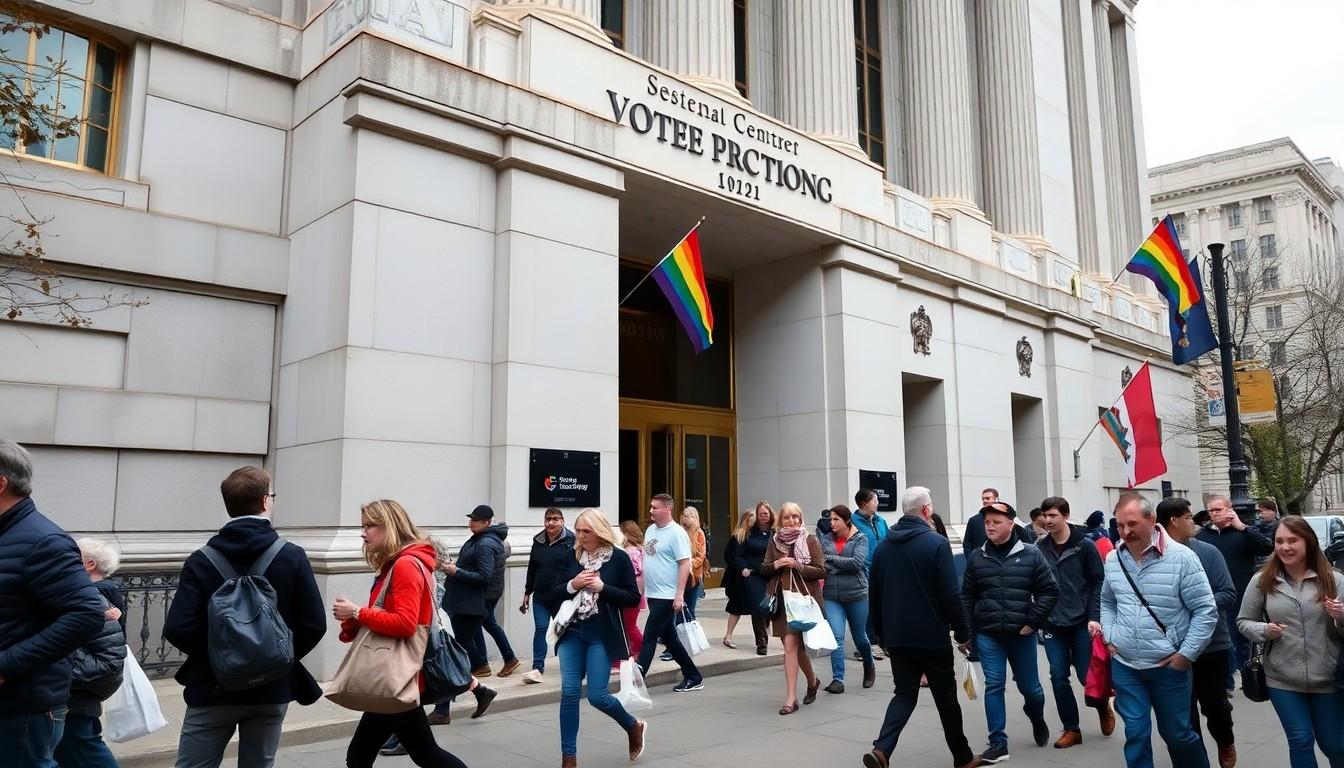
D.C. voters are heading to the polls on 3 November with LGBTQ rights, local autonomy and neighbourhood representation all in focus. With Janeese Lewis George strongly favoured in the mayoral race, endorsements and candidate ratings offer useful clues, but the ballot also includes dozens of local contests where the details matter.
Essential Takeaways
- Mayoral favourite: Janeese Lewis George has backing from Capital Stonewall Democrats and GLAA's highest rating.
- Rights and home rule: LGBTQ activists are watching the race amid threats to D.C.'s autonomy and human rights protections.
- Key Council contests: Zachary Parker, Robert White and other LGBTQ-supportive candidates are among the leading contenders.
- Local influence: At least 45 known LGBTQ candidates are running for Advisory Neighborhood Commission seats.
- Check the detail: Endorsements, ratings and questionnaire responses don't always line up, so voters should compare sources.
A mayoral race with national pressure
The D.C. mayoral contest has quickly become more than a local popularity test. Janeese Lewis George, the Democratic nominee, is the clear front-runner in a city where Democratic voters dominate, and her record on LGBTQ issues has helped secure support from prominent local groups.
Capital Stonewall Democrats endorsed Lewis George, while GLAA gave her its top rating. That combination makes her the leading choice for many LGBTQ voters, particularly those who see local government as the first line of defence for civil rights. According to Axios, the race has also drawn intense attention because of the wider political battle over D.C.'s direction. [2], [6]
President Donald Trump's attacks on Lewis George have added an unmistakably national edge. He has criticised her democratic socialist politics and raised the possibility of federal intervention if she wins, while Lewis George and her supporters say those claims misrepresent her policies. Axios reported that the contest has become a test of both city leadership and political identity. [5], [7]
Why home rule matters to LGBTQ voters
For many residents, the concern isn't simply who occupies the mayor's office. It's whether D.C. can continue making its own decisions, including maintaining a human rights framework that protects people from discrimination based on sexual orientation and gender identity.
Lewis George has pledged to defend LGBTQ residents, support gender-affirming care and protect access to HIV-related healthcare. Those promises land differently in a city where local autonomy has long been politically vulnerable. The possibility of Congress interfering with D.C. policy may sound remote, but activists are treating it as a serious issue rather than a theoretical one. [1], [4]
There is also a more reassuring argument: even a Republican-controlled Congress might be reluctant to take such a dramatic step, particularly if the political balance changes in the midterm elections. Still, uncertainty has a way of making normally dry constitutional questions feel very immediate. [2], [7]
The Council races where LGBTQ issues are visible
Several prominent Council contests feature candidates with established LGBTQ records. In Ward 5, Zachary Parker is seeking re-election with the backing of Capital Stonewall Democrats and a strong GLAA rating. In Ward 1, bisexual candidate Aparna Raj is the Democratic favourite to replace Brianne Nadeau, another prominent LGBTQ ally who isn't standing again. [1], [4]
Robert White is also expected to win the race for D.C.'s non-voting delegate to the U.S. House. He's presented himself as a strong advocate for LGBTQ rights in Congress, while Republican challenger Denise Rosado's campaign has supported restricting classroom discussions about sexual orientation and gender identity. That contrast gives the contest particular significance for voters focused on education and representation. [1], [5]
Other leading candidates include Council Chair Phil Mendelson, At-Large candidates Elissa Silverman and Oye Owolewa, and Ward 6 incumbent Charles Allen. Their endorsements and ratings vary, but the broad pattern is clear: LGBTQ voters are assessing not only party labels, but also records, questionnaires and public statements. [3], [4]
Endorsements help, but they aren't the whole ballot
Capital Stonewall Democrats and GLAA provide two useful signposts, but they operate differently. Capital Stonewall Democrats relies on member votes for endorsements, with a 60 per cent threshold, while GLAA's ratings are based largely on candidate questionnaires and wider progressive policy positions.
That distinction explains some of the apparent gaps. A candidate can receive a majority of votes but still miss the endorsement threshold, while another may have no rating simply because they didn't return a questionnaire. In Ward 1, for example, Raj received a strong GLAA rating, but no candidate secured the required Stonewall endorsement margin. [3], [4]
So, if you're voting in D.C., treat ratings as a starting point rather than a shortcut. Read the candidate's own platform, look for a record of action, and check whether silence reflects disagreement, caution or simply a missing questionnaire. It isn't glamorous research, but it can prevent a ballot-box surprise. [1], [4]
Neighbourhood politics brings LGBTQ representation closer to home
The most striking sign of grassroots engagement is the number of LGBTQ candidates running for Advisory Neighborhood Commission seats. At least 45 known LGBTQ candidates are on the ballot across the city, covering districts from Columbia Heights and Dupont Circle to Deanwood, Capitol View and Garfield Heights. [1]
ANC commissioners don't write national legislation, but they influence the everyday texture of city life, including zoning, transport, parking, public space and liquor licensing. Those decisions can feel far more immediate than a congressional headline, especially when they affect the streets, businesses and community spaces residents use every day. [1], [2]
Some candidates have received Capital Stonewall Democrats' backing, while others fell just short of the group's endorsement threshold. The breadth of the field suggests that LGBTQ representation in D.C. isn't limited to high-profile races. It's also being built quietly, meeting by meeting, on the blocks where residents actually live. [1], [3]
The result is a ballot that rewards attention. D.C. voters aren't just choosing a mayor; they're deciding who speaks for the city, protects its autonomy and shapes neighbourhood life.
It's a small ballot-box decision repeated across a whole city, but together those choices can set the tone for LGBTQ rights in D.C.
Source Reference Map
Story idea inspired by: [1]
Sources by paragraph: