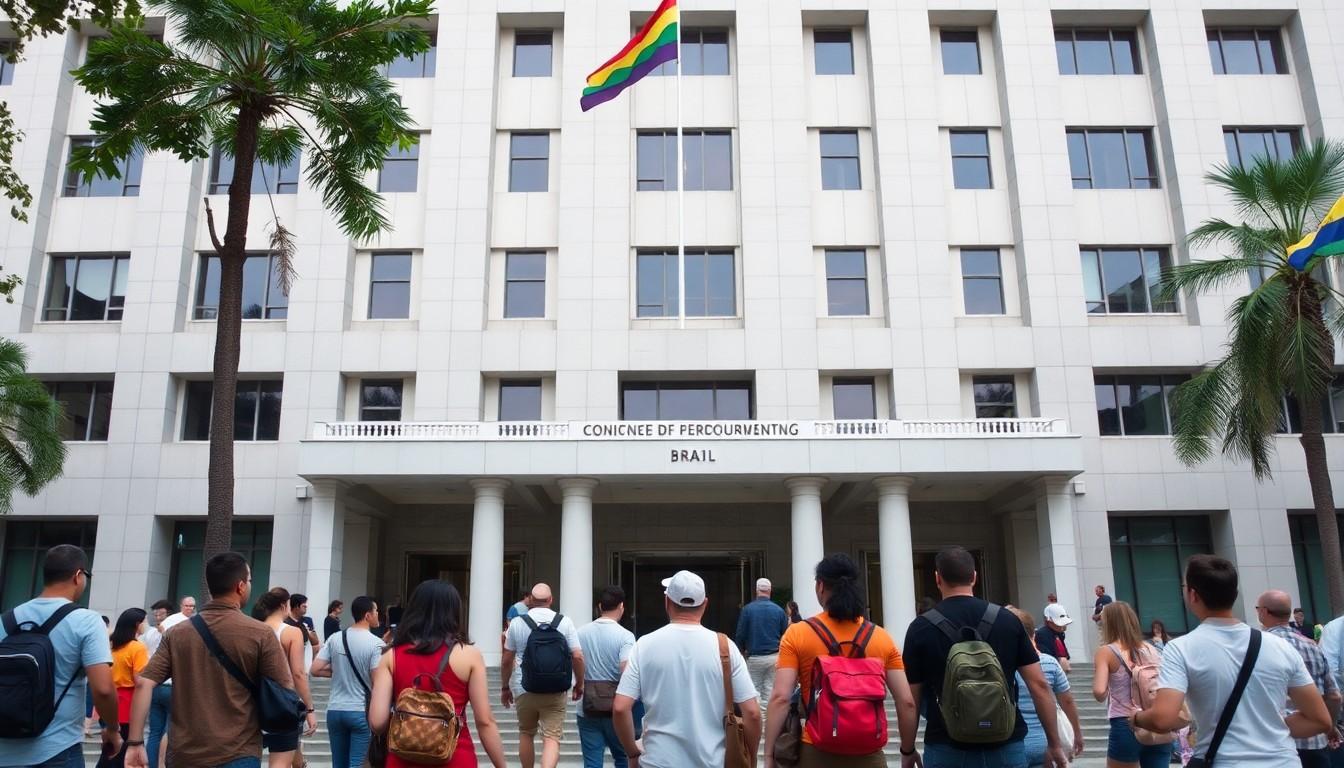
Voters across Brazil have delivered a striking message: LGBTQ+ representation can grow even as the far right gains ground. More than 220 openly LGBTQ+ candidates were elected in the 2024 municipal elections, while queer leaders nationally drew millions of votes. Their success shows how identity, intersectional campaigning and civic participation can work together.
Essential Takeaways
- Record representation: More than 220 LGBTQ+ people were elected in Brazil’s 2024 municipal elections.
- Intersectional leadership: Many successful candidates were women, Black, working-class or transgender.
- Identity became an asset: Candidates addressed everyday concerns while speaking openly about who they are.
- Participation mattered: Campaigns linked queer politics with youth engagement, climate action and wider democratic renewal.
- Progress remains fragile: Violence, hostility and far-right pressure still threaten LGBTQ+ politicians.
Brazil’s queer candidates have broken through
The headline number is hard to ignore. Brazil elected more than 220 LGBTQ+ representatives in its 2024 municipal contests, a sharp increase that signals growing visibility in local politics. According to Brasil de Direitos, the result included councillors and mayors from across the country, turning representation from an occasional breakthrough into a recognisable national trend.
That progress came against a complicated backdrop. The political climate remains polarised, and openly queer candidates still face harassment and threats. Yet voters backed politicians who brought personal experience of exclusion into debates about transport, jobs, schools, housing and public services.
It makes for a useful reminder that representation isn't only about symbolism. Local officials decide plenty of the issues people feel most directly, from healthcare access to education and community safety.
Intersectionality is doing the heavy lifting
The strongest lesson is that LGBTQ+ politics doesn't exist in a neat little box. Queer voters and candidates are also connected to movements focused on racial justice, women's rights, poverty, disability and regional inequality.
Coverage from Brasil de Fato highlighted the record number of LGBTQ+ people elected in the municipal vote, including candidates whose campaigns reflected several of those identities at once. That matters because voters rarely experience politics through a single issue. A Black trans woman in a low-income neighbourhood, for instance, may care about safety and healthcare just as urgently as she cares about protection from discrimination.
This wider lens also creates stronger alliances. Rather than asking candidates to soften their identity, intersectional campaigning can turn different experiences into a shared argument for better public services and fairer institutions.
Pride didn't have to be traded for broad appeal
For years, progressive candidates have often been advised to keep identity politics at arm's length, particularly when conservative movements are energised. Brazil's results suggest that retreat isn't the only route to a wider electorate.
Reporting from Estado de Minas described a 130 per cent rise in the number of elected LGBTQ+ candidates, showing how quickly the political landscape has shifted. Successful campaigns didn't need to choose between queer visibility and mainstream concerns. They could talk about discrimination while also discussing employment, public transport, inflation and the future of their towns.
That combination is important. Voters aren't single-issue consumers, and neither are candidates. A politician can campaign proudly as LGBTQ+ while offering practical answers to the everyday problems that fill a ballot paper.
Local elections are rebuilding trust from the ground up
National politics tends to dominate the headlines, but municipal elections can be where democratic confidence is repaired. Councillors and mayors are close to the services, streets and communities they represent, making their work tangible in a way that distant political arguments often aren't.
CartaCapital reported that Brazil reached a record number of elected LGBTQ+ candidates in the municipal elections. The figure points to more than a change in who appears on campaign posters. It suggests that parties, civic groups and voters are gradually becoming more willing to treat queer candidates as credible contenders for public office.
That shift can help address political disengagement too. When people see someone with a familiar background standing for election, politics may feel less like a closed professional club and more like something they can enter, influence and question.
The gains are real, but so are the risks
The celebratory figures shouldn't disguise the dangers. LGBTQ+ politicians continue to face abuse, threats and organised hostility, while the far right remains a powerful force in Brazil and elsewhere.
Vermelho reported that LGBTQ+ movements welcomed the 2024 results as historic, but the response also carried an awareness that representation alone doesn't guarantee safety or policy change. Elected officials need institutional support, reliable security and parties willing to defend them when attacks intensify.
Still, the direction of travel is significant. The growth from a handful of openly LGBTQ+ candidates to thousands seeking office, and hundreds winning local seats, shows that political habits can change. It also offers a quiet challenge to anyone who thinks democracy is renewed by making itself smaller.
Brazil's queer leaders have shown another route: build alliances, speak plainly and let lived experience widen the conversation.
It's a small revolution in political confidence, and one worth watching.
Source Reference Map
Story idea inspired by: [1]
Sources by paragraph: