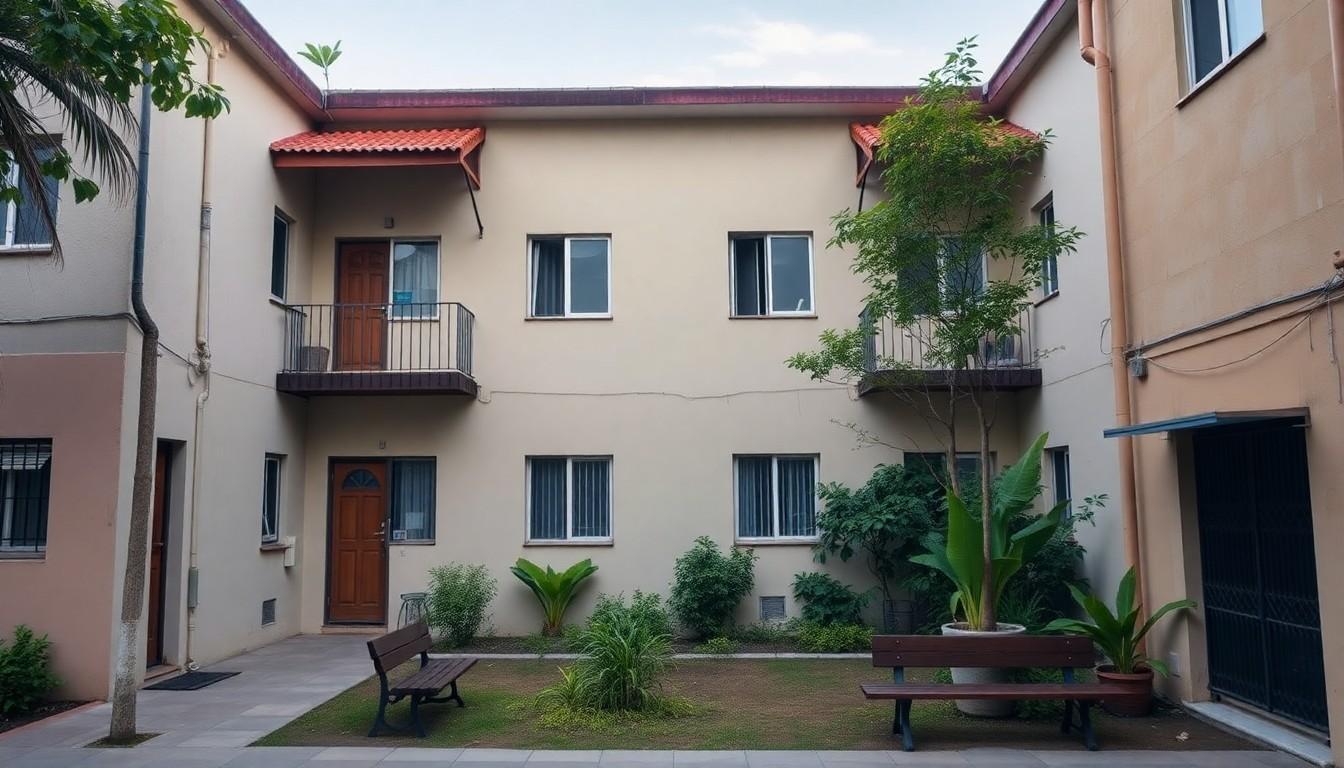
A community-led LGBT+ housing co-operative in Salto, Uruguay, is turning months of meetings and shared effort into a formal organisation. After signing an agreement with a technical assistance institute, the group is preparing to secure legal recognition, bringing affordable, dignified housing and stronger support networks a step closer.
Essential Takeaways
- A key agreement is signed: The co-operative has contracted a technical assistance institute to support its housing project.
- Legal recognition is next: Members expect to apply for legal status within roughly a month.
- The membership is inclusive: The initiative supports LGBT+ people, as well as mothers and female heads of household facing housing barriers.
- More than bricks and mortar: Members are building mutual support, belonging and practical co-operative skills.
- Collective action matters: Democratic participation, self-management and shared responsibility are central to the project.
A housing project with a bigger purpose
The most important milestone is now in place: Salto's LGBT+ housing co-operative has signed its agreement with a technical assistance institute. That may sound like paperwork, but for members it represents something much more tangible, a path towards secure housing and a community built on mutual support. Information from the co-operative sector highlights the role of technical guidance in helping housing groups develop viable projects. [2], [6]
The next target is legal recognition, which the group expects to pursue in about a month. Once formalised, the organisation will have a stronger foundation for its future work, from managing the project to dealing with institutions and advancing towards construction. It's an unglamorous stage, perhaps, but these are the nuts and bolts that turn a hopeful idea into a functioning co-operative. [3], [4]
Why legal status is such a significant step
For Alexa Pereira, the co-operative's president and founder, progress reflects months of meetings, learning and careful organisation. The project has been shaped not only by official procedures but also by the people willing to keep showing up, sharing responsibilities and working through the details together. That steady commitment is often what separates a lasting community project from a short-lived campaign. [2], [5]
Legal status should also make the group's structure clearer. Co-operatives depend on rules, accountability and participation, rather than on one person carrying the whole burden. Guidance from Uruguay's technical assistance organisations places emphasis on supporting groups through planning, administration and the practical demands of collective housing. [6], [7]
Who the Salto co-operative hopes to support
The initiative emerged from a straightforward but urgent need: many LGBT+ people face difficulties when trying to access stable, suitable housing. It also includes mothers and female heads of household who may struggle to secure a home of their own. The result is a project rooted in a particular community, but broad enough to recognise that housing insecurity can take several forms. [2], [5]
That wider outlook gives the co-operative an important social dimension. A home isn't only a roof, a front door and somewhere to put the kettle. It can mean safety, independence and the confidence that comes from having a reliable base, especially for people who have experienced exclusion or had to navigate housing challenges alone. [3], [4]
Learning how co-operation works
Members are also taking on the challenge of learning the principles behind co-operative housing. Democratic decision-making, self-management, mutual aid and shared responsibility all sound simple on paper, but they require patience in real life, particularly when a group is balancing different needs and expectations. Training and technical support can help turn those principles into everyday practice. [6], [7]
This is where the project becomes more than a property scheme. The group is developing the skills to make decisions together, organise finances and maintain a common purpose. There will inevitably be long meetings and difficult conversations, but the reward is a model that gives residents an active role in shaping the place they hope to call home. [3], [4]
A small local project with wider significance
The Salto initiative reflects a broader belief in Uruguay that collective organisation can open doors when individual routes to home ownership feel out of reach. Support from the co-operative movement and linked institutions has helped the group establish its foundations and keep moving forward. [6], [7]
Its progress will now depend on maintaining momentum after legal recognition, developing the housing proposal and continuing to build trust among members. For Pereira and her colleagues, the goal is not simply to construct homes, but to create opportunity, inclusion and a durable network of support. That makes the project quietly ambitious, and all the more meaningful for it. [2], [3]
A shared home starts with shared effort, and Salto's co-operative is already proving the point.
Source Reference Map
Story idea inspired by: [1]
Sources by paragraph: