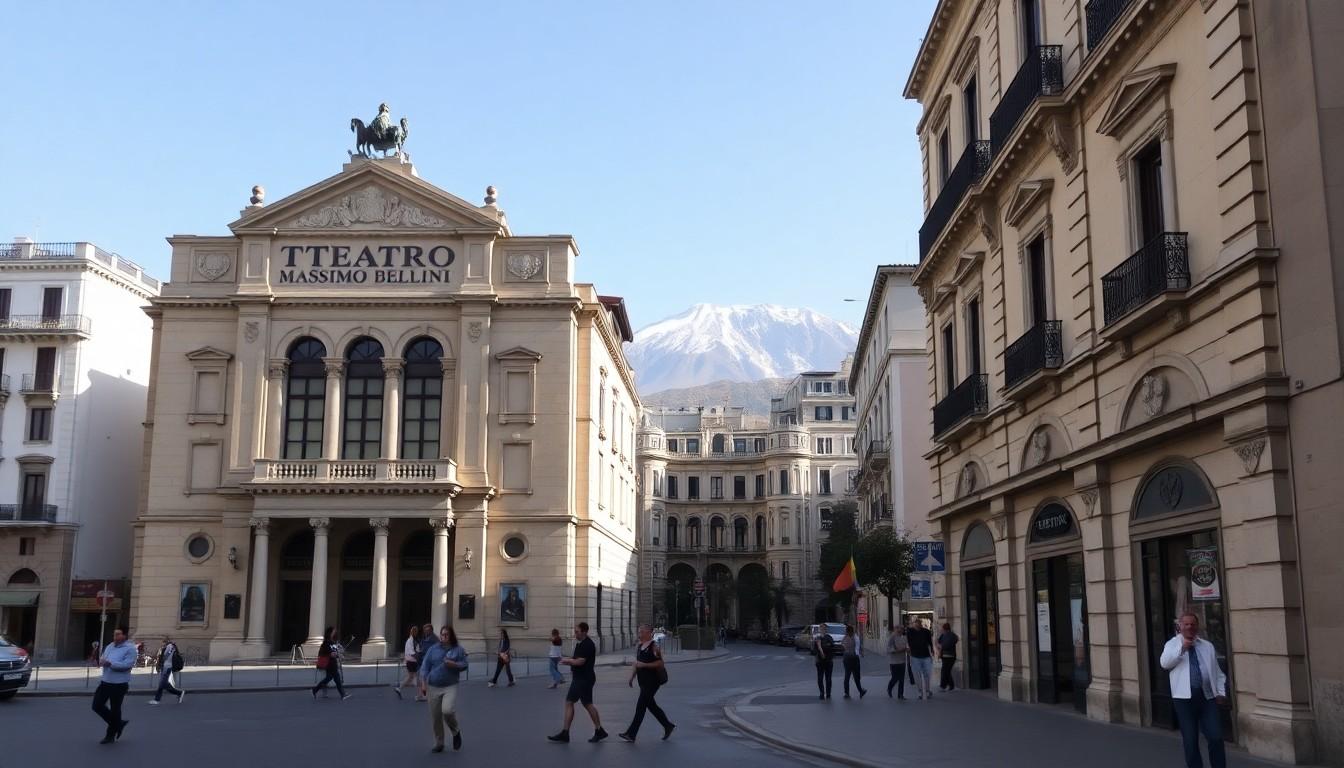
Travellers are looking beyond Sicily's headline cities and discovering Catania, where black lava stone, Baroque streets and Ionian Sea views create a thrilling weekend escape. Set beneath Mount Etna, the city combines dramatic scenery, lively markets, memorable food and a welcoming cultural scene, making it an easy base for exploring eastern Sicily.
Essential Takeaways
- Start in the historic centre: Piazza del Duomo, the cathedral and Elephant Fountain are essential first stops.
- Make time for Etna: Guided excursions offer the safest way to explore the active volcano.
- Eat like a local: Try granita with brioche, pasta alla Norma and market-fresh seafood.
- Travel in the shoulder seasons: April to June and September to October usually bring comfortable sightseeing weather.
- Slow down on the railway: The Circumetnea route offers a scenic journey through vineyards, orchards and lava fields.
Catania's volcanic character is impossible to miss
Catania announces itself with a distinctly dramatic palette. Dark lava stone frames grand churches and piazzas, while Mount Etna rises behind the city and the Ionian Sea opens out beyond it. It feels energetic rather than polished, which is precisely the charm.
The historic centre is the natural starting point. Piazza del Duomo brings together the cathedral, the celebrated lava-stone elephant known as u Liotru and some of the city's most recognisable architecture. Sicily's tourism authorities describe the square and Cathedral of Sant'Agata as a major cultural focal point, and it's easy to see why. [Source: Visit Sicily]
From there, wander towards Via Crociferi, a handsome Baroque street lined with historic churches and palazzi. The effect is especially lovely in the late afternoon, when the stone takes on a warm golden glow. [Source: Italy Tourism]
Visit the market before the city fully wakes up
Catania's fish market offers a more candid glimpse of daily life than any postcard view. Stalls bustle with seafood, fruit and vegetables, while nearby streets lead quickly into the old centre. Go early if you want the liveliest atmosphere and the freshest-looking produce.
Food is one of the city's strongest arguments for a visit. A traditional breakfast of granita and brioche is refreshing, sweet and surprisingly filling, while pasta alla Norma brings together tomato, aubergine and ricotta in a dish that feels both simple and deeply comforting. Local travel guides regularly highlight these flavours as essential parts of the Catanian experience. [Source: Treffpunkt Sizilien]
For a quick bite, look for arancini, fried seafood served in a paper cone or seasonal vegetables from market vendors. If you're sitting down for lunch, ask what's landed that day. Tuna and swordfish are especially associated with the waters around eastern Sicily, but the best choice is often the one the restaurant is proud to recommend.
Etna turns a city break into an adventure
Mount Etna isn't merely a backdrop. The volcano shapes Catania's landscape, agriculture and atmosphere, and a trip upwards reveals vineyards, orchards, rugged lava and sweeping views across the coast.
Visitors shouldn't treat the mountain like an ordinary hiking trail. Conditions can change quickly, and access rules vary, so a licensed guide is the sensible option for higher routes and crater excursions. RwandAir's destination information also presents Catania as a useful gateway for exploring the surrounding region, including Etna and eastern Sicily. [Source: RwandAir]
If you prefer a gentler adventure, consider the Ferrovia Circumetnea. This narrow-gauge railway circles much of the volcano, passing through cultivated countryside and villages at a pleasantly unhurried pace. It's a lovely alternative when you want scenery without spending the day on foot.
Catania rewards curious culture seekers
For an evening with a little ceremony, book a performance at Teatro Massimo Bellini, the neo-Baroque opera house named after Catania-born composer Vincenzo Bellini. Even visitors who aren't regular opera-goers may enjoy seeing the interior and experiencing the building's famous acoustics.
Catania also has a lively LGBTQ+ scene, even though it doesn't have a single defined gay district. Beach clubs, bars and seasonal events often create an inclusive nightlife calendar, while the city's annual Pride has a strong grassroots and activist character. That gives the destination a more community-minded feel than a purely party-led one.
Festival timing can add another layer to a trip. The Festa di Sant'Agata brings major processions in February, while summer programming typically fills historic venues with concerts and theatre. Check dates before booking, as popular periods can make accommodation and restaurant reservations harder to secure. [Source: Drumivdumi]
When should you plan a Catania break?
For comfortable sightseeing, spring and early autumn are hard to beat. April to June and September to October tend to offer a useful balance of warm days, manageable crowds and conditions that suit walking, eating outdoors and exploring Etna.
Summer brings longer evenings and a fuller events programme, but the heat can make city wandering feel strenuous, particularly around exposed piazzas. Winter is milder than in much of northern Europe and can work well for a quieter cultural trip. A seasonal travel guide also points to the shoulder months as a particularly appealing time to visit. [Source: Yondli]
Catania works best when you leave room for spontaneity. Follow the smell of frying seafood, pause beneath a church façade or take the next train beyond the city. The memorable moments are often the ones that weren't on the original plan.
It's a city where volcano, sea and supper are never far apart.
Source Reference Map
Story idea inspired by: [1]
Sources by paragraph: