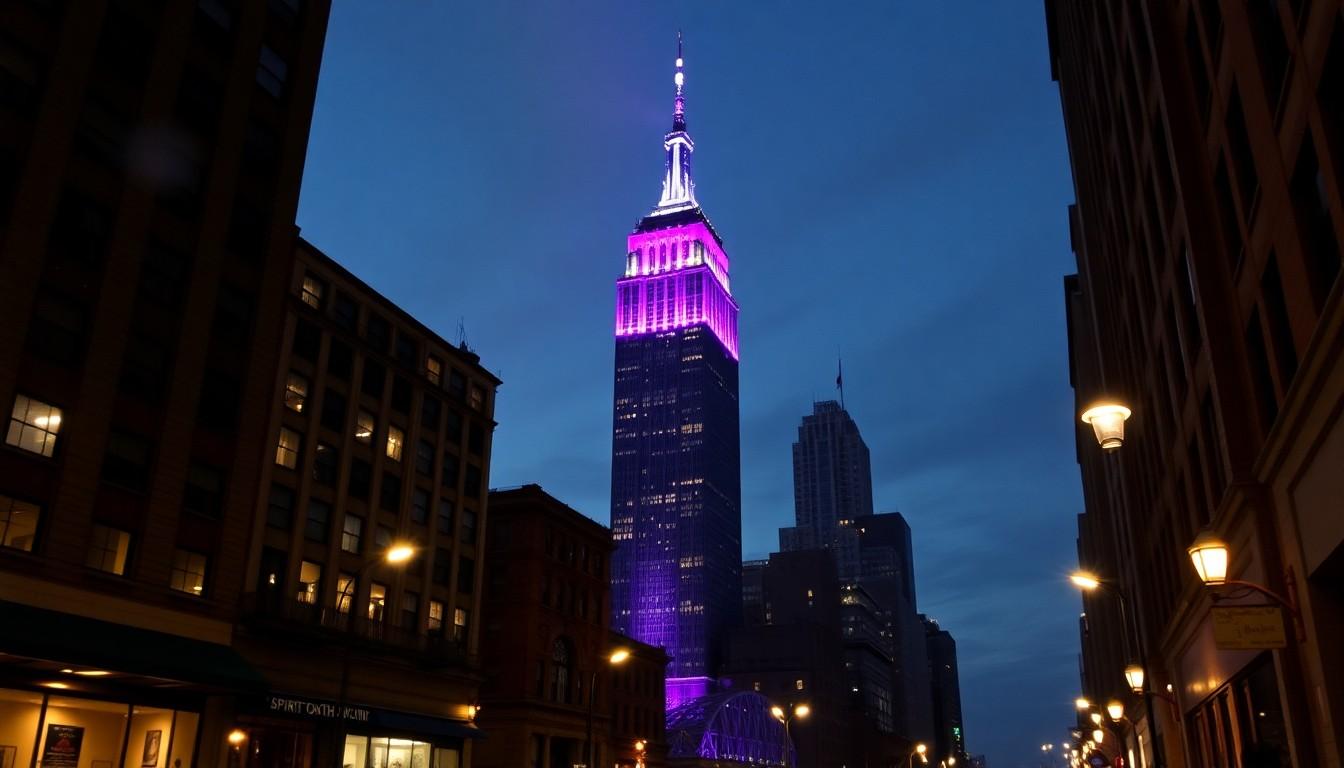
New Yorkers, visitors and landmarks across the city turned purple for Spirit Day, creating a striking public show of support for LGBTQ youth and a clear message against bullying. From Times Square to Niagara Falls, the annual campaign paired bold visuals with practical community action.
Essential Takeaways
- A city-wide statement: Major New York landmarks, public spaces and organisations displayed purple in support of LGBTQ young people.
- A national campaign: Spirit Day encourages people to stand against anti-LGBTQ bullying and show solidarity.
- Public voices mattered: New York politicians used the occasion to speak directly about protection, history and community support.
- Action beyond appearances: Volunteers also cleaned Washington Square Park and planted purple allium bulbs with local students.
New York's landmarks made solidarity impossible to miss
Purple appeared across some of New York's most recognisable places, from Times Square and the Vessel to Penn Station and the Empire State Plaza. Niagara Falls, the Roosevelt Island Lighthouse and the Kosciuszko Bridge joined in too, turning an anti-bullying campaign into a highly visible part of the city's evening landscape.
CBS New York reported that the annual event brought together landmarks, public figures and community organisations. There's something especially powerful about a message of inclusion appearing in places where millions of people pass every day: it reaches far beyond those already familiar with LGBTQ advocacy.
The New York Yankees also marked the occasion through their official social media channels. That mix of civic spaces, sport and entertainment helped Spirit Day feel less like a niche observance and more like a shared public commitment.
Spirit Day puts LGBTQ youth at the centre
The campaign's focus is straightforward but urgent: LGBTQ young people should be able to go to school, travel through their city and take part in everyday life without facing bullying or harassment. Wearing purple offers a simple visual way for individuals and organisations to make that support visible.
According to CBS New York, Spirit Day has grown into a broad anti-bullying effort involving schools, broadcasters, brands and public institutions. The colour itself becomes a kind of shorthand, allowing supporters to stand together even when they aren't gathered in the same place.
That visibility matters. A purple building won't solve bullying on its own, of course, but it can reassure a young person that they're seen. Sometimes a small signal in a very large city lands more deeply than adults realise.
Local leaders gave the message some political weight
New York City Council Member Chi Osse took a direct approach, warning that bullying doesn't make the aggressor look powerful or impressive. His blunt delivery cut through the polished language that often surrounds public campaigns.
Manhattan Borough President Brad Hoylman-Sigal connected the event with the city's LGBTQ history, including the legacy of Stonewall. He also stressed that supporting LGBTQ rights shouldn't be limited to a single date, even if Spirit Day creates a useful moment for public action.
Speaker Julie Menin highlighted city funding for organisations working with LGBTQ youth. As ABC7 New York reported, that backing matters because community groups provide the day-to-day support that a one-off display cannot: services, advice, safe spaces and practical help.
The strongest support went beyond the purple lights
GLAAD staff also joined the Washington Square Park Conservancy for a clean-up, trading cameras and speeches for gloves, rakes and rubbish bags. Later, the group worked with students at the Little Red Schoolhouse to plant allium bulbs in Little Red Square.
The planting carried a neat symbolic touch. The flowers are expected to bloom purple in spring, creating a living reminder of the day's message. It turns a single campaign moment into something that will quietly reappear months later.
LGBTQ Nation noted that Spirit Day has involved an expanding mix of celebrities, broadcasters, companies and landmarks. New York's contribution showed why the campaign works best when visibility is paired with useful local action. The lights catch attention, while the work in parks and schools helps build trust.
Why public visibility still matters
Critics might reasonably ask whether changing a building's lighting can make a meaningful difference. On its own, probably not. But public signs help shape the atmosphere around young people, especially when they're reinforced by school policies, accessible services and adults willing to challenge harassment.
The New York City campaign brought those elements together: highly visible landmarks, political statements, youth-focused organisations and volunteering. It was colourful, certainly, but it wasn't empty decoration.
As the New York City LGBT Historic Sites Project documents, the city has a long and complicated LGBTQ history. Spirit Day offered a modern expression of that tradition, reminding residents that support is strongest when it's both visible and sustained.
A purple skyline can start the conversation, but everyday courage is what keeps it going.
Source Reference Map
Story idea inspired by: [1]
Sources by paragraph:
- Paragraph 1: [2], [4]
- Paragraph 2: [3], [6]
- Paragraph 3: [4], [5]
- Paragraph 4: [2], [3]
- Paragraph 5: [5], [6]
- Paragraph 6: [3], [4]
- Paragraph 7: [5], [7]
- Paragraph 8: [2], [4]
- Paragraph 9: [3], [6]
- Paragraph 10: [4], [5]
- Paragraph 11: [2], [7]
- Paragraph 12: [3], [5]
- Paragraph 13: [4], [6]
- Paragraph 14: [2], [7]
- Paragraph 15: [3], [5]
- Paragraph 16: [4], [7]