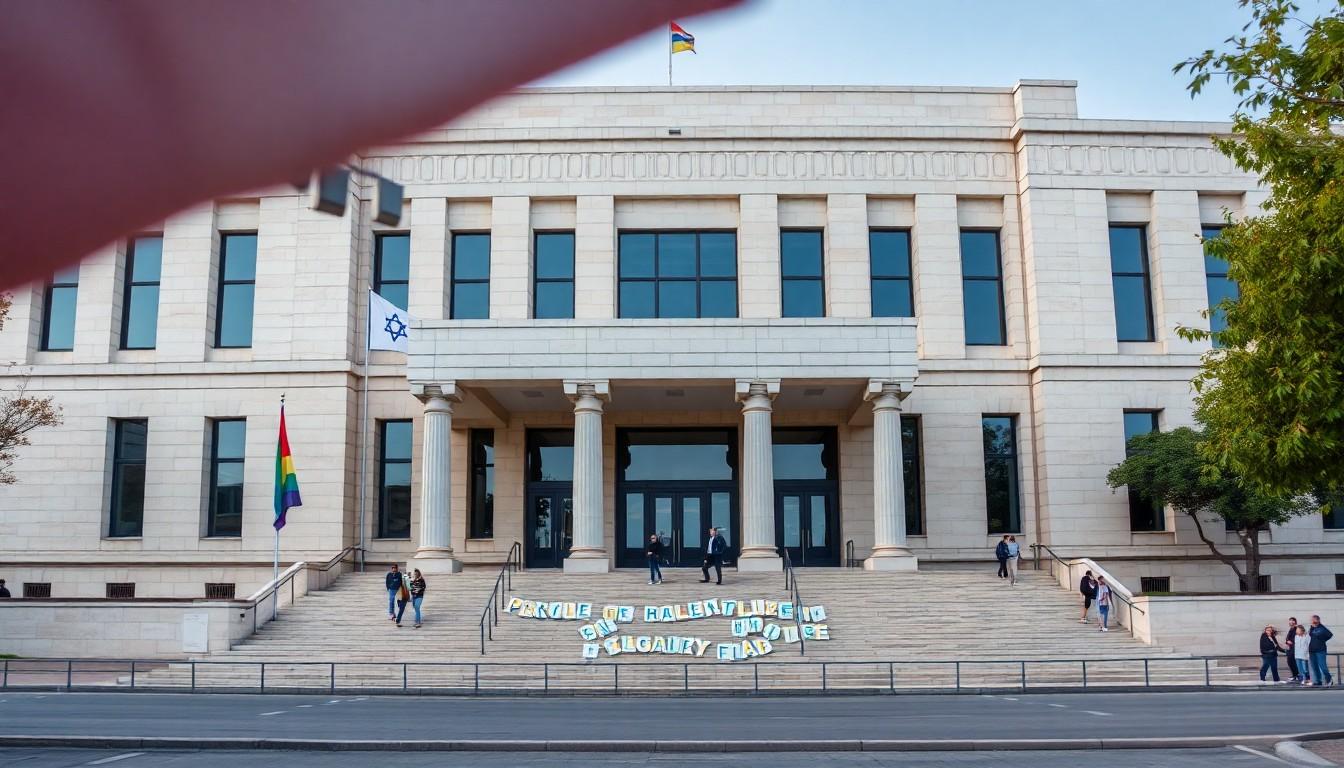
Yair Golan’s Democrats party has promised to enshrine LGBTQ+ equality, marriage and family rights in Israeli law, while proposing a national anti-phobia programme and a dedicated public body. The platform arrives amid reported violence and sharper political divisions, giving voters a clearer view of how competing parties might approach LGBTQ+ rights after the election.
Essential Takeaways
- Legal equality: The Democrats want full LGBTQ+ equality written into law.
- Family rights: The proposal includes equal treatment in marriage, parenthood and family formation.
- Education focus: The party says tolerance and equality should return to the education system.
- Dedicated funding: A proposed national programme would receive 100 million shekels annually.
- Political divide: Other parties have made similar commitments, while Likud's position remains less clearly defined.
A rights pledge with election timing in mind
The strongest promise is also the most straightforward: Yair Golan's Democrats want LGBTQ+ equality protected through legislation rather than left to shifting policy or administrative decisions. The pledge comes as political debate over civil rights grows more heated, with reports of hostility and violence affecting the community. The Times of Israel reported that the announcement formed part of the party's election platform. [2]
That gives the proposal a distinctly practical edge. Instead of focusing only on public statements, the Democrats are presenting a package covering law, education, family life and enforcement. It is a reminder that equality campaigns often turn on quiet legal details, even when the public argument is anything but quiet.
What the Democrats say they would change
The party's programme includes equal rights in marriage, parenthood and family creation, alongside support for civil marriage. Israel currently doesn't offer a general civil-marriage system, so this part of the proposal reaches beyond LGBTQ+ policy and into a broader question about who controls family law. The Jerusalem Post has covered the parties' competing positions on these election issues. [3]
The Democrats also want tolerance and equality principles restored in schools. That matters because education policy can shape attitudes long before a person encounters the courts, workplace rules or public services. A classroom may not look like the front line of a political dispute, but it can be where social change either quietly takes root or quietly stalls.
A proposed anti-phobia body would carry the workload
Golan's party has proposed a nationwide programme to combat anti-LGBTQ+ prejudice, supported by a dedicated body responsible for advancing community rights. The plan would reportedly allocate 100 million shekels every year, a sizeable commitment that suggests the party wants the proposal to be measured in institutions and budgets, not just slogans. Party profiles and election coverage have outlined the Democrats' broader platform. [5], [6]
The difficult question is implementation. A new body would need clear powers, transparent reporting and a way to show whether funding reaches schools, local authorities, support services and victims of discrimination. Without that detail, even a generous-looking budget risks becoming a headline figure rather than a working protection.
Three parties now offer similar LGBTQ+ commitments
The Democrats aren't alone in presenting a defined position. The Be-Yachad party, associated with former prime minister Naftali Bennett, and the Yashar party led by Gadi Eisenkot have also backed legal equality and recognition for same-sex couples, according to election reporting. [4], [7]
That creates a more visible policy choice for voters who treat LGBTQ+ rights as a priority. The differences may eventually come down to coalition arithmetic, legislative wording and whether promises survive negotiations after polling day. In other words, a supportive manifesto is important, but the route from campaign document to law can be long and decidedly bumpy.
Likud’s position remains less explicit
By contrast, Likud has not set out an equally clear LGBTQ+ rights policy, despite the presence of Knesset Speaker Amir Ohana, who is openly gay, high on the party's electoral list. The contrast highlights an unusual feature of Israeli politics: individual representation and a party's formal platform don't always move at the same pace. [2], [3]
The government also relies on ultra-Orthodox and far-right parties that oppose expanding LGBTQ+ rights, making coalition politics central to the debate. For supporters, the question is therefore not only which party makes the warmest promise, but which alliance could realistically pass and defend it. That is where election rhetoric meets parliamentary reality.
The coming campaign is likely to keep equality, civil marriage and family recognition in view. For LGBTQ+ voters and their families, those aren't abstract policy headings. They're the legal foundations of everyday life, from forming a family to feeling safe at school, work or home.
The next test will be whether these pledges become enforceable rights.
Source Reference Map
Story idea inspired by: [1]
Sources by paragraph: