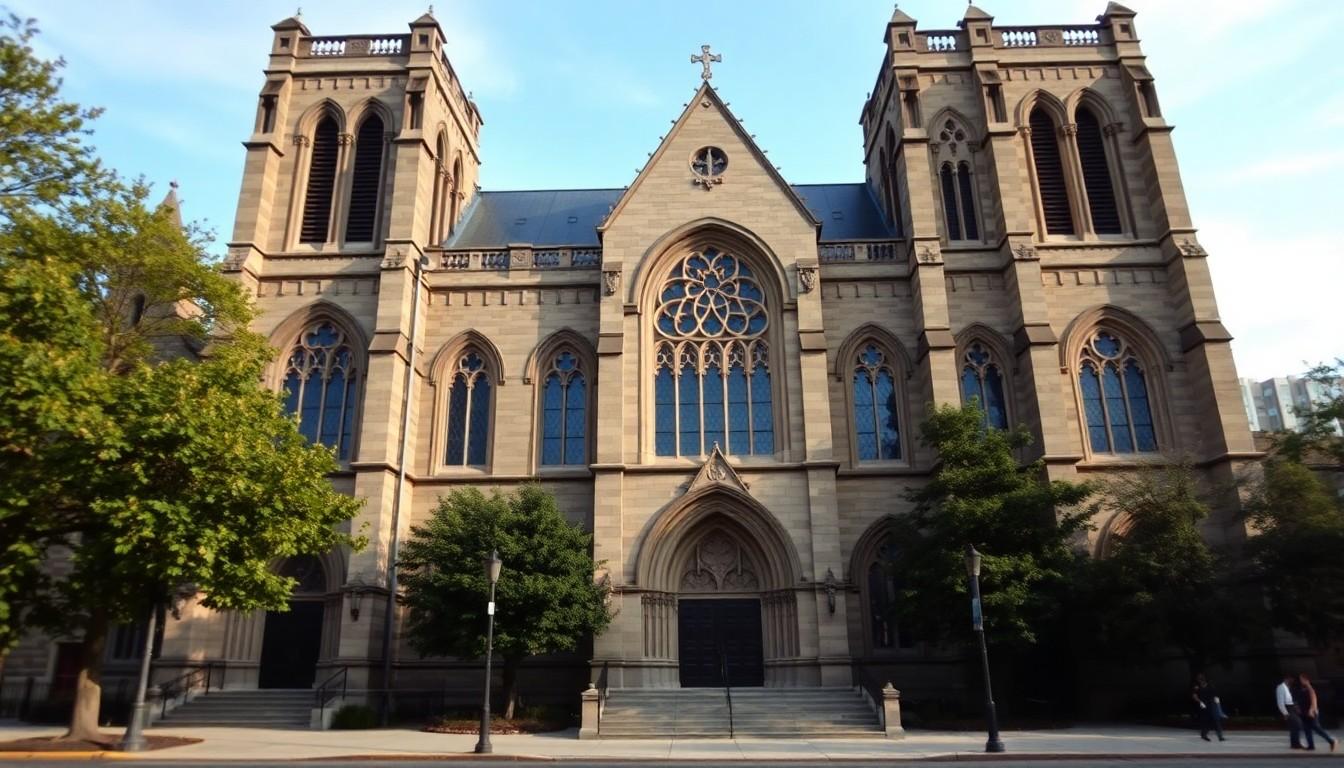
A 40-year-old Vatican document remains central to Catholic teaching on same-sex relationships, while parish-level debates show why many LGBTQI+ Catholics still feel caught between faith, identity and belonging.
Essential Takeaways
- The document: Homosexualitatis problema was issued by the Vatican in 1986 and continues to influence Catholic teaching.
- The parish question: Syracuse has seen renewed attention around Courage, a Catholic ministry promoting celibacy for people experiencing same-sex attraction.
- The wider divide: Many Catholic people support greater acceptance of LGBTQI+ people, despite official doctrine.
- Why it matters: The debate reaches beyond theology, affecting family life, employment, marriage and a sense of spiritual home.
A 40-year-old letter still casts a long shadow
The most striking thing about the Vatican's 1986 letter is how current its consequences still feel. On paper, it belongs to another era of church language and culture. In practice, its ideas continue to shape parish life, Catholic institutions and the choices available to LGBTQI+ people who want to remain connected to their faith.
The letter, signed by then-Cardinal Joseph Ratzinger, described same-sex sexual activity as morally wrong and framed same-sex orientation in deeply negative terms. The Human Rights Campaign's overview of Roman Catholic teaching notes that these positions remain embedded in the Catechism, even as many Catholics have moved towards a more accepting view.
That mismatch is the heart of the problem. A church can offer warmth at parish level while retaining doctrine that many queer Catholics experience as a rejection of their basic dignity.
Why Courage has become a flashpoint
The latest controversy centres on Courage, a Catholic apostolate for people who experience same-sex attraction, as well as relatives and supporters. Its approach encourages chastity and celibacy, presenting them as the appropriate path within official Catholic teaching. The organisation says it offers friendship, prayer and spiritual support, but critics argue that the framework leaves no equivalent institutional space for LGBTQI+ people in loving relationships.
That tension has surfaced in Syracuse, where a parish initiative linked to Courage prompted criticism from inclusive Catholic advocates. New Ways Ministry reported that opponents questioned whether reviving such a chapter would support queer Catholics or reinforce a message that their relationships are inherently unacceptable.
Courage's own materials describe its work around spiritual accompaniment and celibate living. For some participants, that may feel meaningful and voluntary. For others, the concern is that a single approved route is being offered to an entire community with very different lives, relationships and convictions.
Catholics and the Vatican are often out of step
The public argument can sound like a clash between progressives and traditionalists, but the picture among ordinary Catholics is more complicated. Pew Research has found that American Catholics have often been more supportive of same-sex relationships than the Vatican's official position, particularly younger Catholics and those who attend church less frequently.
That gap matters because religious teaching doesn't stay inside church walls. It can influence family conversations, school policies, employment decisions and political campaigns. The Human Rights Campaign's summary of Catholic positions also highlights the institution's opposition to same-sex marriage, even as many Catholic individuals support legal recognition.
In other words, the debate isn't simply about what happens during Mass. It affects whether someone feels safe introducing a partner, applying for a job at a Catholic organisation or bringing a child into a parish community. Those are ordinary life questions, which is why the stakes feel so personal.
What the official language means in daily life
Terms such as "intrinsically disordered" and the restriction of sexual intimacy to heterosexual marriage can sound abstract when read in a catechism. For a queer Catholic, though, they can land with the bluntness of a closed door. They may shape whether a person feels welcome at the altar, recognised by a priest or trusted with a role in church life.
The Catholic Repository's summary of the relevant catechism passages shows how the distinction works: people should be treated with respect, but same-sex sexual relationships remain judged as morally unacceptable. Supporters of this position say it preserves a consistent understanding of marriage. Critics respond that the distinction still marks LGBTQI+ people as less able to live fully within the church.
The practical advice for Catholics navigating this landscape is to ask specific questions rather than rely on a parish's branding. Find out how it treats same-sex couples, whether LGBTQI+ people can serve openly in ministries, and whether pastoral support is available without pressure to become celibate. A rainbow banner can be encouraging, but policies and behaviour tell the fuller story.
Inclusive Catholic spaces are filling the gap
Where official teaching remains restrictive, independent networks and welcoming parishes have often provided the softer landing. Groups connected with New Ways Ministry and other inclusive Catholic communities help LGBTQI+ people, parents and allies interpret faith without treating queerness as a problem to be solved.
That work resembles a patchwork rather than a single national policy. One parish may offer a genuinely hospitable community, while another nearby may promote a ministry that feels deeply alienating. The result can be exhausting: belonging depends heavily on postcode, priest and local culture.
Still, those communities show that Catholic identity and LGBTQI+ affirmation aren't mutually exclusive for many believers. The continuing question is whether the institution will catch up with the people already trying to live those commitments together.
The next test is whether doctrine can change
The anniversary of the 1986 letter offers an obvious moment for reflection, but symbolic regret wouldn't be enough for people who have experienced exclusion in concrete ways. A meaningful shift would involve clearer protections for LGBTQI+ employees, more consistent pastoral care and a serious reconsideration of language that treats same-sex love as defective.
The challenge is substantial. Catholic teaching develops slowly, and the hierarchy remains committed to its traditional account of marriage and sexuality. Yet the gap between official doctrine and lived Catholic opinion is already wide, and every new local dispute makes that gap easier to see.
For queer Catholics, the question is not whether faith can survive modernity. Many are already proving that it can. The harder question is whether the church will make room for the whole person, rather than welcoming only the parts that fit its rules.
It's a small sentence in a church document, but its consequences can reach across an entire life.
Source Reference Map
Story idea inspired by: [1]
Sources by paragraph: