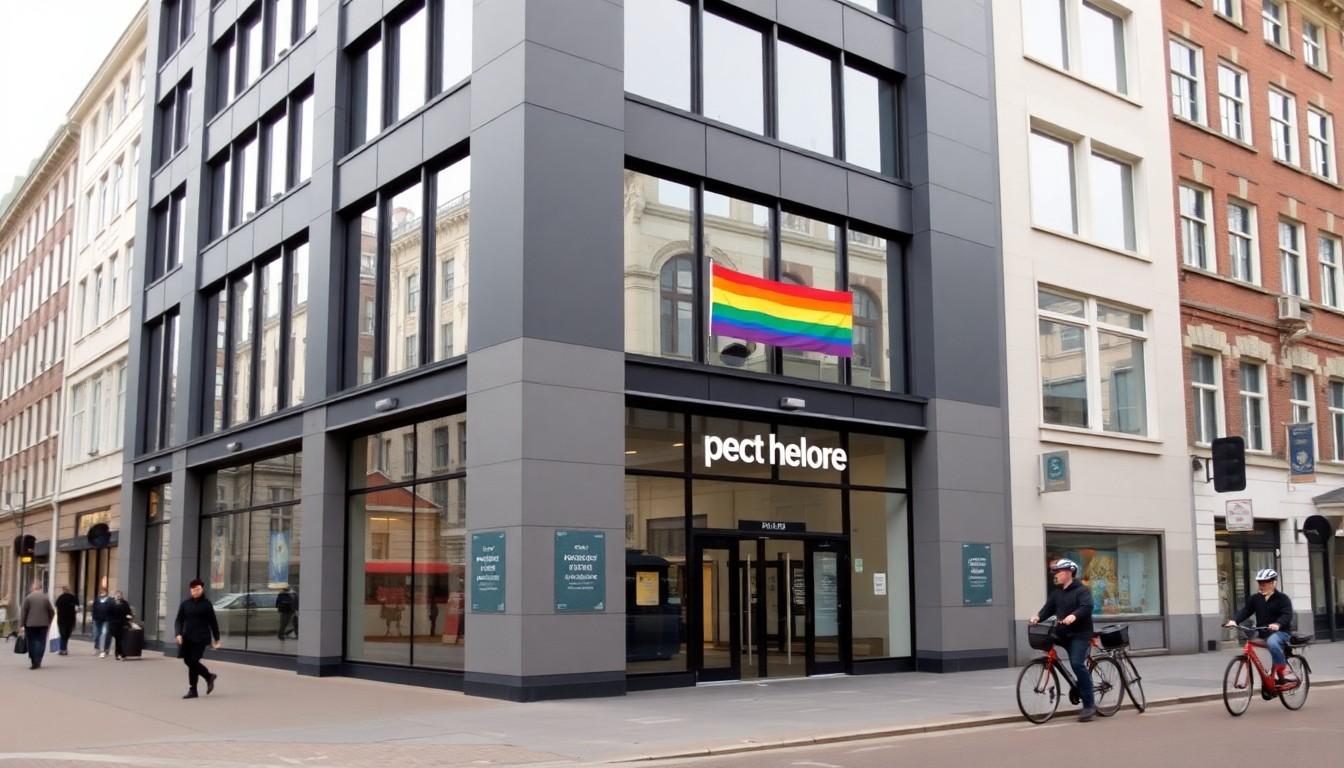
Amsterdam’s queer police network is warning that LGBTQIA+ residents no longer feel as secure as they once did. Roze in Blauw says rising polarisation, online abuse and continued reports of intimidation are making trust, reporting and community outreach more important than ever.
Essential Takeaways
- Safety concerns are growing: Roze in Blauw says queer residents are still reporting intimidation, abuse and violence.
- Online hostility matters: Anonymous social media abuse can help make hateful behaviour feel normal offline.
- Reporting remains important: Police say reports help establish patterns, even when an immediate prosecution seems unlikely.
- Support is available: People who feel uncomfortable reporting to an officer can ask for help from Roze in Blauw.
- Prevention takes patience: The network uses community meetings and Pride events to build trust before incidents occur.
Amsterdam’s reputation for tolerance is under pressure
The sharpest message from Amsterdam’s queer police network is also the most unsettling: the city’s famous reputation for tolerance can no longer be taken for granted. According to Het Parool, Michel Peters of Roze in Blauw says social hardening and polarisation are being felt in everyday life, not just in political debate.
For queer residents, that can turn an ordinary journey, a night out or a public display of affection into a calculation about risk. The police’s own reporting shows that hostility can take many forms, from damage to rainbow flags to violence against transgender people, according to police statements.
That doesn't mean every street has become dangerous. It does mean the old assumption that Amsterdam will automatically feel welcoming is looking rather worn around the edges.
Why online hate can spill into real life
Peters points to social media as one part of the problem. Behind a screen, people can post abuse quickly, cheaply and with a sense of distance. Over time, that language can make hostility seem less shocking, which is precisely when it becomes harder to challenge.
Police work has also become more visible in moments of public solidarity. The national force has stressed the importance of being present at Pride, while Roze in Blauw's wider role has developed around contact with LGBTQIA+ communities, according to police and government material.
That visibility matters, but it isn't a magic wand. A rainbow badge or Pride patrol can't replace properly handled reports, consistent follow-up and officers who understand why a victim may arrive already wary of authority.
Reporting abuse can help build the bigger picture
Peters' advice is straightforward: report incidents, even when the outcome feels uncertain. A report creates information about where abuse is happening, what form it takes and whether a pattern is emerging.
Not every offensive remark reaches the legal threshold for a criminal investigation. But threats, serious insults, assault and other offences can bring police involvement, while community reporting services may capture incidents that never become formal police cases.
Privacy and consent remain important when information is shared between organisations. That can feel frustrating, but it protects victims from losing control of their own story. The practical lesson is simple: ask what will happen to your information before agreeing to pass it on.
Roze in Blauw is trying to make itself less necessary
The network's long-term ambition is slightly counterintuitive. It wants every officer to be able to handle an LGBTQIA+ report properly, so that a specialist network is no longer needed as a safety net.
For now, Roze in Blauw continues to connect with the community through events, outreach and conversations with queer refugees. Government and police accounts describe that relationship-building as an ongoing effort, particularly for people whose previous experiences with authorities may have been frightening or hostile.
Those conversations may not produce neat statistics. They can still make a real difference. Sometimes the first useful outcome is simply that someone leaves thinking, "I know where I can go."
What witnesses and victims can do next
Anyone facing intimidation or violence should prioritise immediate safety. Move towards other people, contact emergency services where necessary and avoid escalating a situation if doing so could put you at greater risk.
If you later decide to report, write down what happened while details are fresh, including the time, location, words used, witnesses and any available messages or images. If speaking to a particular officer feels uncomfortable, ask whether a Roze in Blauw colleague can support the report.
For bystanders, there isn't one perfect response. Checking in afterwards, offering to stay with someone, recording useful details from a safe distance or helping them find support can all matter. The kindest intervention isn't always the loudest one.
The bigger test now is whether Amsterdam can turn its tolerant image back into a lived experience. That will take more than slogans, but honest reporting and patient community work are a credible place to start.
It's a small step, but being heard can be the beginning of feeling safe again.
Source Reference Map
Story idea inspired by: [1]
Sources by paragraph:
- Paragraph 1: [2], [6]
- Paragraph 2: [3], [4]
- Paragraph 3: [5], [7]
- Paragraph 4: [3], [4]
- Paragraph 5: [2], [6]
- Paragraph 6: [4], [7]
- Paragraph 7: [5], [7]
- Paragraph 8: [3], [4]
- Paragraph 9: [2], [6]
- Paragraph 10: [3], [7]
- Paragraph 11: [4], [5]
- Paragraph 12: [2], [6]
- Paragraph 13: [3], [7]
- Paragraph 14: [4], [5]