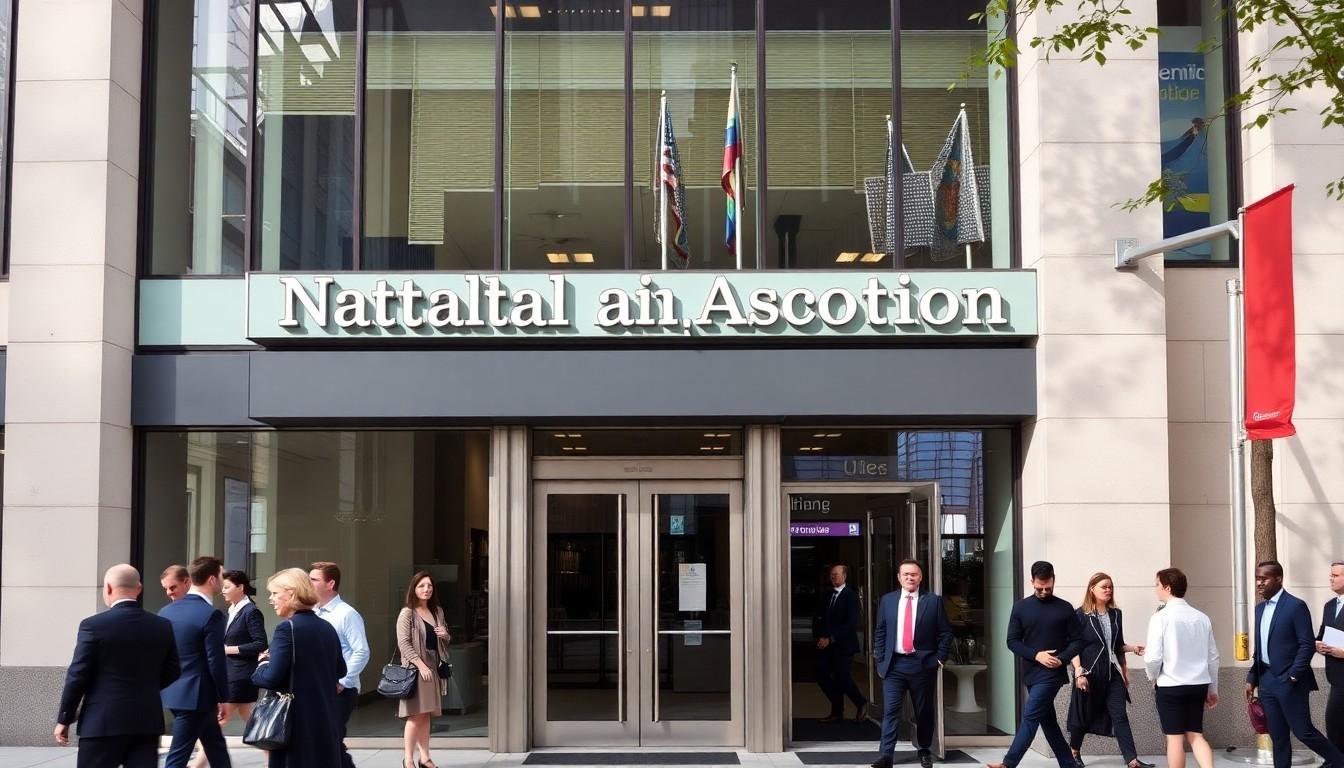
Anya Lynn-Alesker is guiding the National LGBTQ+ Bar Association and Foundation through an increasingly difficult political climate, while widening the path into law for LGBTQ+ and ally students. Their leadership offers a clear message: lasting progress depends on solidarity, protection and the freedom to imagine a fuller future.
Essential Takeaways
- A visible leader: Lynn-Alesker identifies as queer, nonbinary, disabled, a Russian Jew and a first-generation American.
- A demanding moment: They lead the National LGBTQ+ Bar Association during escalating pressure on trans, nonbinary and immigrant communities.
- A practical mission: The organisation supports LGBTQ+ and ally students and legal professionals across the profession.
- A unifying message: Lynn-Alesker argues that communities move forward by protecting one another, rather than dividing along privilege lines.
- A future-focused goal: They want every LGBTQ+ legal professional to see room for their career to grow.
A legal leader in a tense climate
The most striking part of Anya Lynn-Alesker's story isn't simply the number of identities they carry. It's the way those experiences inform a leadership style rooted in protection, access and collective action.
As executive director of the National LGBTQ+ Bar Association and Foundation, Lynn-Alesker works at the intersection of law, education and community advocacy. The organisation represents out and allied legal professionals, while also helping students see the profession as somewhere they can genuinely belong.
That work has become more urgent as attacks affecting trans, nonbinary and immigrant people intensify. The National LGBTQ+ Bar Association has described its mission in similarly broad terms, connecting professional development with the wider fight for LGBTQ+ equality.
Why representation in law matters
For students considering law, representation can be surprisingly powerful. Seeing someone who shares part of your experience in a senior role can turn an abstract ambition into something that feels possible, rather than distant or quietly off-limits.
Lynn-Alesker's professional journey carries particular weight because it reflects several communities that have often had to argue for visibility within institutions. Their leadership makes the point without needing much decoration: legal spaces are stronger when more people are allowed to shape them.
The association's work also matters beyond courtrooms and law firms. Its networks, programmes and public advocacy help create a route from education into employment, which is especially important for people who may lack inherited professional connections.
Solidarity is the strategy, not a slogan
Lynn-Alesker says the answer to escalating hostility isn't fragmentation. Instead, they emphasise showing up, protecting one another and building places where communities can thrive together.
That approach feels particularly relevant in a moment when public debate often encourages people to rank whose rights matter most. Their argument is more practical than that: movements are more resilient when people recognise overlapping pressures and refuse to leave the most vulnerable behind.
The National LGBTQ+ Bar Association's leadership and advocacy work reflect this wider view of professional community. Its members aren't only sharing career advice. They're helping one another navigate institutions that can still feel intimidating, exclusionary or openly hostile.
The future needs more than survival
Lynn-Alesker's message extends beyond resistance. They want LGBTQ+ people to thrive in their work, relationships and communities, and they place particular emphasis on young people having the freedom to imagine their own futures.
That distinction matters. Survival language is necessary when rights and safety are under pressure, but it can also shrink the horizon. A student deserves more than reassurance that they might endure the profession. They deserve to picture leadership, influence and a long career within it.
For anyone exploring LGBTQ+ legal careers, the practical lesson is to look for communities that offer both professional support and genuine belonging. Mentorship, peer networks and organisations with a clear inclusion mission can make the difference between simply entering a field and finding room to grow.
A broader invitation into the profession
Lynn-Alesker's stated goal is ambitious but straightforward: every LGBTQ+ and ally student should be able to see a future in law, while every LGBTQ+ legal professional should be able to see space for their career to develop.
That vision turns representation into something measurable. It's not only about who appears in leadership photographs. It's also about who receives guidance, who gets promoted, who feels safe speaking up and who can stay in the profession long enough to make a lasting contribution.
In a difficult period, that may be the most useful form of optimism. Not a claim that the obstacles have disappeared, but a commitment to building the networks and institutions that make progress harder to reverse.
The strongest legal communities don't just open the door; they make sure people can stay, belong and thrive.
Source Reference Map
Story idea inspired by: [1]
Sources by paragraph:
- Paragraph 1: [3], [4]
- Paragraph 2: [4], [6]
- Paragraph 3: [3], [7]
- Paragraph 4: [4], [5]
- Paragraph 5: [3], [6]
- Paragraph 6: [4], [7]
- Paragraph 7: [3], [5]
- Paragraph 8: [4], [6]
- Paragraph 9: [3], [7]
- Paragraph 10: [4], [5]
- Paragraph 11: [3], [6]
- Paragraph 12: [4], [7]
- Paragraph 13: [3], [5]
- Paragraph 14: [4], [6]
- Paragraph 15: [3], [7]
- Paragraph 16: [4], [5]
- Paragraph 17: [3], [6]
- Paragraph 18: [4], [7]
- Paragraph 19: [3], [5]
- Paragraph 20: [4], [6]