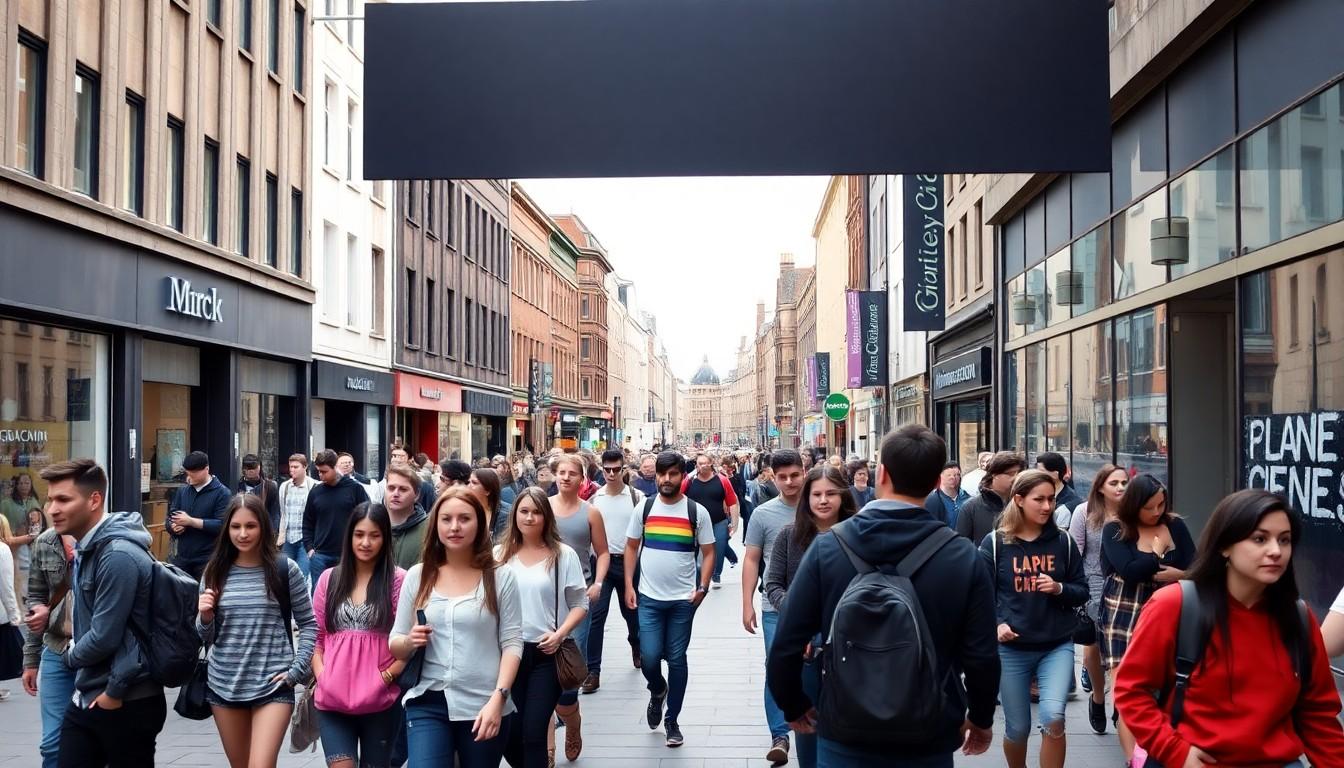
Trans teenagers in Glasgow say abuse on streets and public transport has left them constantly alert, with a youth-led campaign group linking that fear to a harsher national debate around trans rights and public services.
Essential Takeaways
- Young people’s accounts: Members of Trans Weans Wont Wheesht describe verbal abuse, spitting, assault and stones being thrown.
- A tense city-centre experience: Some teenagers say they scan their surroundings and avoid feeling relaxed in public.
- National context: The group believes official guidance and political debate have intensified hostility towards trans people.
- Youth-led response: Trans Kids Deserve Better and related groups are campaigning for equality and safer lives.
- Practical concern: Supporters say schools, transport providers and public services need clear anti-harassment measures.
Glasgow’s city centre no longer feels easy to navigate
For some trans teenagers, a trip through Glasgow city centre isn't simply a matter of catching a bus or meeting friends. It can mean choosing quieter routes, watching nearby faces and preparing for the possibility of a cruel comment turning into something more serious.
Members of Trans Weans Wont Wheesht, who asked not to use their real names, told Glasgow Live they had faced insults, spitting and physical attacks. One teenager said stones had been thrown at them, while another described feeling permanently on guard in public.
That detail matters because harassment can reshape ordinary routines. A street that should feel familiar starts to feel unpredictable, and even a short journey can carry an exhausting mental cost. Trans Kids Deserve Better says young trans people deserve safety, dignity and the freedom to grow up without being treated as a problem.
“You're definitely watching your back”
The teenagers' experiences vary, but the emotional pattern is strikingly similar. Stares, sneers and shouted abuse may not always become physical violence, yet the possibility hangs over everyday life.
One trans woman from the Glasgow group said she was constantly watching her back and rarely felt fully at ease in the city centre. Another teenager said harassment had been part of their experience on public transport and on the street since early adolescence.
Campaigners often point out that this kind of hostility isn't limited to one dramatic incident. Repeated low-level intimidation can be just as effective at pushing people out of public spaces. As the Museum of Transology's material on Trans Kids Deserve Better reflects, visibility and community are central to challenging the isolation many young trans people experience.
Why the wider debate feels so personal
The local accounts come during a period of intense argument about sex, gender and access to single-sex services. Guidance from the Equality and Human Rights Commission following the Supreme Court's ruling on the meaning of sex in equality law has added to uncertainty for many organisations and the people who use them.
The EHRC says its guidance is intended to help service providers comply with the Equality Act and reduce discrimination and legal risk. However, members of Trans Weans Wont Wheesht argue that the public discussion surrounding the changes has made trans people more fearful and exposed to harassment.
That tension has also been reported nationally. Dazed covered Trans Kids Deserve Better's opposition to the direction of travel, while PinkNews reported on political criticism and the group's campaign activity. For teenagers living through it, a legal and policy dispute can feel much less abstract when it changes how safe they feel using a toilet, boarding a bus or walking home.
A youth movement finding its voice
Trans Weans Wont Wheesht is connected to the wider Trans Kids Deserve Better network, a youth-focused campaign that has used direct action, public statements and community organising to demand better treatment for trans children and teenagers.
The group's name is deliberately spirited, but its message is serious. Its members are asking adults to listen to the practical realities behind arguments that are often conducted through headlines and courtroom language.
Trans Kids Deserve Better's own account of its work presents the movement as a response to political pressure and growing public hostility. Coverage by Them has also highlighted how young activists have built a visible, supportive network around one another. That solidarity can be powerful, although it shouldn't have to substitute for safety from transport operators, retailers, schools or the police.
What could make public spaces safer?
For anyone supporting a trans teenager, the most useful starting point is simple: believe them, ask what would make a journey feel safer and avoid treating harassment as an unavoidable part of growing up. Practical steps might include planning a trusted contact, identifying staffed places along a route and reporting incidents where it feels safe to do so.
Organisations have responsibilities too. Staff training, clear reporting systems, visible anti-harassment policies and swift responses can help prevent abuse from becoming normalised. Public information should also be careful not to turn trans people into a culture-war talking point, especially when young people are already dealing with fear.
The Glasgow teenagers' accounts offer a sobering measure of the debate's real-world impact. Behind every argument about guidance or policy is someone deciding whether they feel comfortable being seen in public. That shouldn't be the price of being themselves.
Small changes in safety, support and understanding could make Glasgow feel like a city for everyone again.
Source Reference Map
Story idea inspired by: [1]
Sources by paragraph:
- Paragraph 1: [2], [3]
- Paragraph 2: [2], [4]
- Paragraph 3: [2], [3]
- Paragraph 4: [2], [4]
- Paragraph 5: [2], [5]
- Paragraph 6: [2], [6]
- Paragraph 7: [3], [5]
- Paragraph 8: [3], [6]
- Paragraph 9: [3], [7]
- Paragraph 10: [2], [3]
- Paragraph 11: [3], [4]
- Paragraph 12: [2], [7]
- Paragraph 13: [3], [6]
- Paragraph 14: [2], [3]
- Paragraph 15: [2], [5]
- Paragraph 16: [3], [4]