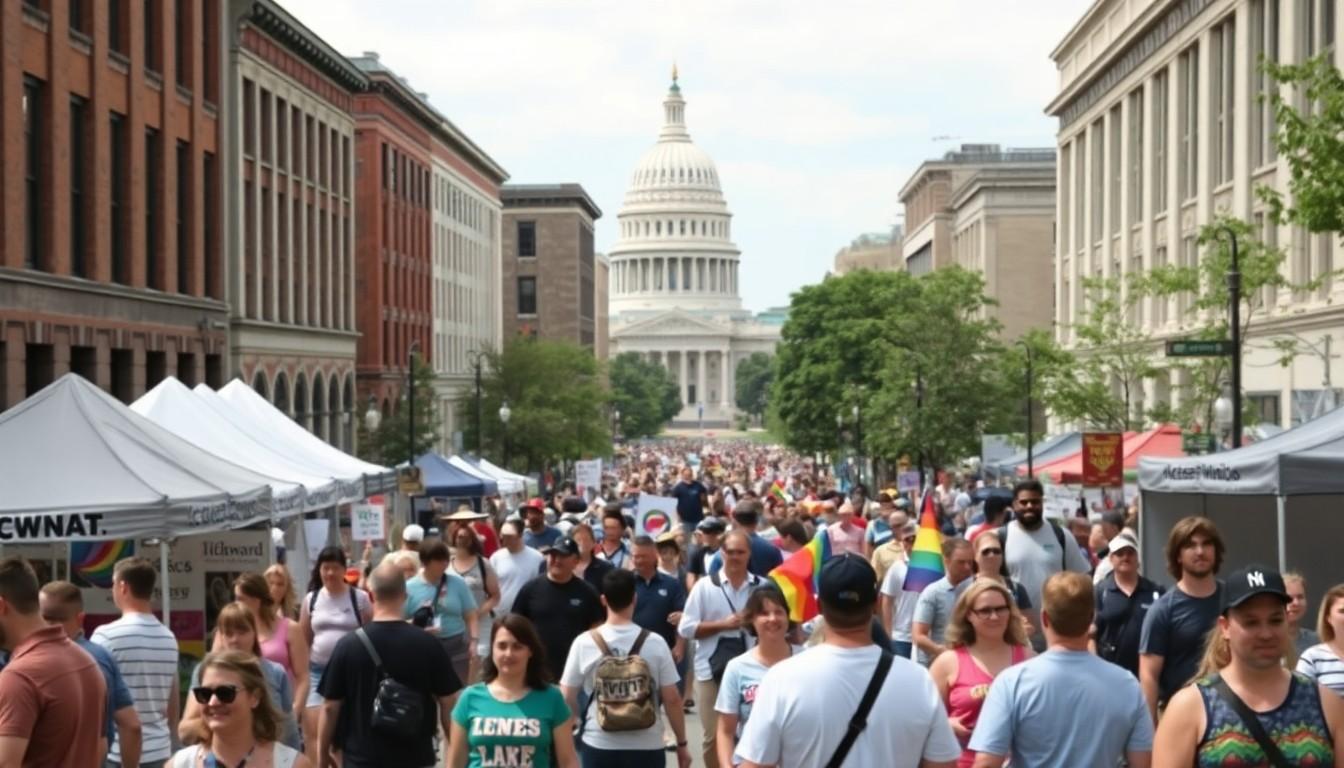
Marchers filled Little Rock's Capitol Avenue on Saturday, joining Pride celebrations with a nationwide No Kings protest as Arkansas voters prepared for early voting. The unusual partnership brought LGBTQ+ families, young activists and democracy campaigners together, turning a colourful parade into a lively reminder that community participation matters beyond the festival itself.
Essential Takeaways
- Two events, one route: Little Rock's Pride parade and No Kings protest shared Capitol Avenue for the second consecutive year.
- A wider movement: No Kings gatherings took place in at least 13 other Arkansas cities.
- Voting was central: Organisers urged residents to vote as early voting opened ahead of the midterm elections.
- Youth voices stood out: Young participants spoke about immigration, equal rights and political engagement.
- Pride beyond June: Organisers said the autumn festival offered another chance for LGBTQ+ people and allies to connect.
A colourful march with a serious message
The mood along Capitol Avenue was energetic but purposeful, with rainbow flags, handmade signs and a steady stream of marchers heading towards the state Capitol. Central Arkansas Pride and the No Kings demonstration were held together again, creating an event that felt both celebratory and politically charged.
According to the Arkansas Democrat-Gazette, the wider No Kings series also included gatherings in cities such as Springdale, Mountain View and Texarkana. That broader footprint gave the Little Rock march a sense of connection to something larger, while keeping the focus firmly on local concerns. [2], [4]
For many attendees, the combination made sense. Pride offered music, colour and a welcoming atmosphere, while the protest gave people space to challenge policies they believed threatened democracy, equality or personal freedom. It was a reminder that community events don't always fit neatly into one category.
Why voting became the day's strongest theme
With early voting beginning on Monday, volunteers used the march to encourage people to cast their ballots. Lizzie Smith of Indivisible Little Rock and Central Arkansas said organisers wanted to reach residents concerned about issues ranging from school funding and food access to data centres and democratic institutions.
The message arrived at a politically tense moment. Axios has reported on the controversies surrounding Donald Trump's administration as the midterm campaign gathered pace, while other coverage has highlighted disputes over executive power and the use of public resources. [3], [6]
Organisers also pointed to Arkansas's relatively low turnout in the 2024 general election. Smith argued that the state shouldn't simply be described by its partisan reputation, suggesting that non-voting may be the bigger challenge. That's a useful distinction: enthusiasm at a march matters, but it only becomes political influence when people follow it with participation.
Young activists add a sharper edge
The march included experienced campaigners, but younger attendees were especially visible. Conway resident Julienne Duarte, who isn't old enough to vote, said she had joined an anti-Immigration and Customs Enforcement rally at school and used social media to support causes she believed in.
Her concerns were personal as well as political. She spoke about her Colombian heritage and her grandfather's fear of leaving home without a passport, then described a future where people could live freely regardless of gender, race, background or wealth.
That generational energy reflects a wider pattern in American politics. National coverage has focused on the pressure placed on voters and campaigners as the midterms approach, while debates over voter-roll policies and access continue to attract attention. The Atlantic has also examined legal battles involving voter rolls, showing why registration, participation and election administration remain so emotionally charged. [3], [7]
Pride offers more than a single month
For Pride organisers, the partnership was about visibility as much as protest. Parade director Porter Pfrenger said the theme, "United in Pride", captured the spirit of the collaboration and gave young people an example of being open, confident and supported.
The festival also offered a chance to celebrate LGBTQ+ life outside the traditional Pride Month focus in June. Marie Maynard O'Connell, a Presbyterian pastor and founder of Queer Collective, said families often need welcoming spaces throughout the year, not just during one busy month.
That point is easy to overlook. A parade may last an afternoon, but the friendships and reassurance it creates can linger much longer. For someone who feels isolated, seeing supportive families and allies gathered in public can be quietly powerful.
The Capitol steps became a shared stage
The march ended at the state Capitol, where speakers addressed a crowd that had arrived with concerns about immigration enforcement, foreign conflicts, living costs and the balance of power in Washington. Barry Jefferson, president of the NAACP Arkansas State Conference, led chants built around the idea that authority ultimately belongs to the public.
Some participants had attended every previous No Kings event, while others were joining for the first time. Their reasons varied, but the common thread was a belief that showing up still matters, particularly when national politics feels distant or overwhelming.
The collaboration also suggests how local movements are changing. Pride groups, voting organisations and democracy campaigners may have different immediate priorities, but they can share audiences, energy and a belief in equal participation. As one organiser put it, the future is shaped by the people willing to take part now.
It's a small step from marching together to making your voice count at the ballot box.
Source Reference Map
Story idea inspired by: [1]
Sources by paragraph: