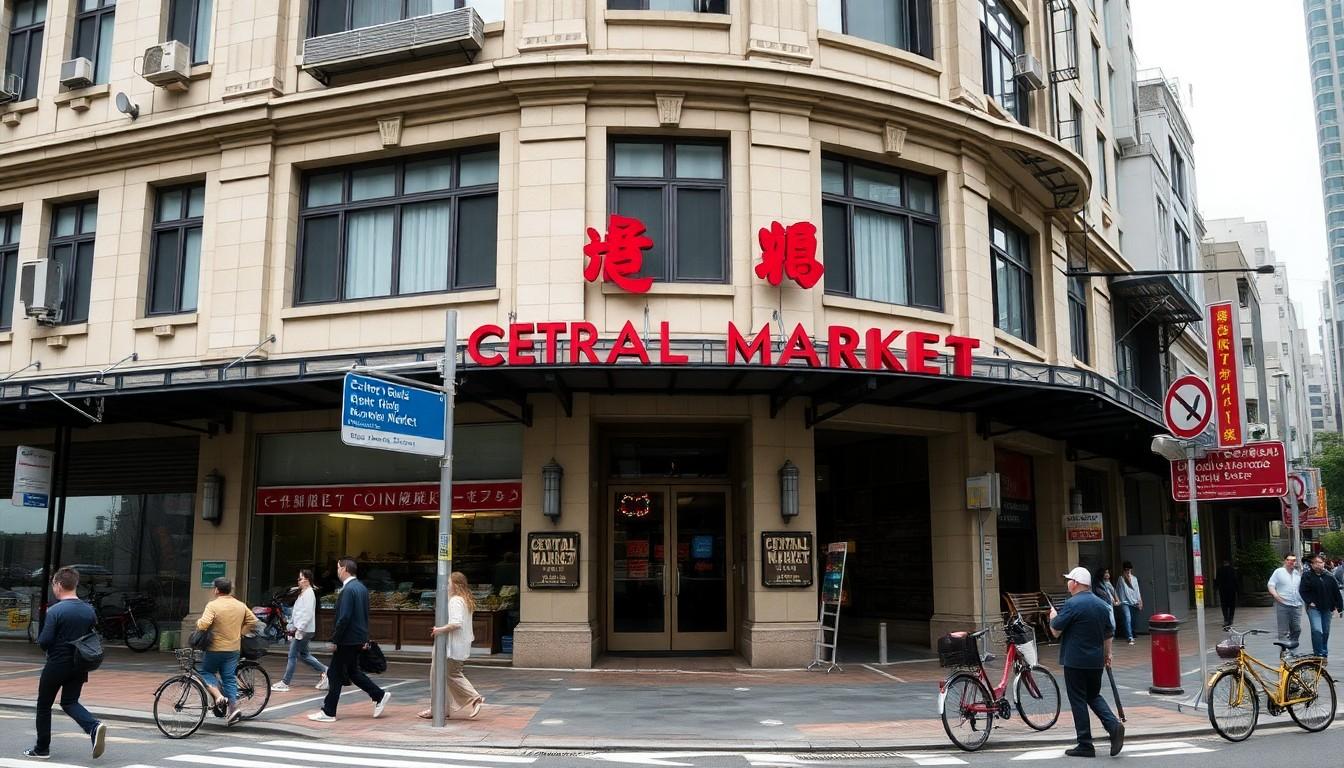
Organisers of Hong Kong's Rainbow Market have cancelled this year's event after Central Market withdrew its venue, highlighting the growing difficulty of securing spaces for LGBTQ+ gatherings in the city. The cancellation comes weeks after organisers announced the 14 November date, leaving visitors, vendors and supporters waiting for a new plan.
Essential Takeaways
- Venue booking error: Central Market reportedly double-booked the same date for two events.
- Refund promised: The venue operator said organisers would receive a full refund and apologised for the disruption.
- Second cancellation: The Rainbow Market has now lost its planned venue for a second consecutive year.
- Wider concern: Other LGBTQ+ events in Hong Kong have also faced venue refusals or late withdrawals.
- No replacement yet: Organisers say they'll try to continue the event and share updates online.
A colourful event loses its home
The Rainbow Market was due to take place at Central Market on 14 November, but organisers say the venue later told them it couldn't proceed because the date had been assigned to two events. According to Ming Pao, the committee had first contacted Central Market in June, paid a deposit in July and announced the booking publicly on 31 August.
That makes the reversal particularly frustrating. For vendors preparing stock, performers arranging appearances and visitors making plans, a venue isn't just an address on a poster. It's the practical foundation of the whole event, and once that disappears, the countdown becomes a scramble.
The venue's operator, Chinachem Group, said it had notified the organisers as soon as possible, arranged a full refund and reviewed its booking procedures. It also apologised for the inconvenience, according to Ming Pao.
Why the Rainbow Market matters
The committee describes the Rainbow Market as an important inclusion-focused event, offering a visible space for LGBTQ+ communities, supporters and local businesses. Since 2021, Hong Kong Pride has shifted from an annual outdoor march to indoor Rainbow Market-style gatherings amid changing social conditions, according to Ming Pao.
That change has made reliable indoor venues even more important. A market format can feel more approachable than a large public demonstration, with stalls, community groups and creative activities bringing people together in a softer, more social setting. Lose the room, however, and the whole atmosphere vanishes overnight.
The organisers said the event also supports a more LGBTQ+-friendly image of Hong Kong as an international city. That message matters beyond one weekend, especially when comparable community events elsewhere are still able to attract visitors, performers and athletes.
A pattern of venue problems
This isn't an isolated booking mishap. Hong Kong's LGBTQ+ event organisers have faced several recent venue difficulties, including the cancellation of Pink Dot HK's outdoor carnival after the West Kowloon Cultural District Authority declined to provide a venue, according to HIVOS's East and Southeast Asia resource centre.
South China Morning Post has also reported that a major LGBTQ+ carnival was cancelled after its host venue backed out, while other community events were unable to secure the licences or locations needed to proceed. Taken together, those cases create a wearying pattern for organisers who must repeatedly start again with uncertain access to public or commercial spaces.
The issue is practical as well as symbolic. A late venue decision can affect insurance, permissions, stall contracts, publicity and transport arrangements, so even a refund may not cover the wider cost of disruption.
Hong Kong's event landscape has narrowed
The pressure isn't limited to markets and carnivals. Gay Games Hong Kong was cancelled after organisers said they could no longer stage the planned sporting programme, with reports pointing to challenges around venues and the wider operating environment, according to Outsports.
That history gives the Rainbow Market's cancellation a broader context. LGBTQ+ groups aren't simply looking for somewhere to put up a few colourful stalls. They're trying to maintain regular, visible community life in a city where event planning appears increasingly fragile.
Meanwhile, government information has continued to promote Hong Kong as a place capable of hosting major international events, according to Hong Kong's Information Services Department. The contrast is hard to miss: the city can manage enormous sporting and cultural spectacles, yet smaller community gatherings may struggle to find a stable home.
What happens next?
The Rainbow Market committee says it will make every effort to continue organising the event and will announce further arrangements through social media. For now, though, there is no replacement venue or confirmed schedule.
The most useful step for potential visitors is to avoid relying on older posters or saved calendar entries. Check the organisers' latest social updates before travelling, and vendors should wait for written confirmation before committing to stock, staffing or paid promotion.
There is also a simple lesson for venues: booking systems need more than a calendar slot. Clear ownership, written confirmations and a final pre-event audit could prevent an administrative error from becoming a public cancellation.
For supporters, the uncertainty is understandably tiring. But the continued effort to keep the market alive shows why these events matter in the first place: community is often built through repeated, ordinary acts of gathering.
A venue mix-up should not be allowed to erase that work.
Closing Line
Follow the organisers' updates for a new date, venue and chance to support Hong Kong's LGBTQ+ community.
Source Reference Map
Story idea inspired by: [1]
Sources by paragraph: