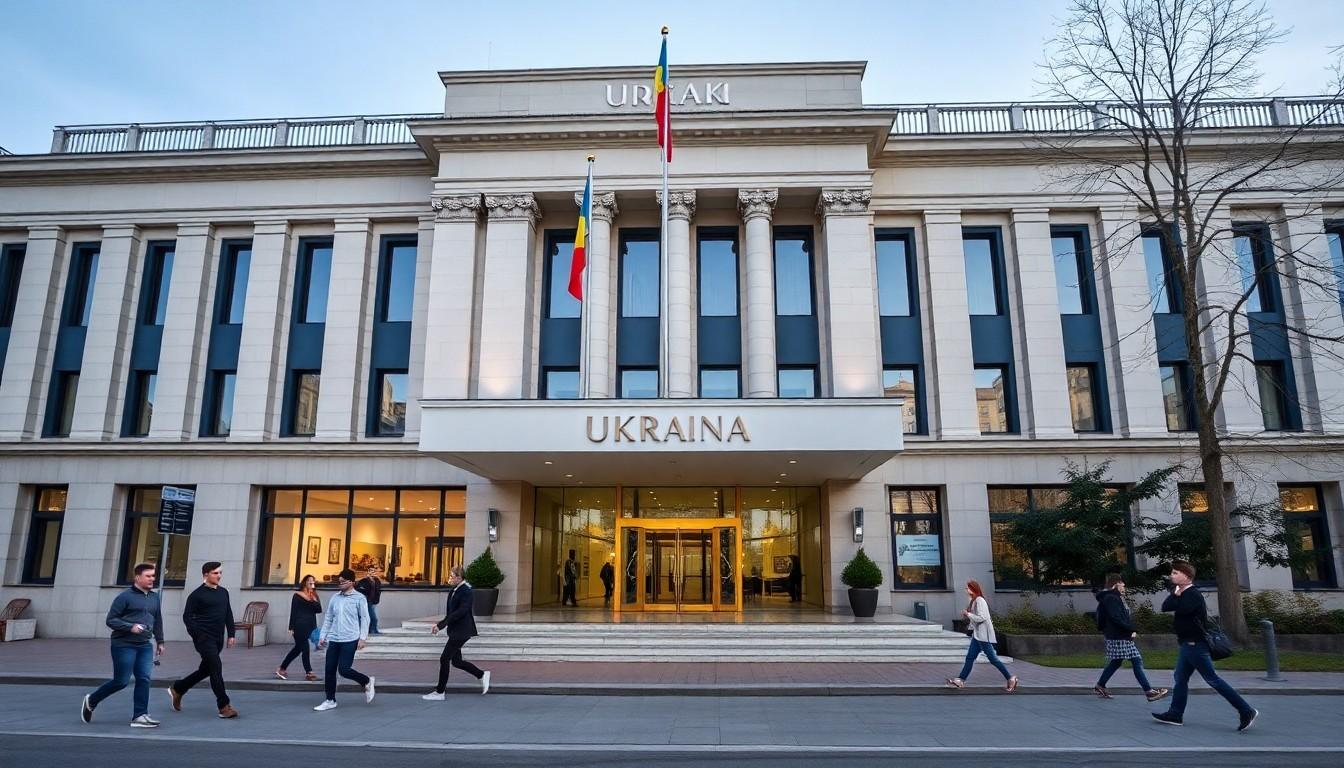
Ukraine has adopted a national strategy aimed at protecting LGBT people from discrimination, linking the move to its wider push for European Union membership. The policy places equality, access to rights and alignment with European legal principles at the centre of a debate that remains politically and socially sensitive.
Essential Takeaways
- National policy: The decree makes LGBT rights protection part of Ukraine’s broader human rights approach.
- EU connection: Officials present the strategy as consistent with European principles and legal standards.
- Focus on discrimination: The document recognises that LGBT people may face extra barriers when exercising their rights.
- Legal tension: Questions around same-sex relationships remain complicated by Ukraine’s existing constitutional and family-law framework.
- Wider significance: The announcement sends a clear signal about the country’s intended direction during its EU integration process.
A formal shift in Ukraine’s human rights policy
Ukraine’s new LGBT rights strategy is more than a symbolic statement. It places the protection of LGBT people within the country’s national policy framework, with discrimination and unequal access to rights identified as issues requiring action.
The strategy describes LGBT people as potentially facing a heightened risk of rights violations or additional obstacles when trying to exercise those rights. That language gives the policy a practical focus, rather than treating equality as a purely ceremonial principle. The Ukrainian LGBT rights consortium said the decree represents an important step towards making protection part of state policy.
For many people, the significance lies in that change of emphasis. A government document can sound dry, but it shapes priorities across public institutions, from legal practice to public services. According to Antikor, the wider human rights strategy also includes measures intended to counter discrimination.
Why the EU is central to the announcement
The decree links the strategy directly to Ukraine’s ambition to become a full member of the European Union. Its stated aim is to ensure that national policy is compatible with EU principles, policies and legal standards.
That connection matters because equality protections are closely watched in the EU accession process. Countries seeking membership are expected to show that their institutions respect human rights, protect minorities and apply the law consistently. Mezha reported that the announcement forms part of Ukraine’s wider effort to bring national policy closer to European expectations.
It also gives the measure a distinctly political dimension. The strategy isn't simply about domestic law; it tells European partners how Ukraine wants to be viewed. That makes the document both a rights policy and a statement of direction.
Recognition does not immediately change family law
The announcement comes against a complicated legal backdrop. Ukraine's current constitutional wording defines marriage as a voluntary union between a man and a woman, while courts and public authorities have continued to face questions about how to recognise same-sex couples and their family ties.
A Kyiv court previously considered the long-term cohabitation and overseas registration of a relationship between two Ukrainian men. The case attracted attention because it appeared to recognise the relationship in practice, despite the limits of existing constitutional and family-law provisions.
The new strategy should therefore be read as a framework for policy rather than an instant rewrite of marriage law. As Korabelov reported, the document sets out areas Ukraine plans to address, but implementation will depend on legislation, institutions and future court decisions.
What could change in everyday life?
A national strategy can influence how public bodies handle complaints, discrimination claims and access to services. It may also encourage clearer guidance for officials, stronger monitoring and more consistent treatment of LGBT people across different regions.
The details will matter enormously. A policy has real value only when people can see its effects in ordinary encounters, whether that's dealing with a public office, seeking medical care or asking for legal protection. The Ukrainian LGBT rights consortium described the move as a step towards making rights safeguards part of national policy, rather than leaving them dependent on individual interpretation.
That implementation question is especially important in a country facing enormous wartime pressures. Progress may be uneven, but setting a national standard gives advocates, courts and public institutions something concrete to reference. In human rights policy, that groundwork can be as important as the headline announcement.
A signal of Ukraine's intended direction
The decree has predictably attracted competing interpretations. Supporters see it as evidence that Ukraine is moving closer to European rights standards, while critics argue that it raises difficult questions about national law, social policy and constitutional limits.
Several reports framed the decision as part of President Volodymyr Zelensky's wider human rights agenda and European integration drive. SPZH highlighted the EU-related rationale, while DSnews described the strategy as including protections for the LGBT community and measures against discrimination.
For LGBT people in Ukraine, the practical test will be whether the policy brings safer institutions and more reliable legal remedies. The announcement is significant, but the quieter work of drafting rules, training officials and enforcing protections will decide what it ultimately means.
It's a notable policy signal, but its real impact will be measured in everyday rights and protections.
Source Reference Map
Story idea inspired by: [1]
Sources by paragraph: