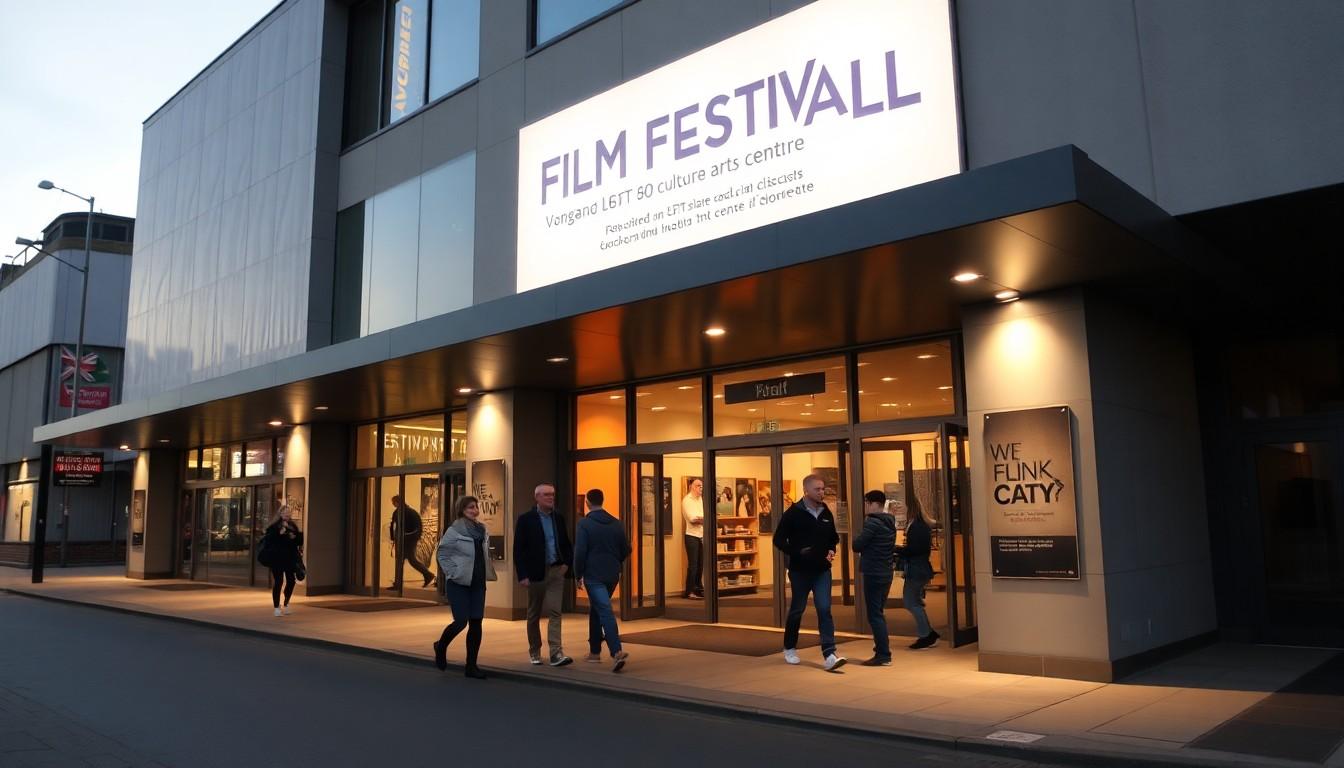
The 2026 Iris Prize LGBTQ+ Film Festival in Cardiff has recognised three distinctive short films, celebrating intergenerational community, queer storytelling and bold animation. With 21 entries screened across three categories, this year’s winners show how powerful LGBTQ+ cinema can be at any length, from intimate community projects to sharply crafted micro-shorts.
Essential Takeaways
- Three films won awards: Uncanny Waters, Kiss Me Thru the Phone and Clecs/Gossip took the Community, Education and Micro-short prizes.
- Community is central: The winning films explore queer connection, collective strength and relationships across generations.
- Distinctive voices stood out: Judges praised the films’ atmosphere, visual style, sound and emotional warmth.
- Cardiff remains the home of queer cinema: The festival’s 20th edition continues its annual celebration with screenings and online programming.
- Short films pack a punch: These compact works prove that LGBTQ+ stories don't need a feature-length running time to leave a lasting impression.
Three films, three very different ways to tell queer stories
The strongest thing about this year’s Iris Prize winners is their variety. Uncanny Waters, Kiss Me Thru the Phone and Clecs/Gossip don't simply repeat the same festival formula; each approaches LGBTQ+ storytelling from a different angle, with community, education and animation offering distinct creative spaces.
According to the festival’s published programme, the awards recognise work made for different audiences and formats, giving filmmakers room to experiment. That matters in a short-film scene where a few carefully chosen images, sounds or lines can carry enormous emotional weight.
The result feels lively rather than neatly packaged. There’s warmth, resistance, humour and a touch of mischief, all within films that appear determined to make their own rules.
Uncanny Waters puts intergenerational community centre stage
Uncanny Waters, directed by Ray Malone and Steve Melia, won the Community Award after judges responded to its portrait of people connected across a 60-year age gap. The film’s focus on shared experience gives the award a particularly generous spirit.
Malone’s work with Heads Bodies Legs Collective explores queer ancestry, feminist histories and collaborative storytelling. That background helps explain why the film’s community focus feels so important: it isn't just presenting individuals, but considering how stories and support move between generations.
Festival materials place community-led filmmaking at the heart of Iris Prize’s wider mission. It’s an approach that can make a film feel less like a distant observation and more like an invitation to sit down, listen and take part.
Kiss Me Thru the Phone brings energy to queer education
The Education Award went to Kiss Me Thru the Phone, directed by Greater Manchester filmmaker Scarlett J. Stribley. The jury described the project as optimistic and determined, highlighting its themes of empathy, resistance and collective strength.
Stribley is a British-American writer and director studying Film Production at the University of Salford. Her interests span experimental fiction, science fiction, fantasy and queer cinema, a combination that suggests a filmmaker comfortable moving between imaginative worlds and urgent real-life questions.
The Iris Prize programme continues to showcase emerging filmmakers alongside established creative voices, according to the festival’s official listings. For audiences, that makes the education category more than a classroom exercise. It becomes a glimpse at how the next generation is reshaping queer film language.
Clecs/Gossip proves a micro-short can be unforgettable
Manchester-based artist, animator and filmmaker Harri Shanahan won the Micro-short Award for Clecs/Gossip. The animation follows two older women in love through the perspective of a younger woman, using Welsh narration and English subtitles.
Judges singled out its poetry, sound design, visual style and playful tone. That combination gives the film a striking identity, especially in a category where every second has to earn its place. A well-judged colour palette or a perfectly timed sound can do the work of an entire scene.
The festival’s online programme also reflects the growing appetite for accessible short-form cinema, with audiences able to discover work beyond the traditional cinema setting. For viewers searching for the best LGBTQ+ short films to watch online, micro-shorts such as Clecs/Gossip can be an excellent starting point: quick to watch, but not quick to forget.
Iris Prize keeps expanding the conversation
The awards were presented by Welsh comedian Leila Navabi, with judging led by Efa Blosse-Mason, Katie White, Ryan Rowe and Paul Davies, also known as Stumpy. Their selections underline the festival’s interest in craft as well as representation, from cinematography and atmosphere to voice, sound and structure.
Iris Prize has grown considerably since its first edition in 2007. The 2026 festival marks its 20th edition, with the Cardiff event now spanning a full week and attracting roughly 12,000 admissions, alongside a month-long online programme, according to the festival’s own information.
Festival director Berwyn Rowlands said the aim is for LGBTQ+ stories to reach the widest possible audience. That ambition feels especially relevant now, when short films can travel through cinemas, festivals and digital platforms with remarkable speed. A small production can still create a very large ripple.
The three winning films offer a neat reminder of why festivals matter. They give emerging filmmakers a platform, audiences a chance to encounter unfamiliar perspectives and queer cinema the space to be funny, tender, experimental and proudly specific.
Explore the winners and discover how much a short film can hold.
Source Reference Map
Story idea inspired by: [1]
Sources by paragraph:
- Paragraph 1: [2], [5]
- Paragraph 2: [3], [4]
- Paragraph 3: [2], [5]
- Paragraph 4: [3], [5]
- Paragraph 5: [4], [5]
- Paragraph 6: [3], [5]
- Paragraph 7: [2], [3]
- Paragraph 8: [3], [5]
- Paragraph 9: [4], [7]
- Paragraph 10: [2], [5]
- Paragraph 11: [5], [6]
- Paragraph 12: [4], [7]
- Paragraph 13: [3], [5]
- Paragraph 14: [2], [5]
- Paragraph 15: [3], [4]
- Paragraph 16: [5], [7]
- Paragraph 17: [4], [5]