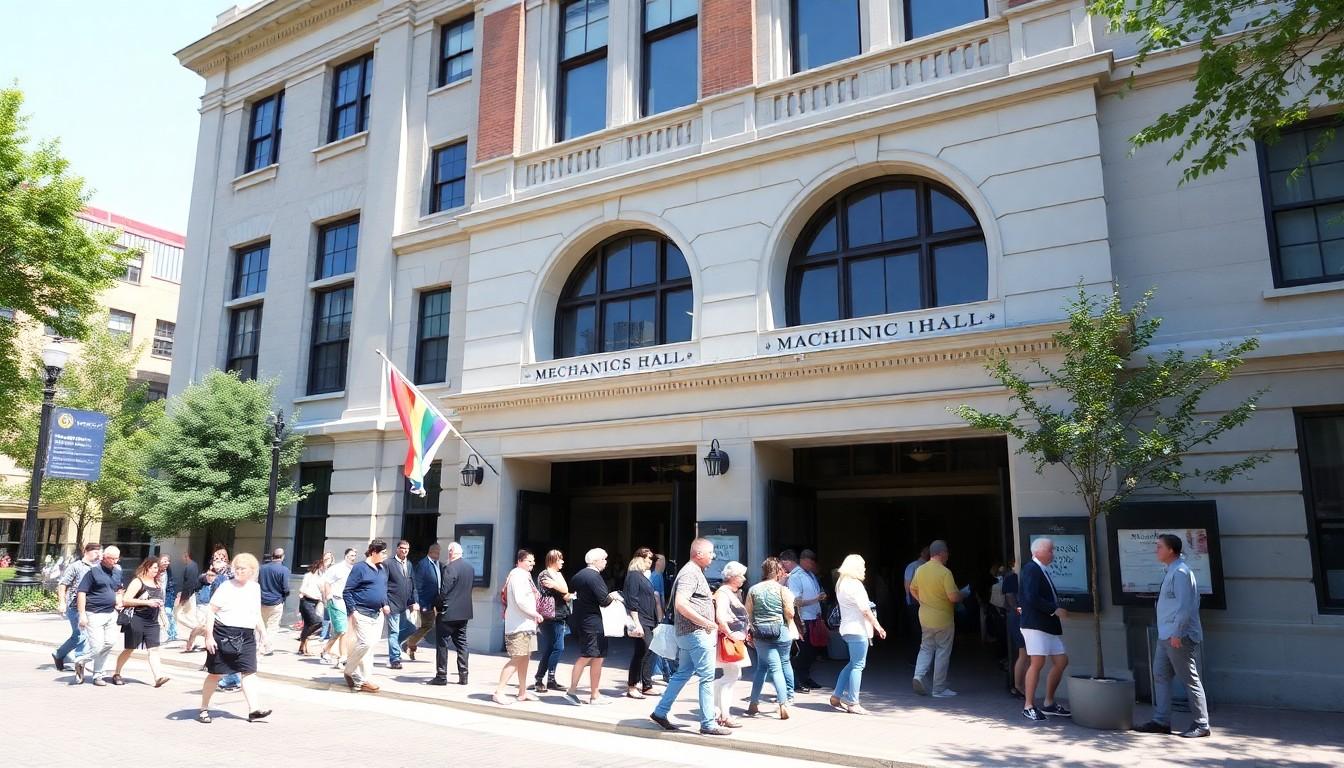
Shoppers and fashion fans gathered in Worcester for a vibrant denim runway show that turned reclaimed clothing, local talent and queer visibility into one joyful evening. The latest Queer AF in Denim event brought more than 1,000 people to Mechanics Hall, while raising support for LGBTQIA+ youth programmes across Central Massachusetts.
Essential Takeaways
- Denim took centre stage: Designers transformed a familiar workwear fabric into dramatic, highly individual looks.
- The runway was radically inclusive: More than 90 local models represented different bodies, genders, ages and abilities.
- Young creatives had a platform: Love Your Labels' Threads programme helped youth designers explore identity through fashion.
- The event supported vital work: Proceeds benefit Love Your Labels and its LGBTQIA+ community programmes.
- Reclaimed materials mattered: Headliner Q built a collection from thrifted denim, giving old garments a striking second life.
Worcester's queer fashion night keeps getting bigger
The room at Mechanics Hall was already buzzing before the first look appeared. Then the sound of a loom weaving, paired with electric viola, set an unexpectedly theatrical tone, and Queer AF in Denim moved from fashion show to full-scale performance.
The seventh annual event drew more than 1,000 attendees, including performers, volunteers, designers and first-time runway models. As the event's organisers have shown in earlier editions, Queer AF works because it feels less like a distant industry spectacle and more like a community party with spectacular clothes.
The event formed part of Big Queer Worcester Weekend, alongside the Worcester Draglesque Festival. Mechanics Hall therefore became a particularly fitting setting: grand, historic and filled with an audience determined to make space for modern queer creativity.
Why denim carries more than style
Denim can look ordinary in a shop window, but its history is anything but simple. It carries associations with labour, exploitation, working-class identity, protest and youth culture, which gives designers plenty to challenge and reinterpret.
That tension has long made denim useful for artists. The Center for Craft's work on denim highlights how the material can be understood not simply as clothing, but as a medium shaped by labour, craft and cultural memory. At Queer AF, that story was pushed into more flamboyant territory through sculptural silhouettes, theatrical layering and deliberately unconventional styling.
The result was denim with a pulse. Familiar jeans and jackets became raw material for looks that felt playful, political and sometimes wonderfully unruly.
Reclaimed denim gave the runway a fresh edge
Q, known to audiences from RuPaul's Drag Race, headlined the design line-up with a collection made from reclaimed denim sourced from thrift shops and similar outlets. Trousers, shirts and other garments were cut apart and rebuilt, turning everyday pieces into new costumes.
The collection was put together in roughly a week after Q returned from Austria, a tight deadline that sounds stressful even before adding fittings, styling and the pressure of a live show. Yet the quick turnaround also suited the collection's energy: resourceful, bold and unafraid to make something new from what was already there.
Upcycling has become increasingly visible across fashion, but events such as Queer AF give it a more personal charge. Here, reuse wasn't presented as a quiet sustainability note. It was part of a wider message about reinvention, self-definition and refusing to be boxed in.
A runway where every body belongs
One of the show's strongest ideas was its open community runway. More than 90 people took part, including some who had never modelled before, and the organisers made clear that the stage was for people of all sizes, genders and abilities.
That inclusivity matters because conventional fashion still tends to reward a narrow idea of who gets to be seen. The event offered a warmer alternative, where confidence could look like a dramatic pose, a nervous first step or simply showing up in an outfit that feels completely yours.
For first-time models, the emotional shift can be enormous. One participant described feeling frightened when first invited, then calm and supported backstage. That transformation is perhaps the show's most persuasive argument: a welcoming runway can become a place to practise visibility before taking it back into everyday life.
Love Your Labels puts creativity to work
The spectacle also had a practical purpose. All proceeds support Love Your Labels, the Worcester-based nonprofit behind programmes for LGBTQIA+ young people and the wider Central Massachusetts community.
Its Threads programme gives middle and high school students a space to explore fashion, personal expression, gender and sexuality. The organisation also runs the Kids Sew-cial Club through open studio hours, offering young people a chance to make, learn and meet others in an affirming environment.
That connection between the runway and youth work gives the event unusual depth. It isn't only celebrating established artists; it's helping young people imagine themselves as designers, makers and confident participants in public life. One Threads designer summed up the feeling simply: creative expression can be lifesaving.
The future looks handmade, visible and hopeful
Queer AF in Denim succeeds because it joins glamour with purpose. There are drag performers, polished collections and plenty of runway drama, but there is also a clear understanding that visibility alone isn't enough without safety, belonging and sustained support.
The show also reflects Worcester's growing reputation as a lively centre for LGBTQ+ arts and community activity. Earlier reporting from WGBH and Boston.com has documented how younger people and local organisers have helped drive that cultural momentum, creating spaces that feel both celebratory and politically alert.
For visitors, the takeaway is refreshingly straightforward: fashion can be beautiful, funny, resourceful and meaningful at the same time. And when a community gets to write the dress code, the result is far more memorable than another polished industry event.
A bold runway can turn old denim into new possibilities.
Source Reference Map
Story idea inspired by: [1]
Sources by paragraph:
- Paragraph 1: [2], [3]
- Paragraph 2: [4], [5]
- Paragraph 3: [2], [7]
- Paragraph 4: [6], [4]
- Paragraph 5: [6], [5]
- Paragraph 6: [4], [7]
- Paragraph 7: [3], [5]
- Paragraph 8: [4], [6]
- Paragraph 9: [3], [7]
- Paragraph 10: [2], [4]
- Paragraph 11: [4], [5]
- Paragraph 12: [3], [7]
- Paragraph 13: [4], [6]
- Paragraph 14: [2], [3]
- Paragraph 15: [5], [7]