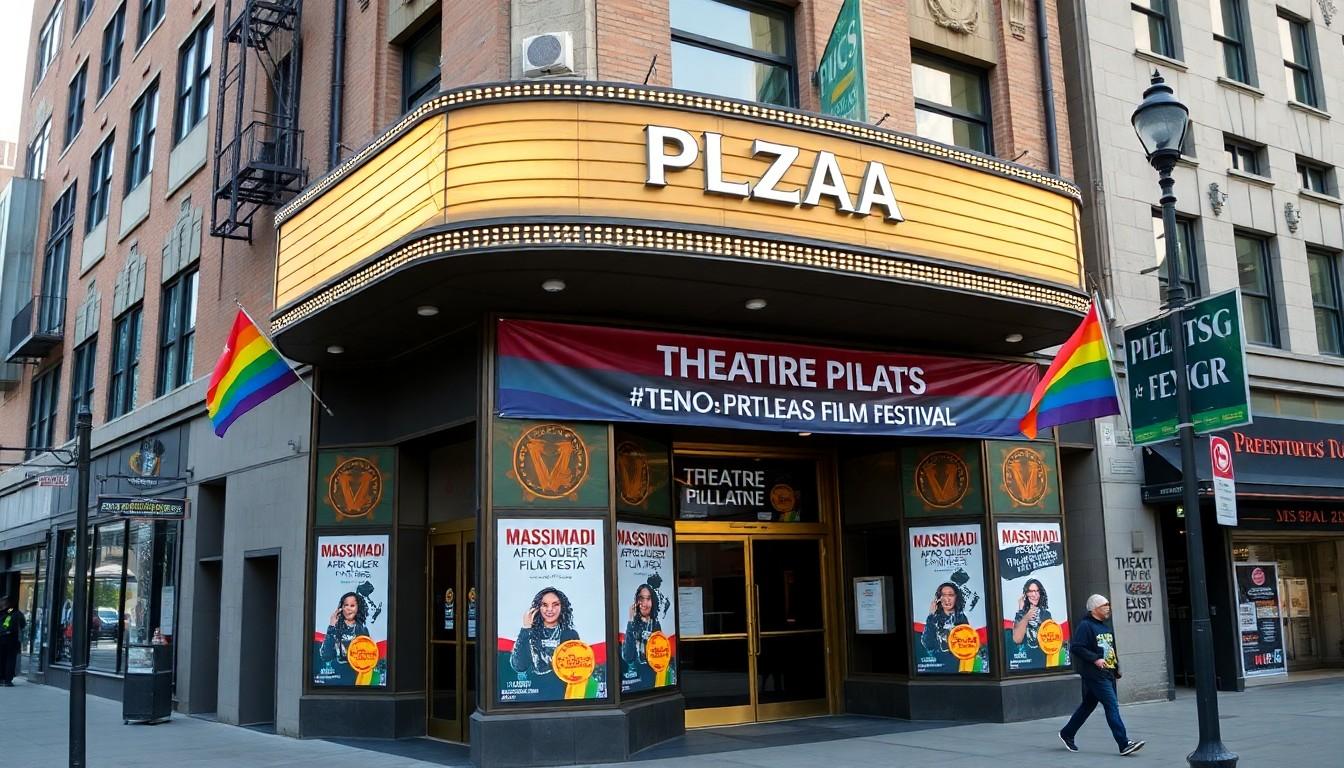
Montreal's Massimadi Film Festival returns from 15 October to 8 November with nearly 40 Afro-queer and Indigenous films, live performances, talks and an exhibition, creating a lively, welcoming space for stories too often pushed to the margins.
Essential Takeaways
- A landmark return: The 18th edition runs across Montreal from 15 October to 8 November.
- A broad programme: Expect films, panels, workshops, live acts, drag and visual art.
- Opening-night energy: The festival begins at Théâtre Plaza with a screening, performances and a reception.
- Flexible viewing: An online programme extends access to audiences in Canada and several other countries.
- More than cinema: The programme includes an exhibition focused on Black femme refuge and community.
Montreal's Afro-Queer Film Festival Is Bigger Than Ever
There’s a particular warmth to a festival that feels less like a formal cultural appointment and more like a gathering. Massimadi returns to Montreal for its 18th edition with a programme built around Afro-queer and Indigenous storytelling, bringing films, artists and audiences together in venues across the city. The festival’s official programme confirms a packed schedule running from 15 October to 8 November. (Massimadi)
Its theme, “Living Memories”, gives the event an emotional centre. These aren’t simply films placed on a schedule; they’re stories about identity, inheritance, survival and the freedom to be seen. That combination of celebration and reflection is precisely what makes Massimadi feel so distinctive. (Massimadi)
Opening Night Brings Film, Music and Drag Energy
The festival opens on 15 October at Théâtre Plaza, where Terry Blade’s My Gender Is Black will set the tone with its focus on gender, identity and liberation. The evening also includes six live acts, a reception and plenty of reasons to arrive early rather than treating the screening as a quick in-and-out cultural stop. (Massimadi)
Dee Joyce, DJ Tokyo Mamii, Ohemaa, Big Sissy, RèN Darah and Athena Lucie are all scheduled to perform. The opening event is free, although visitors need to reserve tickets online, so leaving it until the last minute could be a risky move. (Montreal Rocks)
Films That Put Identity and Resilience Centre Stage
The programme moves between short-film collections and feature presentations, with themes spanning family, Black and queer histories, and Afro-queer communities in the Antilles and Guianas. Two Wapikoni short-film blocks add Indigenous and Two-Spirit perspectives, widening the festival’s conversation without losing its focus. (Massimadi)
Feature highlights include What Will I Become?, Black Burns Fast and Guyane, amours taboues. Together, they explore transgender youth, queer coming-of-age and the risks of living openly in a society where homosexuality remains taboo. The subjects are serious, but the programme’s strength lies in giving those experiences room to breathe rather than reducing them to headlines. (Bonjour Quebec)
For viewers choosing what to see, the short-film blocks may be the best place to start. They offer a brisk way into several perspectives, while the feature films provide more time with individual characters and their complicated, often moving journeys.
Where to Watch Massimadi in Montreal
In-person screenings are spread between Cinéma Public, the National Film Board venue on Bleury, Théâtre Plaza and the McCord Stewart Museum. That variety gives the festival a city-wide feel, although it’s worth checking the venue carefully before setting off, particularly if you’re planning to see several events in one day. (La Vitrine)
Massimadi also offers an online programme from 26 October to 8 November. It extends the festival to remote parts of Quebec and Canada, as well as viewers in Haiti, Côte d’Ivoire, France, Belgium and the United States. For anyone who can’t make a Montreal screening, that access is more than a convenience; it keeps the festival’s community reach genuinely international. (Massimadi)
An Exhibition Adds Another Layer to the Festival
Cinema is only part of the story this year. Le/The Sanctum opens at the Maison de la culture de Côte-des-Neiges on 22 October, presenting a living archive shaped as an intimate refuge by and for Black femmes. The exhibition is free and open to anyone interested in understanding the space and the experiences behind it. (Massimadi)
The wider programme also includes panels and workshops with creatives, making Massimadi feel closer to a cultural forum than a conventional screening series. That matters because audiences don’t just consume these stories; they can meet the people making them, question assumptions and leave with a richer sense of the communities represented. (Massimadi)
Expect a Joyful Finish, Not a Quiet Fade-Out
The closing programme, Celebrating Our Voices, brings together drag, dance, comedy and poetry before a drag party at Club DD’s. Scheduled for 25 October, the event offers a suitably exuberant counterpoint to the more contemplative films and discussions elsewhere in the programme. (Massimadi)
That balance is one of Massimadi’s strongest qualities. It can hold difficult histories and joyful performance in the same frame, reminding audiences that pride isn’t only about endurance. Sometimes it’s loud, glittery and dancing until late.
For schedules, venue details and tickets, visitors should check the official Massimadi listings before attending, as individual events may have different booking requirements. (Massimadi)
It's a vivid Montreal celebration of film, memory and Afro-queer pride, with plenty to discover on screen and off.
Source Reference Map
Story idea inspired by: [1]
Sources by paragraph:
- Paragraph 1: [2], [5]
- Paragraph 2: [2], [3]
- Paragraph 3: [4], [3]
- Paragraph 4: [2], [5]
- Paragraph 5: [2], [7]
- Paragraph 6: [6], [2]
- Paragraph 7: [2], [5]
- Paragraph 8: [2], [5]
- Paragraph 9: [2], [6]
- Paragraph 10: [2], [5]
- Paragraph 11: [2], [5]
- Paragraph 12: [2], [5]
- Paragraph 13: [2], [5]
- Paragraph 14: [2], [7]