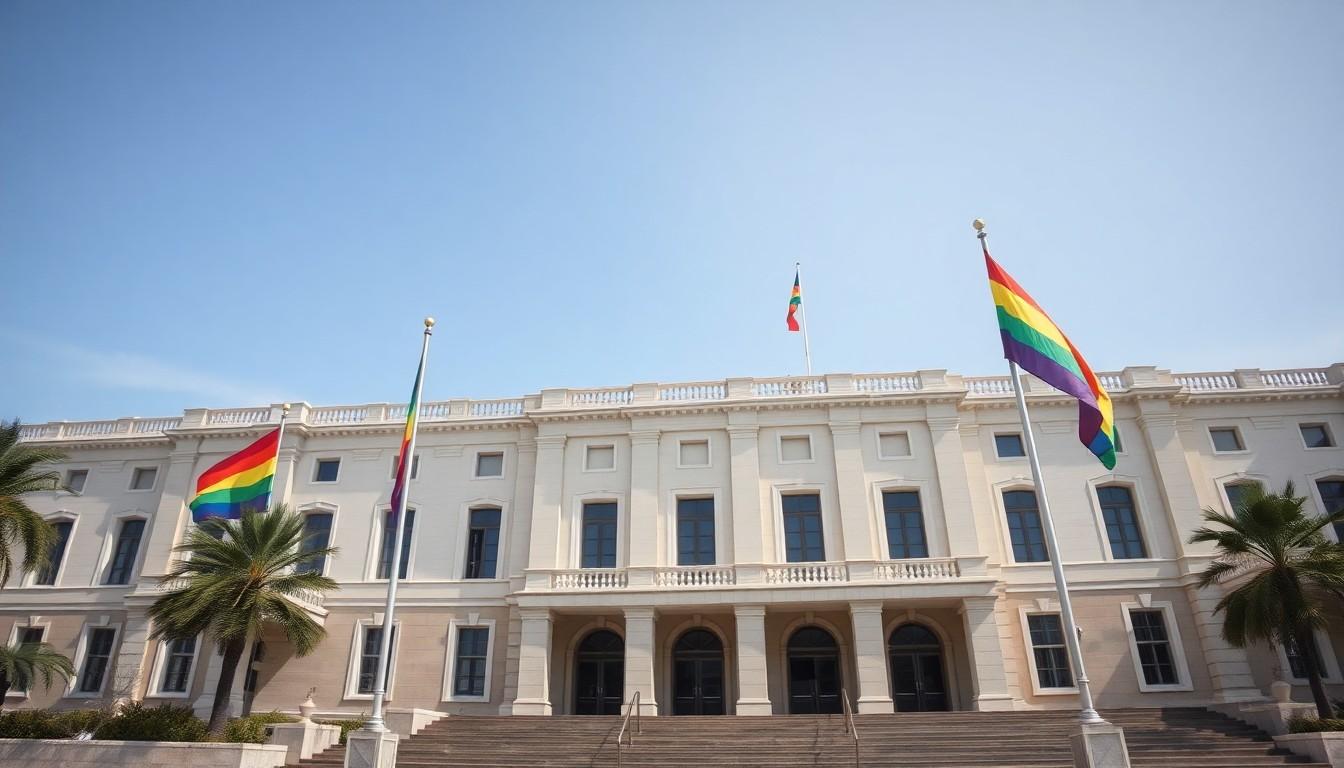
Human rights groups say Senegal’s escalating anti-LGBTQ+ crackdown is fuelling fear, restricting access to justice and undermining public health. With hundreds reportedly arrested in 2026, the country’s tougher laws are drawing renewed international scrutiny over constitutional and human rights protections.
Essential Takeaways
- Arrests are rising: Rights groups have reported hundreds of detentions linked to Senegal’s anti-LGBTQ+ laws.
- Prison terms have increased: Parliament doubled the maximum sentence for consensual same-sex conduct to 10 years.
- Legal support is shrinking: Lawyers reportedly fear prosecution for representing LGBTQ+ clients.
- Health care is at risk: Forced HIV testing and fear of disclosure may be discouraging people from seeking treatment.
- Rights groups want urgent action: Human Rights Watch is calling for detainees’ release, investigations into abuses and repeal of the laws.
A tougher crackdown is spreading fear
Senegal’s legal pressure on LGBTQ+ people has intensified sharply, creating a climate in which ordinary moments can feel perilous. Human Rights Watch says police and specialist units have carried out arrests in cities across the country, while detainees have reported violence, abuse and degrading treatment.
The escalation follows arrests in late 2025 and early 2026, including cases involving alleged same-sex conduct and claims relating to HIV transmission. Human Rights Watch has described the pattern as a brutal crackdown that may breach protections in Senegal’s constitution as well as international law.
The figures vary by source, but the direction is clear. RADDHO linked 212 arrests to the relevant law between February and July, while HIV Justice Network reported more than 300 during the same period. Either number represents a serious human cost, not merely a political statistic.
New laws reach beyond private conduct
In March, Senegal’s parliament increased the maximum prison sentence for consensual same-sex conduct from five years to 10. The amended law also criminalises the so-called promotion or glorification of homosexuality, including financial support for LGBTQ+ people and organisations.
That broader wording has created uncertainty far beyond the people directly accused of same-sex conduct. Human Rights Watch reported that lawyers are increasingly reluctant to take such cases, fearing they could themselves be accused of unlawful promotion simply for providing representation.
The result is a chilling effect on the legal system. When people can't find a lawyer, detention becomes more frightening and the chance of a fair hearing becomes harder to protect.
Forced HIV testing could damage public health
The crackdown has also raised concerns about medical privacy and access to treatment. Some people interviewed by Human Rights Watch alleged that authorities subjected detainees to forced HIV testing, with test results then used to support additional charges.
That approach risks turning health care into a source of fear. HIV Justice Network reported concerns that criminalisation and forced testing could discourage people from seeking screening, medication or follow-up care. A doctor in Dakar told Human Rights Watch that around a third of patients had stopped attending HIV treatment appointments.
That matters well beyond the LGBTQ+ community. Public health depends on trust, confidentiality and early treatment. If people believe a clinic visit could expose them to arrest or stigma, they may stay away until they urgently need help.
Privacy and media exposure are another danger
Human Rights Watch also raised concerns about the handling of personal information. Reports in Senegalese media have allegedly identified people under investigation or disclosed sensitive details that should have remained confidential.
Exposure can have immediate consequences, including rejection by relatives, loss of work and threats of violence. In a hostile environment, even an unverified allegation can follow someone everywhere, long after a case has ended.
Africanews reported that the rights watchdog was warning about rising arrests and the wider consequences of the crackdown. The issue, then, isn't only what happens inside a police station. It's also what happens when private information is pushed into public view.
Rights groups call for a halt
Human Rights Watch says Senegal should release people detained under the anti-LGBTQ+ laws since February, investigate reported abuses and prohibit forced HIV testing. It is also urging the government to protect freedom of expression, association and peaceful assembly, including for organisations supporting LGBTQ+ rights.
The organisation has warned that the measures may conflict with international obligations, Senegal's own constitutional protections and principles associated with the Olympic Charter. Those concerns give the crackdown a significance beyond domestic politics.
For people living under the laws, however, the argument is painfully immediate. As one lawyer told Human Rights Watch, representing an accused person can itself invite suspicion. That's what makes the current moment so bleak: the safeguards designed to protect people are becoming harder to access just when they're needed most.
It's a small phrase, but a powerful one: equal rights only matter when everyone can use them.
Source Reference Map
Story idea inspired by: [1]
Sources by paragraph:
- Paragraph 1: [2], [4]
- Paragraph 2: [2], [5]
- Paragraph 3: [3], [4]
- Paragraph 4: [2], [6]
- Paragraph 5: [3], [7]
- Paragraph 6: [2], [4]
- Paragraph 7: [2], [6]
- Paragraph 8: [3], [7]
- Paragraph 9: [2], [4]
- Paragraph 10: [2], [7]
- Paragraph 11: [2], [6]
- Paragraph 12: [2], [3]
- Paragraph 13: [2], [7]
- Paragraph 14: [2], [4]
- Paragraph 15: [2], [6]
- Paragraph 16: [2], [7]
- Paragraph 17: [2], [3]