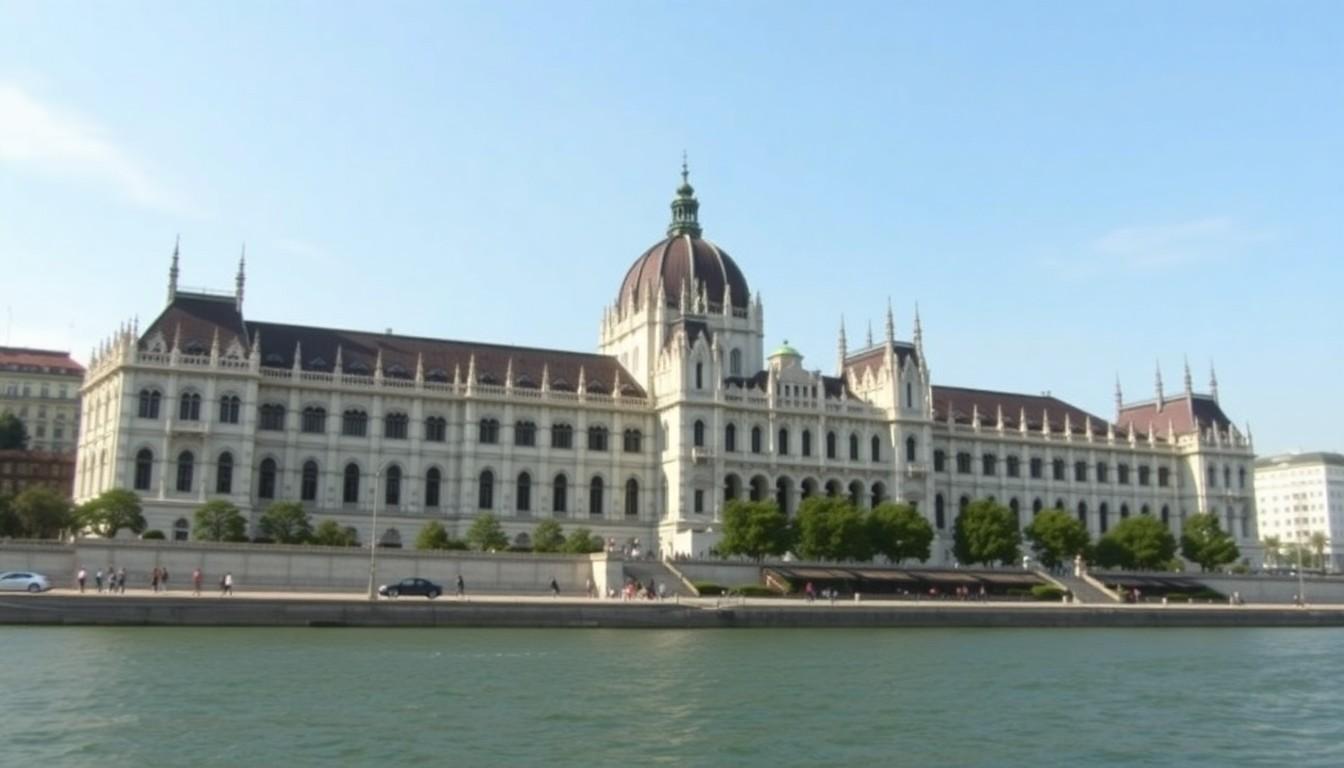
Hungary's parliament has voted to remove controversial anti-LGBTQ provisions from its child-protection law, marking a significant policy shift after years of criticism from the EU and human rights groups. The change is welcomed as progress, although campaigners warn that equal rights remain unfinished business.
Essential Takeaways
- Parliamentary majority: MPs voted 139 to 51 in favour of removing the restrictions.
- EU pressure: The legislation followed an EU court ruling that found Hungary's measures incompatible with the bloc's core values.
- What changes: Restrictions on LGBTQ-related content for minors, including references to homosexuality and gender transition, are being rolled back.
- Progress is limited: Same-sex couples still cannot adopt jointly, and legal recognition of gender transitions remains unavailable.
- Political handover: Prime Minister Péter Magyar backed the changes after taking power from Viktor Orban.
Hungary's controversial law is finally being rolled back
Hungary's parliament has voted to dismantle key parts of the country's disputed child-protection legislation, reversing restrictions that critics said were less about safeguarding children and more about silencing LGBTQ people. The move removes a major source of tension between Budapest and Brussels. According to Al Jazeera, the reform is intended to bring Hungarian law closer to EU standards.
The original measures were introduced in 2021 under the banner of child protection. They prohibited the presentation or promotion of homosexuality and gender transition to minors, with later amendments also creating a route to restrict Pride events. Human Rights Watch described the reforms as an important step, while stressing that they don't resolve the wider rights problem.
For LGBTQ people in Hungary, the change may feel both significant and incomplete. A law can be rewritten quickly, but its effects on schools, families and public debate tend to linger.
Why the EU court ruling mattered
The vote followed a European Court of Justice ruling in April that found Hungary's restrictions conflicted with the EU's foundational principles. Euronews reported that the court decision helped create the political pressure for Budapest to amend the legislation.
That judgment put the issue in a broader European frame. It wasn't simply a domestic argument over education or public morality, but a test of how far an EU member state can go when its laws affect equality, expression and minority protections.
The ruling also gave reformers a clear legal reference point. Rather than presenting the change as a sudden reversal of political belief, the new government has framed it as a return to European rules, according to Gaycation.
A new government, and a very different direction
The parliamentary vote is part of the wider shift that followed Péter Magyar's election victory. Magyar had not made LGBTQ rights the centrepiece of his campaign, but he later supported scrapping the disputed provisions to bring Hungary more closely into line with the EU.
That position has drawn predictable criticism from Viktor Orban's Fidesz party, which argues that Magyar bowed to pressure from Brussels. Reuters-style reporting carried by Nampa likewise highlights the political contest behind the reform: the vote is about legal rights, but it's also a visible break with the previous government's approach.
The numbers were decisive. A total of 139 MPs backed the changes, while 51 opposed them. That margin suggests the new administration has enough room to move, although future disputes over LGBTQ equality are unlikely to disappear quietly.
What the reform does, and what it doesn't
The most immediate effect is the removal of rules restricting LGBTQ-related content involving minors. That matters to teachers, publishers, broadcasters and families, who have faced uncertainty over what could be shown or discussed. Reporter World News said the repeal targets the Orban-era content restrictions that critics regarded as discriminatory.
Still, this isn't a complete equality package. Same-sex couples remain unable to adopt jointly, while legal recognition for gender transitions is still unavailable. Human Rights Watch welcomed the parliamentary action but said substantial gaps remain.
That distinction is important for readers comparing LGBTQ rights across Europe. Ending a censorship-style restriction can be a meaningful improvement, but it doesn't automatically create family equality, gender recognition or protection from discrimination.
A cautious welcome from rights groups
Hungarian human rights organisations have welcomed the vote, while warning that further changes are needed. Their response reflects the slightly awkward mood surrounding the reform: there is genuine relief, but no appetite for declaring victory too early.
Al Jazeera reported that the amendment is designed to align Hungary with EU expectations, while Euronews linked it directly to the European court ruling. Together, those developments point to a government responding to legal and political reality rather than making a wholesale ideological conversion.
For LGBTQ Hungarians, the practical test will come next. The key questions are whether schools and cultural organisations feel freer to operate, whether Pride can take place without fresh restrictions, and whether lawmakers address adoption and gender recognition. As Human Rights Watch has made clear, removing one set of barriers is progress, but it isn't the same as full equality.
The vote is a notable change in direction, but the longer journey towards equal rights in Hungary has only just begun.
Explore the reforms in context, and watch what happens next.
Source Reference Map
Story idea inspired by: [1]
Sources by paragraph:
- Paragraph 1: [2], [4]
- Paragraph 2: [3], [5]
- Paragraph 3: [6], [7]
- Paragraph 4: [4], [5]
- Paragraph 5: [2], [3]
- Paragraph 6: [4], [6]
- Paragraph 7: [2], [7]
- Paragraph 8: [3], [5]
- Paragraph 9: [6], [7]
- Paragraph 10: [2], [4]
- Paragraph 11: [3], [5]
- Paragraph 12: [2], [4]
- Paragraph 13: [3], [6]
- Paragraph 14: [5], [7]
- Paragraph 15: [2], [3]