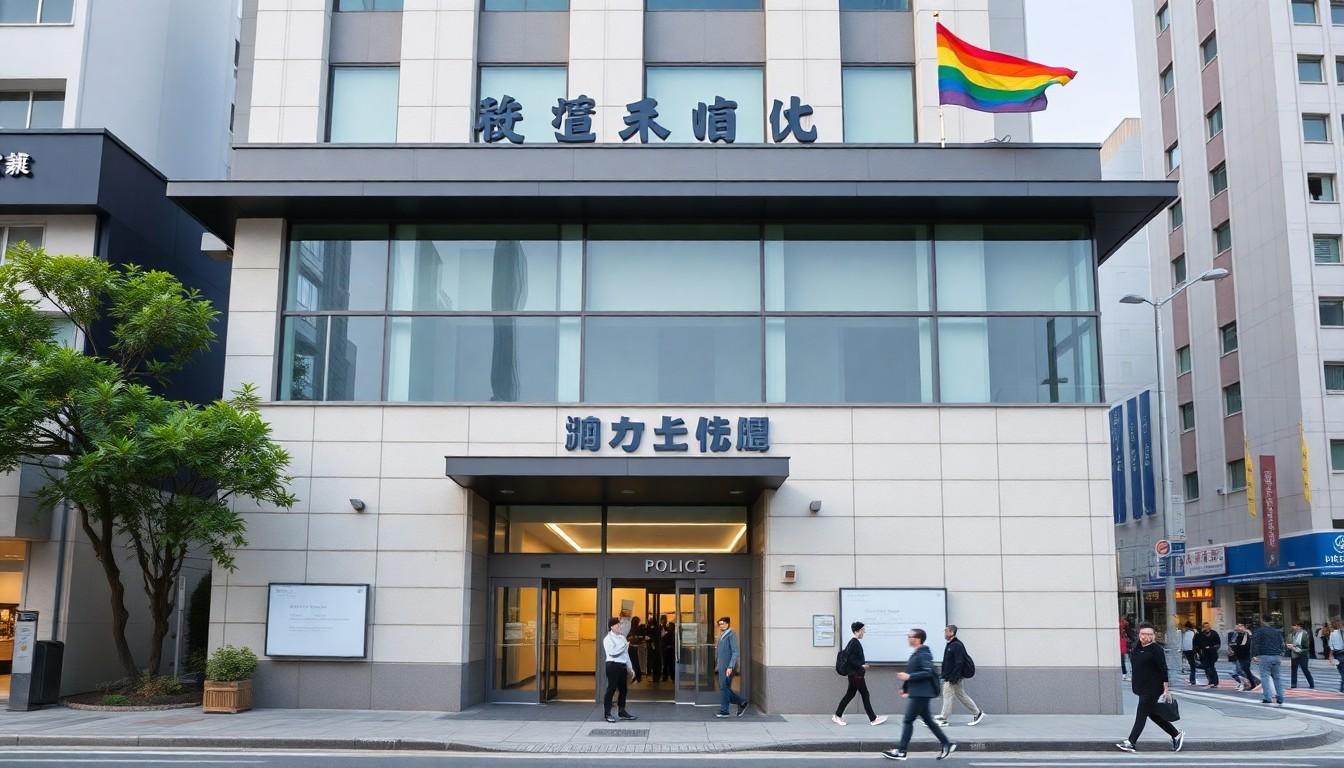
LGBTQ+ demonstrators gathered outside a Taipei police station after a raid on Commander D detained dozens of patrons and arrested the venue's owner. The operation has fuelled concern over police treatment of queer communities in Taiwan, just weeks before the city's major Pride celebrations and despite the island's reputation as one of Asia's most LGBTQ-friendly societies.
Essential Takeaways
- Dozens detained: Police took 51 people in for questioning after entering Commander D in Taipei's Wanhua district.
- Public-decency warrant: Authorities cited suspected breaches of laws covering nudity and “lascivious” behaviour in public or publicly accessible places.
- Peaceful protest: Around 100 people demonstrated outside the police station the following day.
- Bigger questions raised: LGBTQ+ advocates say the incident points to institutional problems, not simply the conduct of individual officers.
- Taiwan's mixed picture: The island legalised same-sex marriage in 2019, yet older public-order laws remain on the books.
A police raid turns into a public reckoning
The afternoon raid reportedly began when more than 30 uniformed and plain-clothes officers entered Commander D, stopped the music and switched on the lights. Patrons were ordered to squat and put away their phones, creating a tense, stark scene inside a venue that had been operating as a social space. Reuters reported that 51 people were taken in for questioning, while the bar's owner was arrested.
Police said they were acting on a search warrant linked to suspected offences against public morality. The stated concern centred on nudity and sexualised conduct in a public or publicly accessible setting, while authorities also said they found used condoms at the venue. Reports from The Diplomat and Taiwan Plus have added to scrutiny of how the operation was carried out. [2], [3]
Why the Commander D case has struck such a nerve
Taiwan's LGBTQ+ reputation is not accidental. It became the first jurisdiction in Asia to legalise same-sex marriage in 2019, and Taipei Pride has grown into one of the region's largest celebrations. The city's public image is inclusive, colourful and outward-looking, which makes a forceful police operation at a gay venue feel especially jarring.
That contrast is at the heart of the backlash. Sean Du of the Taiwan Tongzhi Hotline Association told The Diplomat that the raid revealed a gap between public celebration and equal treatment by state institutions. Coverage by GCN and LGBTQ Nation likewise described demands for accountability, suggesting the anger is about more than one difficult afternoon. [4], [7]
Protesters say the treatment was humiliating
About 100 members of Taipei's LGBTQ+ community marched peacefully around the police station on October 4, chanting against the raid. One detained patron, identified by Reuters by the family name Wen, said the operation felt violent and frightening. That reaction helps explain why the episode has travelled beyond a technical dispute over licensing or public-decency rules.
Advocates have also alleged that nude patrons were prevented from dressing and that some people who had put clothes on were ordered to remove them again. The details remain contested, but reports in Taiwan's local press and by New Bloom Magazine have focused attention on dignity, consent and the handling of evidence during the search. [5], [6]
Old public-order laws meet a modern LGBTQ+ society
Taiwan's legal progress sits alongside laws inherited from a more restrictive era. Rules intended to protect public order can penalise nudity or the distribution and display of material deemed obscene, leaving room for police action in venues where customers may dress or behave differently from people in ordinary public spaces.
That tension is not unique to Taiwan, but it becomes sharper when enforcement appears concentrated on a queer venue. The Diplomat noted that Taiwan's history includes police harassment of LGBTQ+ people during the martial-law period, which ended in 1987. For many protesters, the concern is therefore historical as well as immediate: old language can produce very modern harm. [6], [7]
What happens next for Taipei's Pride-friendly image?
The police precinct chief reportedly told protesters that officers respected a pluralistic society and would protect every citizen's rights. Some officers involved in the raid have also reportedly faced disciplinary action, though LGBTQ+ organisations argue that individual punishment won't resolve wider questions about training, oversight and the use of public-morality laws.
The timing has made the dispute harder to contain. Taipei's Pride celebrations were approaching, and one protester told Reuters he was angry that the raid had happened during Pride Month. Taiwan can still be a regional leader on LGBTQ+ rights, but trust is built in ordinary encounters too, not only on parade day. [2], [3], [4]
It's a reminder that legal equality means little without equal treatment on the ground.
Source Reference Map
Story idea inspired by: [1]
Sources by paragraph: