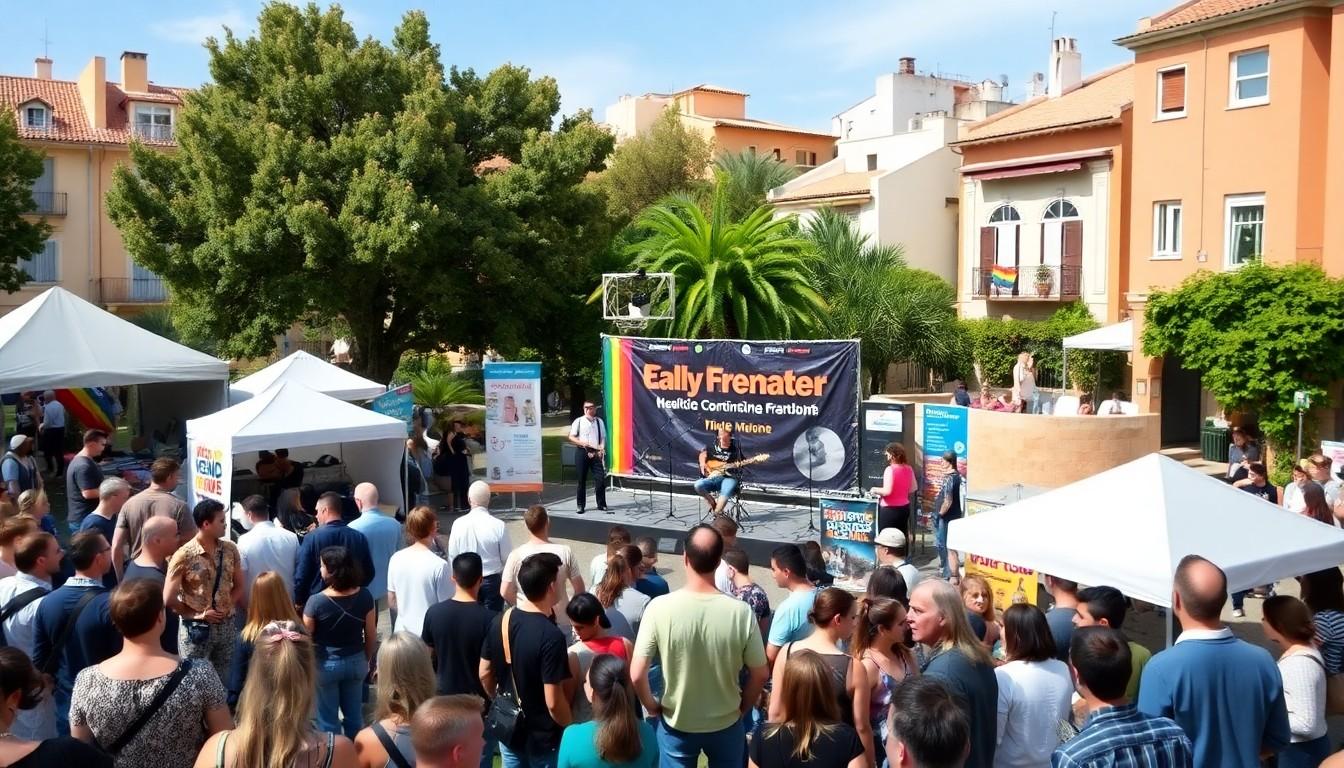
Visitors in Dénia swapped big-city crowds for a lively Pride festival in the Costa Blanca town, where drag artists, diva classics and community groups filled La Glorieta with colour. The third Diva Dénia Music Pride offered four hours of entertainment and support, showing why local celebrations can feel especially welcoming.
Essential Takeaways
- Four hours of celebration: The event ran from 6pm to 10pm in central Dénia.
- A starry soundtrack: Classic female pop hits from the 1970s, 1980s and 1990s drove the evening.
- A last-minute change: Alma de Soul replaced Choriza May and was warmly received.
- More than music: LGBTQ+ organisations, artists and sexual health professionals met visitors at the community fair.
- A strong local message: Organisers promoted Pride close to home, rather than relying only on major city events.
Dénia turns its town centre into a Pride stage
La Glorieta became the beating heart of Dénia’s latest Pride celebration, with music, laughter and glittery stage energy spreading through the town centre. According to the Euro Weekly News, the third Diva Dénia Music Pride welcomed residents of different ages for an evening that balanced entertainment with a clear message of inclusion.
That local setting mattered. Instead of travelling to Valencia, Madrid or Barcelona, residents could enjoy a full Pride programme close to home, in a familiar public space. It gave the evening an easy, neighbourly feel, while still delivering plenty of showbiz sparkle.
Drag performers and diva anthems keep the crowd moving
The programme leaned into timeless pop, with songs associated with major female stars of the 1970s, 1980s and 1990s providing the musical backbone. Presenter La Villaescusa guided the audience through the evening with comedy, introductions and the sort of quick-fire energy that keeps a four-hour event from losing its fizz.
Menorcan singer Kevin Coll, Michel Vintage, Violeta Moore and DJ Luiggi were among the performers involved. Marina Alta reported that Alma de Soul, known from the sixth season of Drag Race España, joined the bill after Choriza May was unable to appear.
A change of performer can easily unsettle an event, particularly when audiences have been looking forward to a named guest. Here, though, the replacement landed well, and the crowd stayed enthusiastic.
Why local Pride events are gaining attention
Large Pride festivals have obvious pull, but smaller gatherings offer something different: less travelling, a more relaxed atmosphere and a better chance of bumping into people from the surrounding community. Costa Kriebels described Dénia’s third edition as a celebration built around music, performance and local participation.
That makes the format especially appealing to people who might find a huge city festival overwhelming. Families, older residents, visitors and LGBTQ+ locals can share the same space without the event feeling like it belongs to only one age group or audience.
There’s also a useful reminder here. Pride isn’t just a parade or a party; it’s a way for communities to make visibility part of ordinary public life. A stage in a town square can sometimes say as much as a much larger event.
Community groups add substance beyond the stage
The festival’s fair brought together LGBTQ+ organisations, creatives and artists, giving visitors somewhere to ask questions, discover local work and find support. Dénia.com had previously highlighted the event’s aim of creating a Pride celebration with community value, not simply a concert with colourful costumes.
Sexólogos sin Fronteras also attended, offering professional guidance around sexual health and diversity. That presence gave the event a practical dimension, helping connect celebration with information that people may not always know where to find.
A photocall near the stage proved popular too, with visitors queuing for photographs alongside performers. It’s a small detail, but it shows how the event encouraged direct contact between the audience and artists rather than keeping the two worlds separate.
What Dénia’s Pride celebration says about the future
Dénia’s approach suggests that Pride can thrive at town level, with the right blend of culture, community groups and accessible entertainment. The local authority’s account of the event described a successful third edition built around the idea of proximity, reinforcing the value of celebrations that residents can reach easily.
The strongest moments were probably the most human ones: people meeting performers, browsing stalls, singing along to familiar songs and finding support in a busy public square. Those encounters can make inclusion feel tangible rather than abstract.
For Dénia, the festival is becoming more than a date in the calendar. It’s a recurring invitation for the whole community to show up, enjoy the music and make room for one another.
A local Pride can still make a big impression, especially when everyone feels invited.
Source Reference Map
Story idea inspired by: [1]
Sources by paragraph: