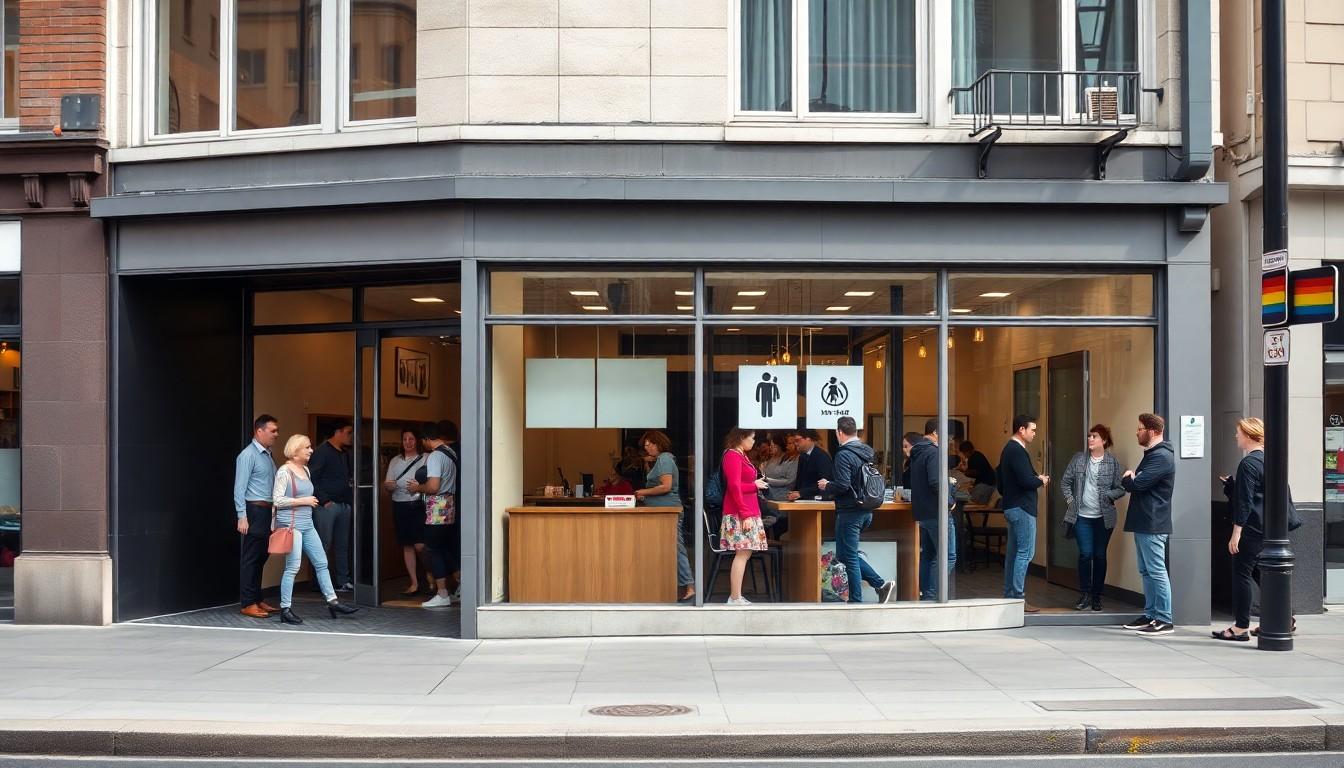
Businesses are being urged to look beyond rainbow flags and make LGBTQIA+ inclusion part of everyday customer service. A free online workshop for NSW small business owners will explore practical changes to language, forms, facilities, marketing and workplace culture, helping shops and services turn a visible welcome into a more comfortable experience for queer customers and staff.
Essential Takeaways
- A flag is only a starting point: Visible support should be backed by inclusive policies and behaviour.
- Language matters: Asking about a partner avoids assumptions about gender or relationships.
- Small changes help: Review forms, booking systems, toilets, websites and signage for unnecessary barriers.
- Staff culture counts: Employees need to feel safe discussing concerns and challenging inappropriate comments.
- Consistency builds trust: Inclusion should continue beyond Pride celebrations and special events.
A rainbow flag needs follow-through
A rainbow flag in a window can feel like a small but meaningful signal. It says, quietly, that queer customers won't have to brace themselves before asking a question, booking a service or mentioning the person they love.
But that reassurance can disappear quickly if the welcome stops at the door. The Rainbow Precinct says its work focuses on helping businesses build LGBTQIA+ inclusion into everyday operations, rather than treating it as a seasonal marketing gesture. Its community work is rooted in Sydney's Oxford Street precinct, a long-standing centre of LGBTQIA+ culture and business.
The point is simple, if slightly uncomfortable: customers notice the gap between what a business displays and how it behaves. A rainbow sticker can't compensate for a form that recognises only one kind of family or staff who make careless assumptions.
The awkward moment often starts with a question
For many queer customers, exclusion isn't always dramatic. It can be the repeated irritation of being asked about a boyfriend when they have a girlfriend, being offered a form that doesn't describe their family, or wondering whether correcting an assumption will create a scene.
Neutral language is an easy place to begin. Asking whether someone's partner is joining them keeps the conversation open, while also avoiding an unnecessary guess. If a staff member gets it wrong, a brief apology and correction are usually enough. Nobody needs a theatrical display of embarrassment that leaves the customer doing the emotional work.
The most useful test is whether people can move through the business without having to calculate every answer. That applies to a salon, cafe, accountant, venue or online booking system. A welcoming business should make ordinary interactions feel ordinary.
Review the customer journey from start to finish
The Oxford Street Pride Business Charter offers businesses a framework for considering inclusion across customers, employees and their wider community connections. The City of Sydney has described the charter as part of broader efforts to strengthen the precinct's character and relationships, rather than simply adding another badge to a shopfront.
A practical review can begin online. Look at website imagery, enquiry forms, booking fields, privacy wording and complaints procedures. Then walk through the physical experience: signage, toilets, reception scripts and the way staff introduce themselves or ask questions.
Single-person toilets may not need gendered signs, provided facilities are safe, accessible and clearly marked. Marketing can also show a wider range of couples and families, but it should feel like a genuine reflection of the business rather than a once-a-year rainbow makeover.
Inclusion must reach the staff room
Customers aren't the only people reading the room. Employees also notice whether they can talk naturally about a partner, raise a concern or challenge an inappropriate joke without being treated as difficult.
That makes workplace culture just as important as public-facing language. A business might have polished social media and inclusive posters, yet still lose trust if staff feel management won't act when something goes wrong.
The City of Sydney's LGBTQIA+ social and cultural place strategy reflects the wider importance of safe, visible and connected spaces. For small businesses, that doesn't require a huge budget. It does require clear expectations, confident managers and a willingness to address problems before they become patterns.
Pride is a beginning, not a deadline
Events such as Mardi Gras and Pride Month can help businesses show support and reach new audiences. However, queer customers don't vanish when the bunting comes down, and neither do the everyday decisions that shape whether a place feels safe.
NSW Small Business Month provides a useful moment for owners to examine those details. The workshop promoted by Oxford Street Rainbow Precinct is designed around tracing a customer's experience and identifying a handful of realistic improvements, rather than demanding an instant overhaul of everything.
That practical approach is encouraging. Most owners don't need another abstract lecture about values; they need to know which question to change, which form to rewrite and how to respond when an employee or customer points out a problem. Those modest adjustments can make a business feel noticeably less tiring to navigate.
A visible welcome matters most when everyday behaviour makes it believable.
Source Reference Map
Story idea inspired by: [1]
Sources by paragraph: