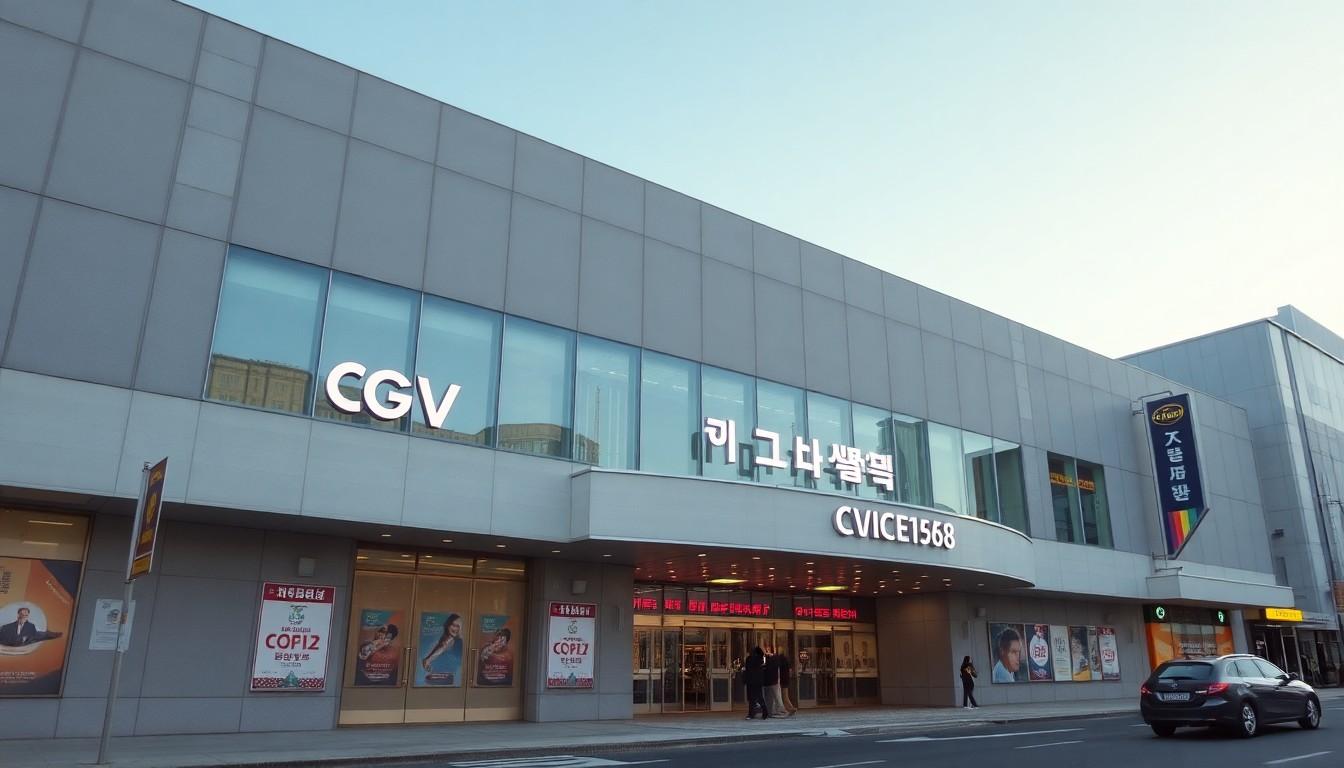
Film fans and LGBTQ+ audiences will gather at CGV Piccadilly1958 from 5 to 11 November for the 16th Seoul International Pride Film Festival, with The Black Ball leading the programme. Spanning three eras of gay life in Spain, the Cannes-winning drama brings Federico Garcia Lorca’s unfinished writing to the screen with a sweeping, emotionally charged story.
Essential Takeaways
- Festival dates: The 16th Seoul International Pride Film Festival runs from 5 to 11 November at CGV Piccadilly1958.
- Opening film: The Black Ball, directed by Javier Calvo and Javier Ambrossi, will launch the festival.
- Three connected eras: The story moves between 1932, 1937 and 2017, linking different generations of gay men.
- Literary roots: The film grows from a four-page unfinished manuscript by Federico Garcia Lorca, combined with Alberto Conejero's play The Dark Stone.
- A striking visual identity: Its poster shows a man's face and uneasy gaze against the violence of the Spanish Civil War.
The Black Ball gives Seoul Pride a powerful opening
The Seoul International Pride Film Festival has chosen a film with plenty of weight behind it. The Black Ball arrives as a major festival opener after winning the Best Director award at Cannes, making it a particularly bold way to begin a week devoted to LGBTQ+ cinema.
The 159-minute drama is directed by Javier Calvo and Javier Ambrossi, and was first presented in competition at Cannes. According to the film's festival listings, it also carries Spain's international feature film submission, underlining its significance beyond the pride-film circuit.
There’s a deliberate sense of scale here. Rather than focusing on one isolated relationship, the film looks across decades, suggesting that queer lives have always formed part of modern history, even when official records tried to hide them.
A lost Lorca story finds a new life
The film's most intriguing starting point is a fragment. Lorca left behind a four-page unfinished manuscript, and the filmmakers have expanded that idea by bringing it together with Alberto Conejero's play The Dark Stone.
That creative combination turns an incomplete literary trace into a cinematic conversation across time. It’s also an especially poignant choice given Lorca's own fate. The poet and playwright, known for works including Blood Wedding and The House of Bernarda Alba, was killed near Granada shortly after the Spanish Civil War began in 1936.
His body has never been found. The title refers to the black ball used in some club voting systems to reject a prospective member, a small object that becomes a quietly sharp symbol of exclusion, secrecy and social judgement.
Three periods, one long emotional thread
The narrative moves between 1932, 1937 and 2017. It begins with a 20-year-old man pressured by his father to apply for membership of a local social club, before moving into the danger and heartbreak of wartime Spain.
A later storyline follows someone investigating an earlier love and the secrets left behind by it. The three strands aren't simply presented as separate historical episodes. They gradually begin to echo one another, showing how fear, desire and family expectations can travel from one generation to the next.
The International Film Festival Rotterdam describes The Black Ball as a work that links these different moments through a broad, intergenerational story. That structure may ask for patience, but it promises a richer payoff than a straightforward period drama.
Why the visual style matters
The Black Ball was shot on 35mm film, giving its historical sections a tactile quality that digital images often struggle to replicate. The directors also distinguish the three periods through different visual textures before allowing the stories to converge.
That approach fits the film's subject. Memory here isn't clean or neatly archived; it feels worn, unstable and vulnerable to being lost. Even the official poster leans into that mood, showing a man's face framed by the turmoil of the Civil War and an uncertain, unsettled gaze.
The Daily Star reported that the film received a 16-minute standing ovation at Cannes, with Penelope Cruz among its cast. Such a response doesn't guarantee that every viewer will find the long running time easy, but it does suggest a film designed to leave an impression rather than pass quietly by.
What festival audiences can expect
For viewers choosing the film as part of their Seoul Pride Film Festival visit, The Black Ball offers both literary curiosity and emotional ambition. It is rooted in Spanish history, but its questions about belonging, silence and queer visibility are much wider.
Festival programmer Kim Seung-hwan said the film demonstrates, in epic form, that LGBTQ+ people have always existed within modern history. That makes the selection feel purposeful rather than merely prestigious.
It may be a demanding opening-night choice, especially at nearly two and a half hours. But sometimes a festival needs a film that opens the door loudly, and The Black Ball seems ready to do exactly that.
A striking opening film can set the tone for an entire festival, and this one looks built for conversation.
Source Reference Map
Story idea inspired by: [1]
Sources by paragraph:
- Paragraph 1: [2], [6]
- Paragraph 2: [4], [5]
- Paragraph 3: [3], [7]
- Paragraph 4: [2], [6]
- Paragraph 5: [3], [7]
- Paragraph 6: [2], [4]
- Paragraph 7: [5], [7]
- Paragraph 8: [2], [6]
- Paragraph 9: [3], [7]
- Paragraph 10: [4], [5]
- Paragraph 11: [6], [7]
- Paragraph 12: [2], [3]
- Paragraph 13: [6], [7]
- Paragraph 14: [4], [5]
- Paragraph 15: [2], [6]
- Paragraph 16: [3], [7]
- Paragraph 17: [2], [6]
- Paragraph 18: [4], [5]
- Paragraph 19: [2], [7]
- Paragraph 20: [6], [7]