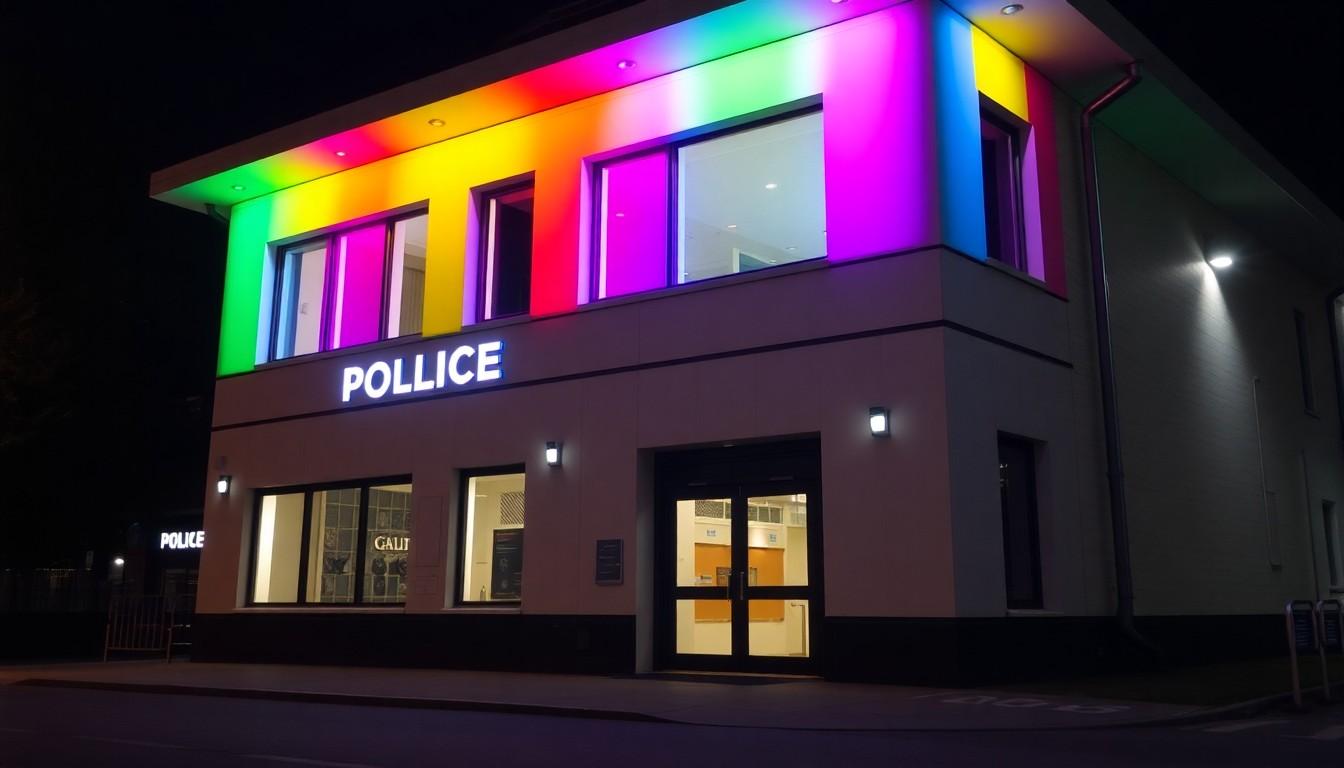
People across the Netherlands saw police stations take on a vivid new look for Coming Out Day, with Enschede’s building glowing in rainbow colours after dark. Alongside Progress Pride flags, the display offered a highly visible reminder that acceptance, safety and the freedom to be yourself still matter.
Essential Takeaways
- A striking display: Enschede’s police station was illuminated in several rainbow shades, making the building especially noticeable at night.
- A national gesture: Police stations around the Netherlands raised the Progress Pride flag for Coming Out Day.
- A message of acceptance: The campaign highlights the importance of being open about identity without fear.
- More than decoration: Rainbow displays can signal visibility and support, while broader inclusion requires action beyond one day.
Enschede station makes a colourful statement
After sunset, Enschede’s police station became a bright landmark, its facade washed in rainbow light. It’s a simple visual change, but one that’s hard to miss when the surrounding streets are dark and quiet.
The display was arranged for Coming Out Day, an international occasion focused on acceptance and the right to live openly. Local coverage reported that Enschede went a step further than the flag-raising seen at police stations elsewhere, using the building itself to carry the message.
Why police stations raised the Progress Pride flag
Police stations across the Netherlands displayed the Progress Pride flag as part of the national observance. According to the Dutch police, the gesture was intended to draw attention to LGBTQ+ acceptance and the importance of feeling able to be yourself.
That setting matters. A police station is not just another public building; it represents help, protection and access to justice. Putting an inclusive symbol there can reassure people who may otherwise feel uncertain about whether they’ll be heard or treated fairly.
Rainbow colours bring visibility after dark
There’s a practical reason the illuminated approach catches attention. A flag can be overlooked during a busy day, while coloured lighting turns a familiar civic building into a visible evening landmark.
Similar initiatives were reported by local authorities and police teams elsewhere in the Netherlands, including Hilversum and the Langstraat area. The details vary, but the idea is consistent: public spaces can help make LGBTQ+ identities visible rather than leaving inclusion to private celebrations.
What Coming Out Day represents
Coming Out Day is centred on openness, acceptance and the ability to express who you are. Rainbowdagen describes the wider rainbow-day movement as a way to promote visibility and support for LGBTQ+ people throughout the year, not just during a single annual event.
That distinction is worth keeping in mind. A glowing facade creates a warm, hopeful image, but lasting confidence also depends on everyday experiences at school, work, in healthcare and when contacting the police. The most meaningful symbol is one backed by respectful treatment when someone actually needs help.
A small light with a wider message
The Enschede display is temporary, yet its message is deliberately public. For some viewers, it may be a welcome sign of solidarity; for others, it’s a prompt to think about how safe and accepted people feel in their own communities.
As rainbow displays continue to appear across Dutch towns and cities, the challenge is turning visibility into lasting trust. The lights may switch off, but the conversation shouldn’t.
It's a bright reminder that public support is most powerful when it continues beyond the calendar.
Source Reference Map
Story idea inspired by: [1]
Sources by paragraph: