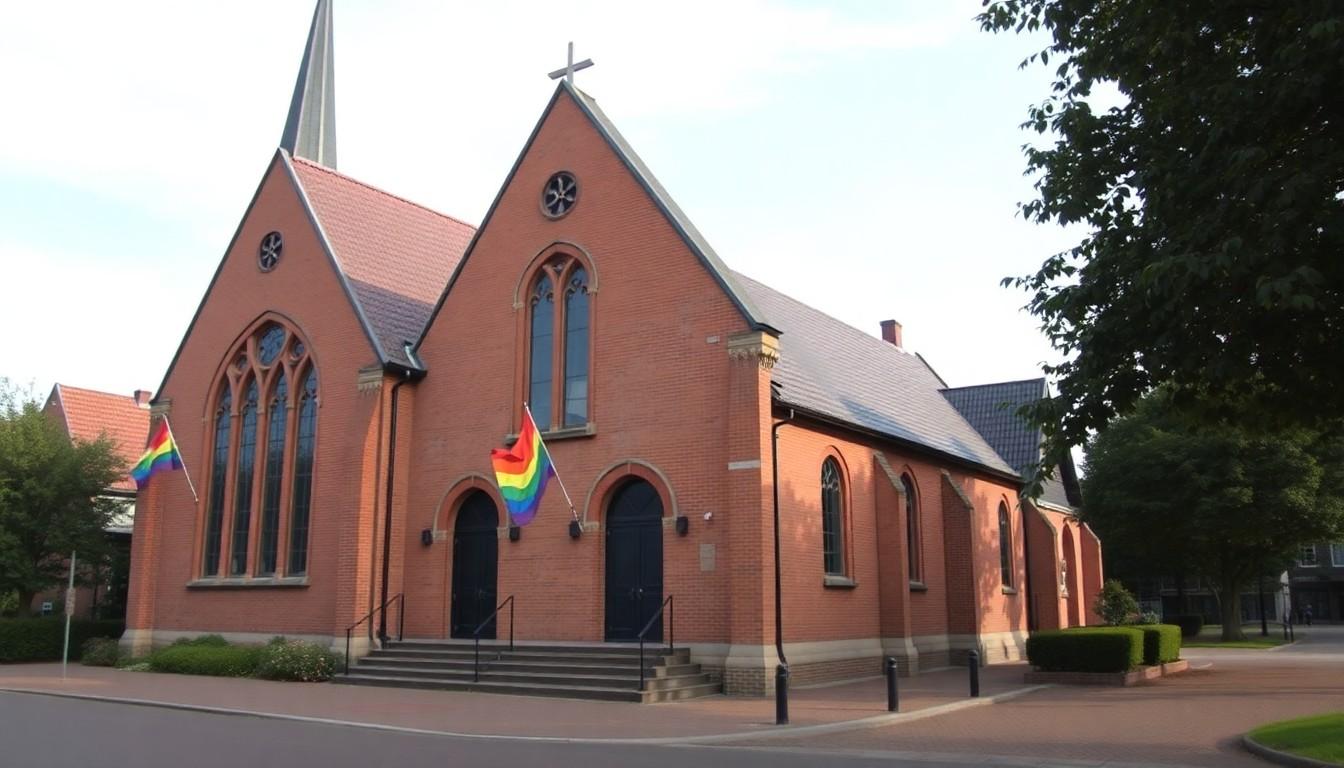
Residents in Oldebroek have been drawn into a heated debate after the council chose not to fly the rainbow flag at the town hall on Coming Out Day. A church in Wezep plans to display it instead, turning a quiet local decision into a vivid national conversation about LGBTQ+ acceptance, faith and public responsibility.
Essential Takeaways
- Council decision: Oldebroek’s town hall won’t fly the rainbow flag for Coming Out Day.
- Church response: The flag will still be raised at Wezep’s Kruiskerk.
- Political fallout: The choice has triggered criticism and divided local opinion.
- Wider concern: Teachers report that anti-gay language remains common among young people.
- Practical lesson: Visible support matters, but so do everyday conversations about respect.
A flag absent from the town hall
The controversy began with a simple omission: Oldebroek’s municipal building would not display the rainbow flag on Coming Out Day. According to EenVandaag, the decision quickly became a symbol of how local authorities approach LGBTQ+ visibility and inclusion. [2], [3]
For supporters, the flag is a modest gesture of welcome. For critics of the policy, refusing to fly it sends an equally clear message, whether intended or not. That’s why what might look like a small civic detail has produced such a strong reaction.
Wezep’s church steps into the gap
The rainbow flag won’t disappear from the area altogether. The Kruiskerk in Wezep plans to raise it during a ceremony, with support from Reverend Han Wilmink and the mayor, according to Hart van Nederland and Zwolse Dagblad. [5], [6]
The church’s involvement gives the dispute an added layer. Rather than treating faith and LGBTQ+ acceptance as opposites, Wilmink’s response presents the flag as an expression of solidarity and public disagreement. It’s a striking image: a place of worship providing the welcome some residents feel is missing from the council building.
Why the argument feels bigger than Oldebroek
Local reactions have been sharply divided, with some residents defending the council’s position and others saying they’re embarrassed by it. Stadindex reported that the debate has prompted people to question what the municipality wants to represent publicly. [4]
That tension reflects a broader shift in how public symbols are understood. A flag can’t change someone’s mind on its own, but it can tell LGBTQ+ residents whether their identity is acknowledged in the civic space around them. In that sense, visibility is less about decoration and more about belonging.
Young people and the everyday language of intolerance
The row also arrives amid concern about falling acceptance among young people. In the related discussion, a Hengelo teacher described hearing “gay” used as an insult and warned that social media can draw teenagers into hostile online communities. According to the reporting, intolerance doesn’t only emerge from organised ideology; it can arrive quietly through a smartphone. [1], [3]
That’s where the conversation needs to go next. Flying a flag is visible and important, but schools, families and sports clubs also have to challenge casual abuse before it becomes normal. A rainbow emblem may catch the eye, yet respectful habits are built in the ordinary moments nobody photographs.
A local dispute with a lasting test
The ceremony at the Kruiskerk offers a possible way forward, even if it doesn’t settle the argument. EenVandaag and Eydaily described a community wrestling with competing views of neutrality, faith and representation. [3], [7]
For residents, the most revealing question may not be whether one building flies one flag. It’s whether LGBTQ+ people can look at their town and feel that public institutions are willing to stand beside them when acceptance is under pressure. That’s a much harder promise, and a more meaningful one.
Visible support matters, but everyday respect matters even more.
Source Reference Map
Story idea inspired by: [1]
Sources by paragraph: