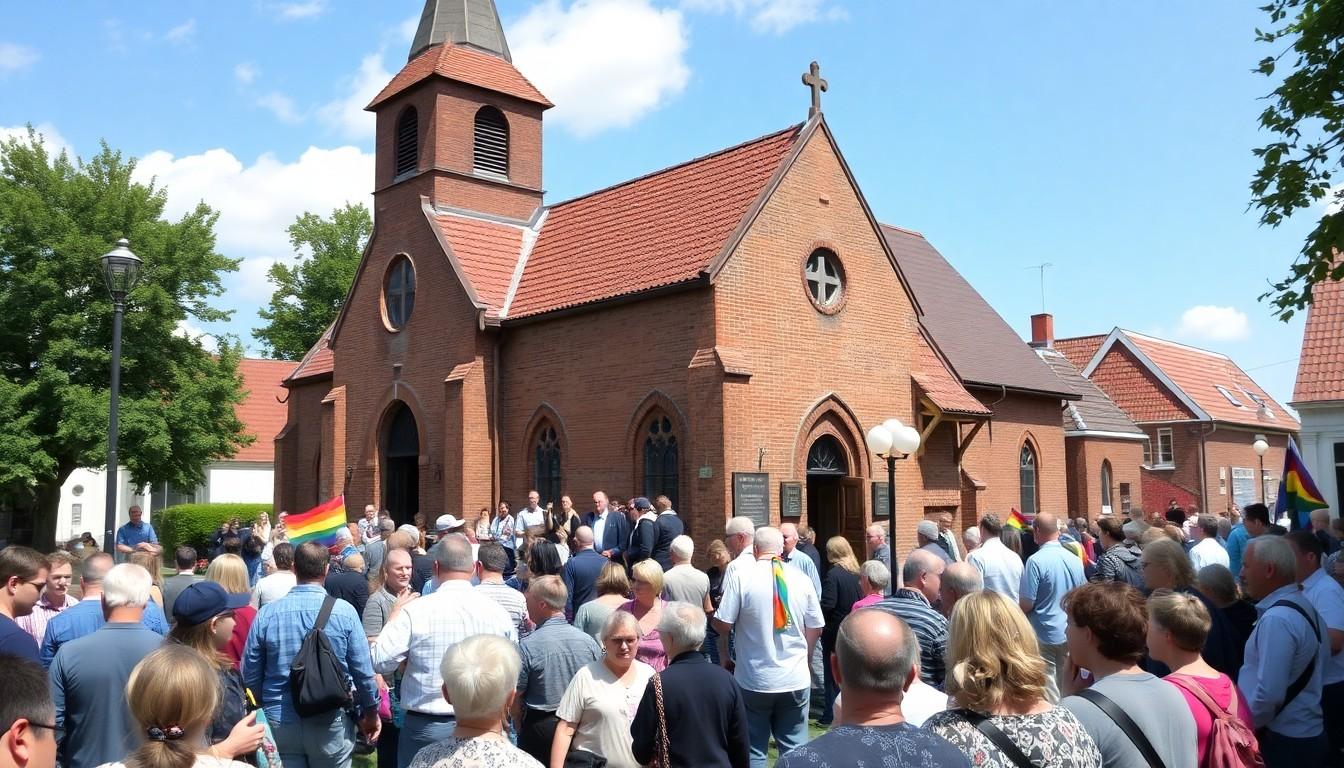
Residents in Oldebroek have turned a rainbow flag-raising into a vivid local statement after the municipality’s new conservative coalition ended its LGBTQ+ policy and stopped displaying the flag at town hall. The mayor’s decision to attend a church ceremony has drawn mixed reactions, but it also underlines her promise to represent every resident.
Essential Takeaways
- Policy reversal: Oldebroek’s new coalition has withdrawn its LGBTQ+ policy and ended municipal rainbow flag displays.
- Mayor’s decision: The mayor attended a church flag-raising despite the council’s position.
- Mixed response: Her presence prompted both supportive and critical reactions.
- Community turnout: Around 200 people reportedly attended the ceremony.
- A wider message: Residents have used rainbow flags and public protest to keep LGBTQ+ visibility on the local agenda.
A flag-raising becomes a local flashpoint
A rainbow flag outside a church might sound like a small civic gesture, but in Oldebroek it has become the centre of a much bigger argument. Around 200 people reportedly gathered for the ceremony, turning a familiar symbol of inclusion into a visible response to the municipality’s policy shift.
The new conservative coalition has scrapped the local LGBTQ+ policy and agreed that the municipality itself will no longer raise the rainbow flag. Reports from NL Times and other outlets describe growing concern among residents, who see the decision as more than a change to the council calendar.
For supporters, the flag is a straightforward sign that LGBTQ+ people belong in public life. For opponents, the debate touches on the proper role of local government and whether symbolic gestures should be official policy. That tension is precisely why the moment has attracted so much attention.
Why the mayor attended the church ceremony
The mayor’s presence added a layer of political and personal significance. Although the flag was not being raised at the town hall, she chose to attend the church event, signalling that the municipality’s decision hasn’t erased the issue from public conversation.
She later acknowledged receiving both positive and negative reactions. Rather than dismissing either side, she said those views were allowed to exist and that her role was to understand and interpret as many perspectives as possible.
That stance reflects the awkward balancing act facing local leaders. A mayor can operate within a coalition agreement while still insisting that public office means serving the whole community. In Oldebroek, that includes residents who identify as LGBTQ+, even when the council has withdrawn a dedicated policy.
Residents keep the rainbow visible
The council’s decision hasn’t ended public displays of solidarity. Residents have reportedly raised rainbow flags themselves and organised protests, while one newspaper advertisement was used to challenge the coalition’s approach.
According to reports from NL Times and Head Topics, the protests are part of a wider effort to object to the removal of LGBTQ+ measures and the decision to stop the municipal flag-raising tradition. It’s a reminder that civic symbolism doesn’t belong only to official buildings. A flag in a window, outside a church or in a public gathering can carry its own message.
There’s also a practical lesson here for communities facing similar disputes. When an official policy disappears, residents often look for other ways to preserve visibility, whether through faith groups, community organisations, local campaigns or public events.
Symbolic politics, with real consequences
Rainbow flag debates are often described as symbolic, but symbols can affect how welcome people feel in their own town. A public display doesn’t replace concrete support, of course, yet its removal may be read as a change in priorities, particularly by groups already watching local politics closely.
Reports about Oldebroek’s new coalition also point to concerns over broader changes to LGBTQ+ policy. The argument is therefore not only about fabric on a flagpole. It’s about whether local government should actively communicate inclusion, and what residents can reasonably expect from their council.
That makes the mayor’s attendance notable. She hasn’t reversed the coalition’s decision, but she has made her role visible at an event that says the community remains divided, engaged and unwilling to let the subject quietly disappear.
What happens next in Oldebroek?
The immediate dispute may remain focused on flag-raising, but the longer-term question is how Oldebroek handles LGBTQ+ issues in everyday governance. Residents may continue to organise independently, while councillors face pressure to explain what replacing the former policy will mean in practice.
For now, the church ceremony has offered a striking picture of local democracy: a crowd, a flag, a mayor, and plenty of disagreement. It’s untidy, but it’s also a reminder that representation is tested most clearly when a community doesn’t speak with one voice.
A rainbow flag can’t settle a political argument, but it can make sure the argument stays visible.
Source Reference Map
Story idea inspired by: [1]
Sources by paragraph: