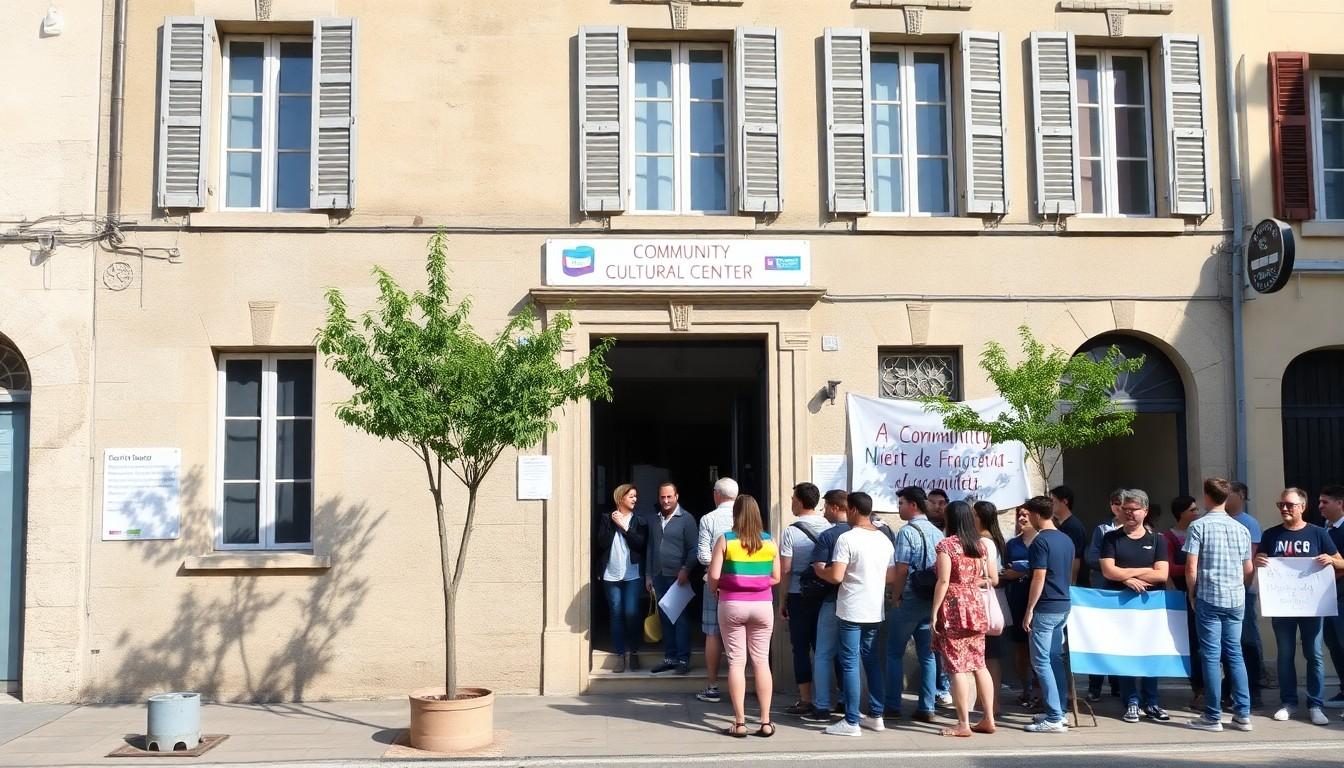
Hundreds of people took to the streets of Nîmes on Saturday 10 October for Fiertés Vénères, a politically focused Pride bringing together LGBTQIA+ campaigners, anti-fascist groups and supporters of Palestine. With glitter, placards and determined slogans, the march showed why Pride remains both a celebration and a protest.
Essential Takeaways
- A sizeable turnout: Several hundred people joined the march through central Nîmes.
- More than a party: Organisers framed the event around discrimination, racism, police violence and LGBTQIA+ rights.
- Broad backing: Around 40 associations from across southern France supported the gathering.
- A colourful protest: Make-up, sequins and bold banners gave the demonstration a bright, energetic feel.
- A wider political message: The march also expressed opposition to the far right and solidarity with Palestine.
Nîmes Pride took a distinctly political turn
The march began at Place Jules-Guesde, where a colourful crowd gathered beneath a forest of placards and flags. Sequins and face paint brought a celebratory sparkle, but the atmosphere was purposeful rather than purely festive.
Fiertés Vénères was organised by the Nîmes anti-fascist and queer collective, with support from dozens of organisations across southern France. Event information published by the organisers described the gathering as a radical Pride rooted in collective action and opposition to discrimination.
Why this Pride was about more than visibility
For many participants, being seen is only the starting point. The demonstration challenged attacks on LGBTQIA+ people, racism linked to state institutions and allegations of police violence, while also highlighting the rights of trans people.
One participant from Montpellier told Midi Libre that a radical Pride should carry demands as well as colour and music. He argued that mainstream celebrations can improve visibility, but politically organised marches are still needed when rights are under pressure.
That distinction matters. A parade can feel joyful and still ask uncomfortable questions about safety, equality and who gets to live openly without fear.
A coalition stretching beyond LGBTQIA+ groups
The support behind Fiertés Vénères reflected a wider alliance between queer, anti-fascist and social-justice organisations. Listings for the event showed it forming part of a broader network of campaigners in the region, rather than standing as an isolated local gathering.
The march also expressed solidarity with Palestine and opposition to the far right. That combination gave the event a wider political frame, linking LGBTQIA+ liberation with struggles against racism, authoritarianism and discrimination.
It was a reminder that Pride has never had just one tone. For some, it is a street party; for others, it's a vital annual opportunity to make demands that may otherwise be ignored.
What makes a radical Pride different?
The practical difference is visible in the messaging. Alongside celebrations of identity, participants carry statements about trans rights, institutional racism, policing and political violence. The mood can shift quickly from joyful to angry, but that contrast is part of the point.
Event details shared by the organising collective and local listings presented Fiertés Vénères as a protest built around participation, solidarity and political expression. Supporters say that this format gives people space to speak collectively, rather than reducing Pride to branding or entertainment.
For anyone attending a similar event, the basics remain simple: check the meeting point, read the organisers' guidance, bring water and stay aware of the group's safety instructions. A comfortable pair of shoes also helps when the slogans continue long after the glitter starts to fade.
A bright crowd with serious questions
The Nîmes march combined the visual language people associate with Pride with a sharper call for change. That mix of colour and confrontation made the event feel lively, but it also underlined why campaigners continue to take to the streets.
As the Pride movement develops across France, gatherings such as Fiertés Vénères are likely to keep pressing the question of what visibility should achieve. Being seen matters, but for many marchers, being heard matters even more.
Pride is at its strongest when the celebration and the protest can share the same street.
Source Reference Map
Story idea inspired by: [1]
Sources by paragraph: