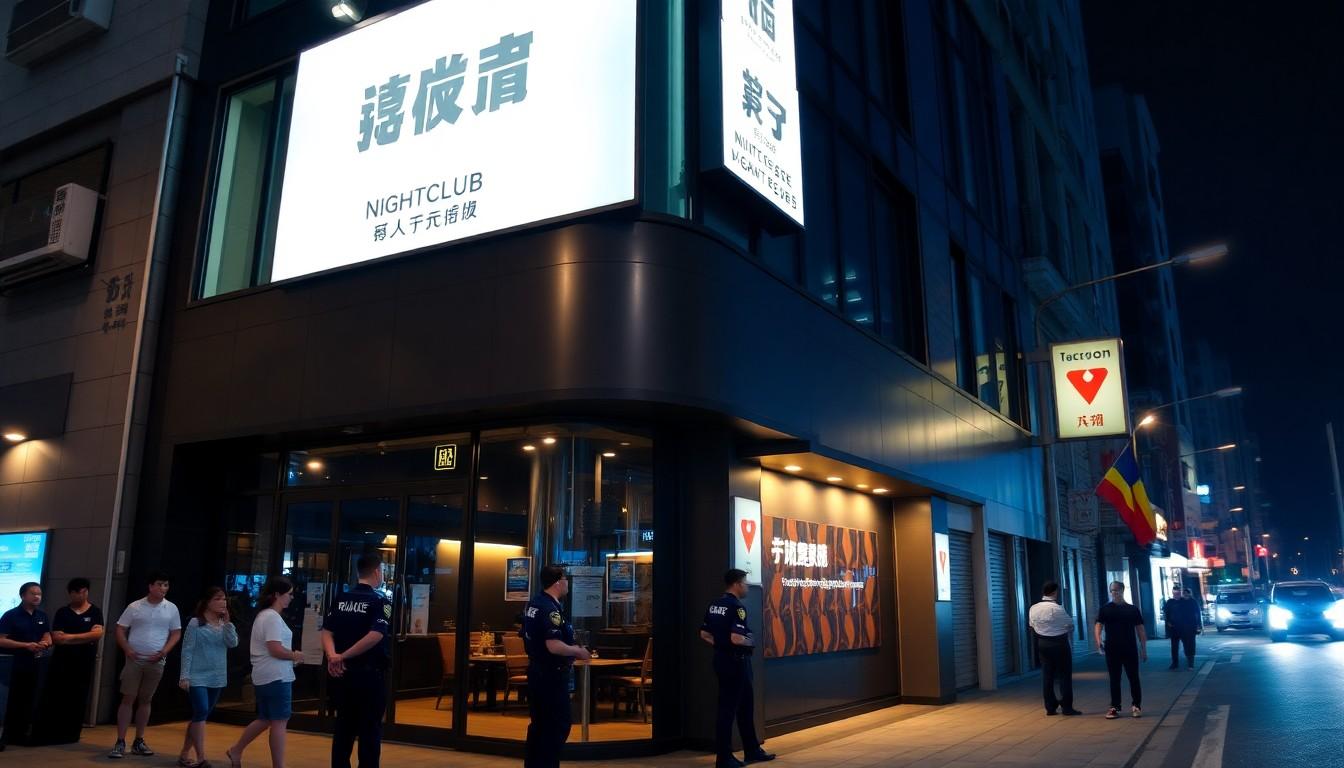
Residents and LGBTQ+ advocates are demanding answers after a large police operation at a Taipei gay bar triggered protests, disciplinary action and fresh concerns about discrimination. The October raid, which came weeks before the city’s major Pride event, has put Taiwan’s reputation as Asia’s most LGBTQ+-friendly destination under an uncomfortable spotlight.
Essential Takeaways
- Dozens were detained: Police took 51 people to a precinct for questioning after searching Commander D in Taipei’s Wanhua district.
- Officers faced discipline: Four officers received reprimands, while senior officials were also penalised over the operation.
- Legal concerns remain: Lawyers questioned searches, drug testing, phone restrictions and the treatment of people held as witnesses.
- Activists want an independent review: Campaigners say the issue may reflect wider institutional bias, not simply individual misconduct.
- Pride now carries extra weight: The controversy has intensified discussion ahead of Taipei’s large annual LGBTQ+ celebration.
A raid that left patrons shocked and confused
The operation began in the late afternoon, when more than 30 uniformed and plain-clothes officers entered Commander D, a long-running BDSM-themed venue in Ximending. Music stopped, lights came on and customers were reportedly ordered to squat, put away their phones and remain where they were.
Witnesses described a tense and humiliating scene. Some patrons were searched, while others were taken for urine testing and questioned at a police station. TaiwanPlus reported that roughly 100 people later protested outside the precinct, turning an unsettling night inside a club into a public confrontation over police conduct.
The raid has attracted particular attention because it happened only weeks before Taipei’s annual Pride event. For a city that markets itself as open and welcoming, the images were jarring, and not just because of the flashing police lights.
Why the operation is legally controversial
Police said the venue had attracted 13 public complaints and that officers were acting under a search warrant approved by the Taipei District Court. They also said they found used condoms and people without clothes inside the premises, raising questions about possible public-decency offences.
But a warrant to search a venue doesn't automatically give officers unlimited power over every person inside. As Taipei Times reporting highlighted, legal experts questioned whether individual belongings could be searched without separate grounds, and whether compulsory drug tests were appropriate for people classed as witnesses rather than suspects.
The treatment of nudity has also become central to the dispute. Lawyers argued that simply being unclothed isn't necessarily enough to establish an offence, particularly if police prevented people from dressing again. One attorney described ordering already dressed customers to undress as humiliation rather than evidence-gathering.
Taiwan's progressive image meets institutional reality
Taiwan became the first jurisdiction in Asia to legalise same-sex marriage, in 2019, and Taipei has since become a major destination for LGBTQ+ travellers from across the region. Its Pride gathering is among Asia's biggest, drawing crowds who associate the city with safety, nightlife and personal freedom.
That reputation, however, doesn't mean every institution has caught up at the same pace. LGBTQ+ Nation reported that advocacy groups are calling for accountability, arguing that discrimination can appear through assumptions, unequal scrutiny and different enforcement standards rather than openly hostile language alone.
The key question is whether an LGBTQ+-focused venue would have faced the same scale of operation as a comparable straight venue. That comparison is difficult to prove, but it explains why this incident has resonated far beyond one club.
Police discipline hasn't ended the argument
Wanhua Precinct said four officers used inappropriate language and were punished. A supervising official received a demerit, while the precinct chief was also reprimanded after requesting disciplinary action. Taipei's mayor subsequently apologised and instructed the police department to improve training and force discipline.
Those steps may acknowledge the immediate problem, but campaigners say they don't settle the larger questions. The Taiwan Tongzhi Hotline Association has called for an independent investigation into whether the venue's gay and BDSM identity influenced the decision-making behind the raid.
The controversy also echoes an earlier dispute involving an LGBTQ+ venue in Taichung, where advocates argued that morality-based enforcement had focused on queer spaces while similar scrutiny was not applied consistently elsewhere. That history makes official assurances harder for some residents to accept.
Pride will be watching closely
The timing has given Taipei Pride an added layer of meaning. Organisers and supporters now face a familiar balancing act: celebrating the progress Taiwan has made while refusing to gloss over the gaps that remain.
Some activists see the rapid public response as evidence that Taipei's civil society is strong. Protesters mobilised quickly, footage prompted official apologies and community groups pushed the issue into national conversation. Still, a lively Pride parade can't by itself guarantee fair treatment in a police station, courtroom or nightclub.
For many in Taipei's LGBTQ+ community, the hope is that this moment leads to better training, clearer procedures and less reliance on moral assumptions. Taiwan's welcoming reputation matters, but equal treatment has to be felt in ordinary, vulnerable moments too.
It's a small distinction with a big consequence: inclusion needs to work after the parade ends.
Source Reference Map
Story idea inspired by: [1]
Sources by paragraph:
- Paragraph 1: [2], [4]
- Paragraph 2: [3], [6]
- Paragraph 3: [5], [7]
- Paragraph 4: [2], [3]
- Paragraph 5: [4], [6]
- Paragraph 6: [5], [7]
- Paragraph 7: [2], [4]
- Paragraph 8: [3], [6]
- Paragraph 9: [5], [7]
- Paragraph 10: [2], [4]
- Paragraph 11: [3], [5]
- Paragraph 12: [6], [7]
- Paragraph 13: [2], [5]
- Paragraph 14: [3], [4]
- Paragraph 15: [6], [7]