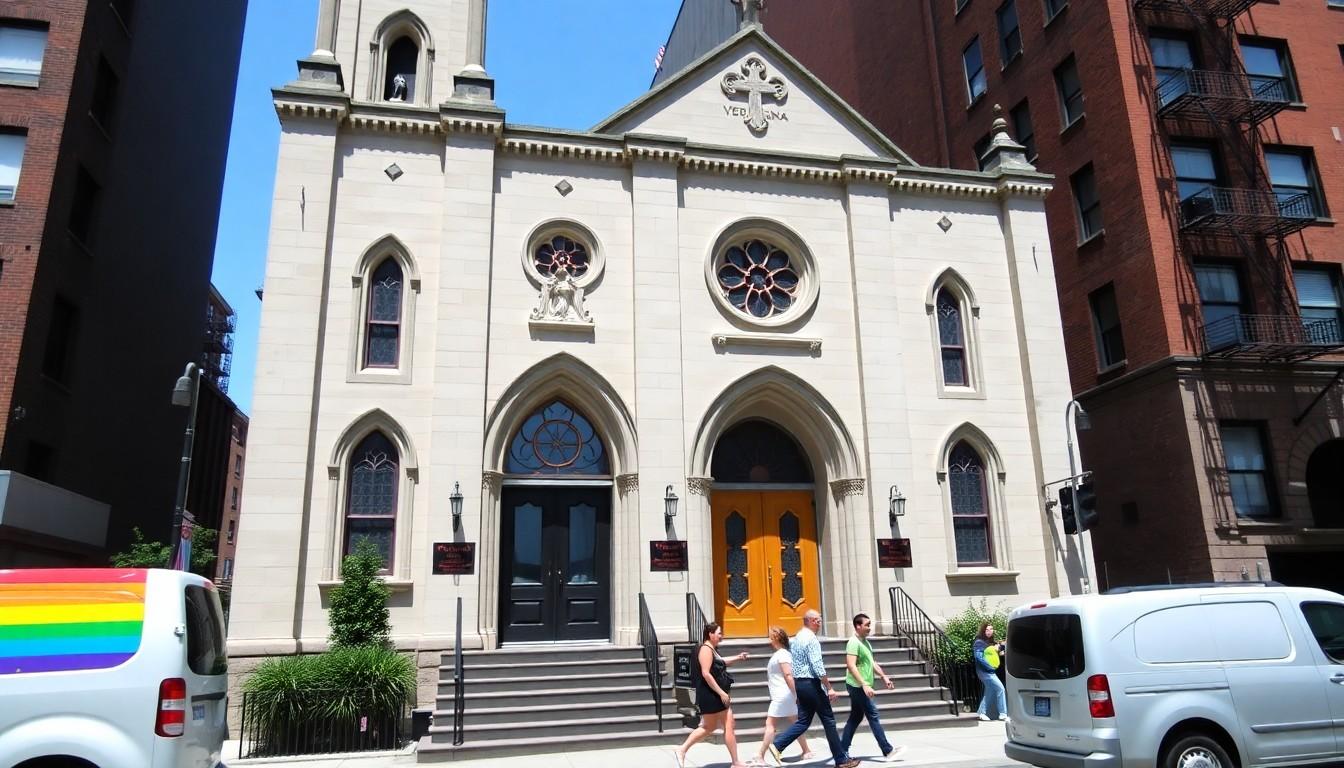
Pilgrims, priests and allies have followed a three-day LGBTQ+ Catholic history pilgrimage through New York City, connecting the HIV/AIDS crisis, faith, loss and resilience. The journey visited churches, memorials and Stonewall, offering participants a thoughtful way to understand how suffering and service have shaped the city’s Catholic LGBTQ+ story.
Essential Takeaways
- A three-day journey: Outreach led the pilgrimage through New York City from 25 to 27 September.
- History with a spiritual frame: The route used the Easter Triduum to explore suffering, ministry, exclusion and perseverance.
- Significant locations: Stops included St Veronica’s Church, the New York City AIDS Memorial and the Stonewall Inn.
- A broad group of pilgrims: LGBTQ+ Catholics, clergy, religious sisters, relatives and allies took part.
- A practical lesson in listening: Participants said the experience deepened their understanding of LGBTQ+ Catholic life and ministry.
A pilgrimage that treats history as lived experience
This wasn't simply a tour of notable New York landmarks. It was a reflective journey through places marked by grief, courage and care, with the HIV/AIDS crisis at its emotional centre.
Outreach, a Catholic LGBTQ+ resource, organised the pilgrimage as a way to explore the city’s history through faith. According to the National Catholic Reporter, the programme followed the shape of the Easter Triduum, linking the pain of crisis with the persistence of ministry and the possibility of renewal.
That structure gave the weekend a clear emotional rhythm. Rather than presenting history as a tidy timeline, the pilgrimage invited people to sit with difficult memories and ask what solidarity looked like at the time.
From St Veronica’s to Stonewall
The route brought together religious and civic landmarks that don't always appear in the same historical account. At St Veronica’s Church, pilgrims remembered the Missionaries of Charity’s care for people living with AIDS. The group also visited the New York City AIDS Memorial, located at the former site of St Vincent’s Hospital.
The final stop at the Stonewall Inn widened the conversation beyond Catholic institutions. The national monument is closely associated with the 1969 riots and the modern gay liberation movement, making it a powerful reminder of the wider struggle for dignity and recognition.
Outreach’s announcement described the pilgrimage as an opportunity to encounter LGBTQ+ Catholic history in New York rather than simply read about it. That distinction matters. A quiet church, a memorial wall and a busy city street can each carry memories that aren't obvious to passers-by.
Why the HIV/AIDS years remain central
For older participants, the pilgrimage offered a chance to reconnect experiences that had often been endured privately. Gene Cavallo, who lived through the crisis, said the journey helped him bring together parts of his past that had previously felt separate, according to the account published by New Ways Ministry.
Younger pilgrims approached the same history from a different position. Kris Estrada, aged 21, hadn't lived through the worst years of the epidemic, but said learning about the suffering and perseverance of gay Catholics still resonated with him.
That generational exchange is one of the pilgrimage’s most valuable features. The crisis isn't only a matter of historical record; its effects continue through community memory, parish life and the stories families and partners carry forward.
A lesson for Catholic ministry today
The pilgrimage also had a practical purpose for clergy. Fr Daniel Serbicki, a priest in the Diocese of Buffalo, described the experience as a way to understand and accompany the people he serves more fully.
That emphasis on accompaniment reflects a wider shift in conversations about LGBTQ+ ministry. Announcements from Outreach and coverage of the New York event presented the pilgrimage not as a symbolic gesture alone, but as a form of formation, asking participants to listen before they presume to lead.
For ministers, the lesson is straightforward but demanding: knowing the history of a community can change how pastoral care is offered. It can make room for grief, acknowledge mistrust and recognise the work already done by LGBTQ+ Catholics themselves.
What participants carried home
Sr Jeannie Humphries, an Ursuline sister, said the pilgrimage revealed how much she hadn't known about LGBTQ+ Catholic history in the 1980s and early 1990s. She also stressed the strength people showed in remaining true to themselves despite considerable adversity.
The experience clearly meant different things to different pilgrims. For some, it was a form of personal reconciliation with the past. For others, it was an introduction to a history they inherited rather than experienced directly. For clergy and allies, it offered a reminder that support begins with attention.
The simplest message may also be the most lasting: every person deserves dignity and love. In a city where memory is often layered into streets, churches and public spaces, that's a message with plenty of room to travel.
It's a quietly powerful way to turn remembrance into understanding.
Source Reference Map
Story idea inspired by: [1]
Sources by paragraph:
- Paragraph 1: [2], [3]
- Paragraph 2: [4], [7]
- Paragraph 3: [2], [5]
- Paragraph 4: [3], [7]
- Paragraph 5: [2], [6]
- Paragraph 6: [5], [7]
- Paragraph 7: [2], [4]
- Paragraph 8: [3], [7]
- Paragraph 9: [2], [5]
- Paragraph 10: [6], [7]
- Paragraph 11: [2], [3]
- Paragraph 12: [4], [7]
- Paragraph 13: [2], [5]
- Paragraph 14: [3], [7]
- Paragraph 15: [2], [4]
- Paragraph 16: [5], [7]