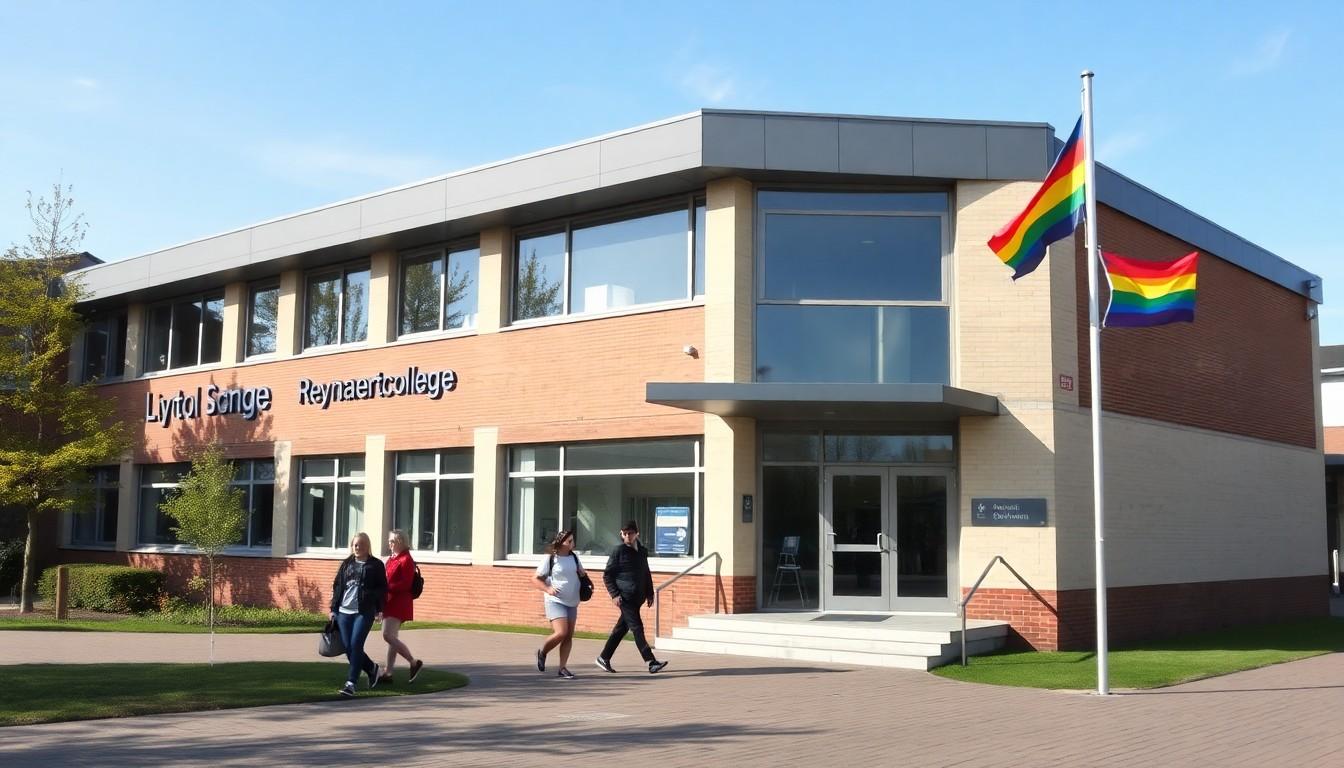
Teachers are making LGBTQ+ visibility part of everyday school life, from classroom conversations to colourful solidarity days. At a secondary school in Hulst, history teacher Eva Bryssinck is using her own experience as a bisexual woman to help students feel recognised, supported and less alone.
Essential Takeaways
- Visibility matters: A familiar teacher can help LGBTQ+ students feel seen and understood.
- Small gestures count: Wearing purple or displaying supportive messages can open wider conversations.
- Progress isn't always smooth: Staff may face criticism from parents or colleagues when inclusion work becomes visible.
- Community takes time: Student-led and school-wide initiatives can create connections where none existed before.
- Support should be practical: Schools need clear, consistent opportunities for discussion, participation and pastoral care.
One teacher's experience has become a source of support
For Eva Bryssinck, LGBTQ+ inclusion isn't an abstract school policy. It's personal, and that gives her work a particular emotional weight. As a bisexual history teacher at Reynaertcollege in Hulst, she remembers attending the same school without seeing much discussion of LGBTQ+ lives or identities.
That absence stayed with her. Bryssinck only began to understand her own bisexuality after leaving secondary school, having assumed that finding women attractive was simply something everyone experienced. According to the interview published by BD, she now wants students to have the visibility and language she didn't have herself.
The result is a quietly powerful form of representation. Sometimes, a student doesn't need a grand speech. Seeing an adult who is open, calm and confident can be enough to make school feel a little less lonely.
Why visibility still matters in the classroom
Schools are busy places, and topics that aren't built into lessons or wider school life can easily disappear. That appears to be one reason Bryssinck and colleagues are making a deliberate effort to keep LGBTQ+ issues visible, rather than treating them as an occasional theme.
Reynaertcollege's education information shows the school provides a broad secondary education setting, while its parent and student information pages outline the wider structure around school life. Within that framework, inclusion works best when it feels like part of the culture, not a one-off poster campaign.
For students questioning their identity, that distinction matters. A supportive environment doesn't require every pupil to share personal details. It does require adults to signal that LGBTQ+ people belong in the curriculum, corridors and conversations.
Purple Friday brings support into the open
One of the most recognisable ways schools show solidarity is Purple Friday, when students and staff wear purple or take part in LGBTQ+ awareness activities. At Reynaertcollege, Bryssinck has helped promote the day with colleagues, including through posters and visible participation.
But the story also shows how easily school calendars can get in the way. When the event couldn't take place on its usual date because of student meetings, Bryssinck planned to wear purple anyway and support a later celebration. It's a modest gesture, but one that says visibility doesn't have to vanish simply because the timetable changes.
The school's information for families and pupils highlights how much school life depends on organised activities and communication. That makes inclusion easier to sustain when it is planned clearly, explained to parents and connected to the wider school community.
Criticism can make inclusion work exhausting
Supportive initiatives don't always receive universal approval. Bryssinck told BD that some parents accused her of indoctrinating children and described the posters as propaganda. That kind of reaction can turn a straightforward act of welcome into a draining exercise in repeatedly defending why it matters.
This is where school leadership has an important role. Teachers shouldn't have to carry the full burden of explaining LGBTQ+ inclusion alone. Clear policies, calm communication with families and visible backing from senior staff can make the work safer and more sustainable.
The practical lesson for schools is simple: decide in advance how activities will be presented, what support is available and how concerns will be handled. Inclusion is much stronger when it's treated as part of safeguarding and belonging, rather than as an individual teacher's personal project.
Small communities can grow into something bigger
Despite the setbacks, Bryssinck has also seen encouraging signs. One student asked whether a friend could take part in the school's LGBTQ+ initiatives, suggesting that a sense of community was beginning to form.
That matters because students don't always need a formal club to start building support around them. A trusted teacher, a small group of peers or a recurring event can create the first connection. From there, participation can grow gradually and feel more student-led.
Reynaertcollege's practical pages for pupils, parents and school activities show the importance of keeping school information accessible. The next step is making sure inclusion is equally easy to find: students should know who they can speak to, what activities exist and how they can join in.
Bryssinck's determination is a reminder that progress can be tiring, especially in places where the subject is rarely discussed. But for the student who recognises themselves in a teacher's story, that effort may be far more significant than it looks from the outside.
It's a small act of visibility that can make school feel safer for everyone.
Source Reference Map
Story idea inspired by: [1]
Sources by paragraph:
- Paragraph 1: [2], [3]
- Paragraph 2: [2], [5]
- Paragraph 3: [2], [7]
- Paragraph 4: [3], [4]
- Paragraph 5: [2], [5]
- Paragraph 6: [2], [6]
- Paragraph 7: [2], [7]
- Paragraph 8: [2], [4]
- Paragraph 9: [3], [5]
- Paragraph 10: [2], [7]
- Paragraph 11: [2], [3]
- Paragraph 12: [4], [6]
- Paragraph 13: [2], [5]
- Paragraph 14: [2], [7]