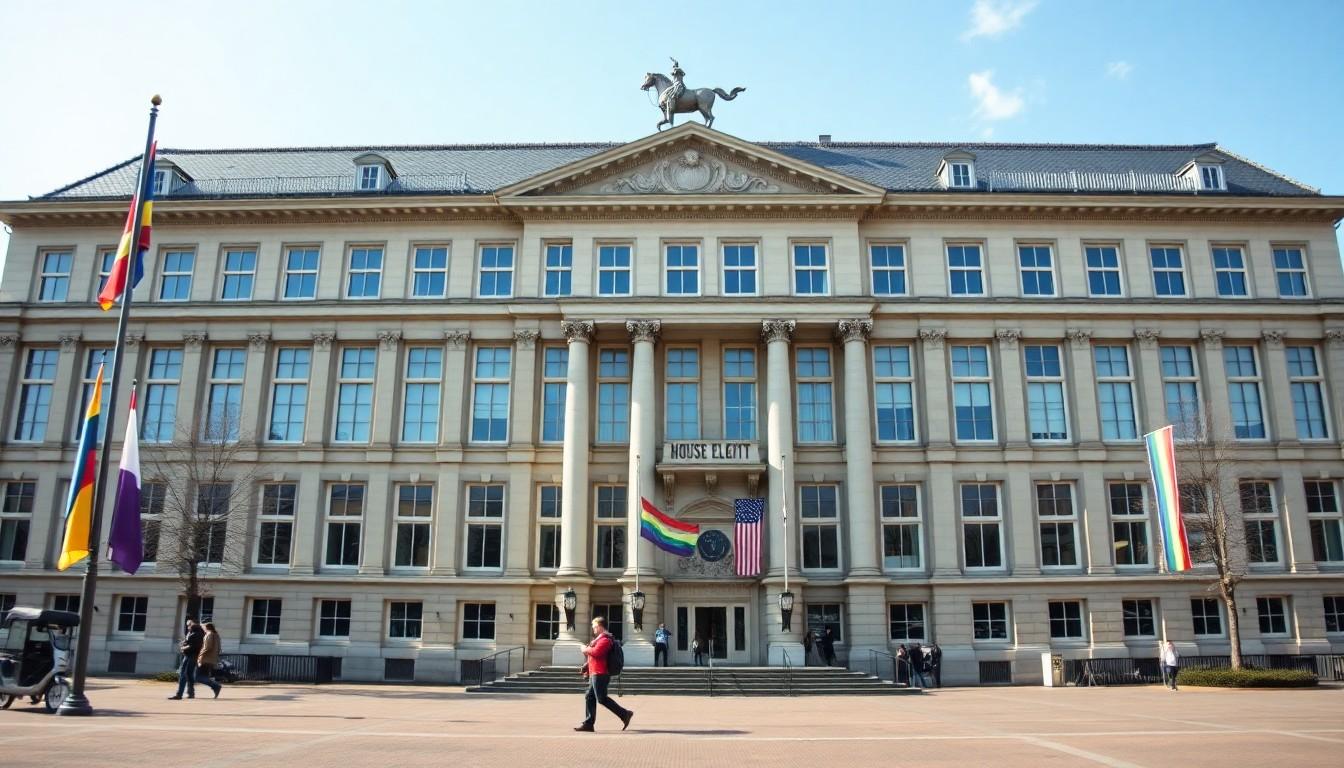
Dutch MPs have voted to fly a rainbow flag at the parliament building on Coming Out Day, a move welcomed by Prime Minister Rob Jetten but clouded by disagreement over what the symbol represents. The decision marks a first for the building and has reopened questions about visibility, neutrality and support for LGBTQIA+ people in public life.
Essential Takeaways
- The vote passed comfortably: 90 MPs supported flying the flag, while 34 opposed it.
- Jetten backed the gesture: The prime minister called the rainbow flag a meaningful show of support for the LGBTQIA+ community.
- Opposition centred on symbolism: SGP, BBB and Forum for Democracy argued that the flag represented activism rather than parliamentary neutrality.
- The timing matters: The flag is due to fly on international Coming Out Day, while schools are also joining Purple Friday.
- It will be a first: DutchNews reported that the rainbow flag will be displayed at the parliament building for the first time.
Why the rainbow flag vote matters
The strongest message from the vote is also the simplest: the Dutch parliament wants the rainbow flag visible above the building. The decision gives the gesture a prominent stage, with the colourful banner set against the formal architecture of the Binnenhof and its familiar national symbolism.
According to DutchNews, the motion passed with 90 votes in favour and 34 against. That margin suggests broad support, even though the debate itself exposed a sharper divide over whether public institutions should display identity or solidarity symbols.
For Jetten, the disagreement was disappointing. He said the flag should be seen as encouragement for LGBTQIA+ people, rather than as a political provocation. The sentiment is familiar, but its setting makes it more potent: this isn't a campaign poster in a town square, but a statement from the country's democratic centre.
A first for the parliament building
The proposal originated with parliament's staff organisation, which asked for the flag to be flown. The chamber's daily management initially supported the idea, but objections from several parties pushed the matter into a formal vote.
DutchNews described the decision as the first time the rainbow flag will fly at the parliament building. That detail gives the story more weight than an ordinary ceremonial gesture. Firsts tend to become markers, and this one will likely be remembered as part of the Netherlands' continuing argument about how public institutions express inclusion.
Kati Piri, who submitted the motion, argued that the flag belongs at the country's democratic heart because it already appears on government buildings elsewhere. Her point is practical as much as symbolic: if public authorities are expected to represent everyone, supporters say they should be able to show that visibly.
Why some MPs objected
The opposition wasn't about the flag's colours themselves, but about the meaning attached to them. The SGP, BBB and Forum for Democracy opposed the proposal, with critics arguing that the rainbow flag has become an activist emblem and therefore doesn't belong above parliament.
That reflects a wider tension in public life. Supporters see the flag as reassurance and recognition, while opponents see it as a departure from institutional neutrality. The same piece of fabric can therefore feel welcoming to one person and politically loaded to another.
The debate also arrives after Jetten faced criticism over an aggressive phrase about confronting abusers. Dutch media including NH Nieuws and De Vector reported that he later expressed regret and said he should have put his point more carefully. That earlier controversy forms a backdrop to the prime minister's measured response here, as he calls for support to be expressed with greater unity.
What the flag will signal on Coming Out Day
The banner is expected to fly on international Coming Out Day, a date focused on LGBTQIA+ visibility and acceptance. Schools are also taking part through Purple Friday, giving the parliamentary gesture a broader social context rather than leaving it as a one-day political statement.
As NL Times reported, the vote coincides with schools joining Purple Friday, when students and staff wear purple or organise activities to show support for LGBTQIA+ pupils. That creates a link between the national institution and everyday settings where young people may experience acceptance, uncertainty or hostility.
The practical message is clear enough: visibility can make a difference. It won't settle every argument about representation, but a flag above parliament is difficult to ignore, and that is precisely why supporters consider it worthwhile.
A symbolic gesture with a long afterlife
Parliamentary flags are never just decoration. They tell visitors, staff and passers-by what the institution wants to acknowledge, and this decision says that LGBTQIA+ citizens should be visibly included in the national story.
Whether the flag becomes a regular feature or remains tied to particular dates is still unclear. For now, its appearance will be closely watched, especially after the unusually public disagreement over whether it belongs there at all.
Jetten's preference would have been for the gesture to be supported wholeheartedly. That may be unrealistic in a divided chamber, but the vote still produced a clear result. Sometimes a symbol does its job not by ending an argument, but by showing exactly where the majority stands.
A flag can’t solve prejudice, but it can make support impossible to miss.
Source Reference Map
Story idea inspired by: [1]
Sources by paragraph:
- Paragraph 1: [2], [3]
- Paragraph 2: [2], [3]
- Paragraph 3: [3], [4]
- Paragraph 4: [2], [3]
- Paragraph 5: [3]
- Paragraph 6: [2], [3]
- Paragraph 7: [3]
- Paragraph 8: [4], [5], [6]
- Paragraph 9: [2], [3]
- Paragraph 10: [2]
- Paragraph 11: [2], [3]
- Paragraph 12: [3]
- Paragraph 13: [2], [3]
- Paragraph 14: [4], [5], [7]
- Paragraph 15: [2], [3]