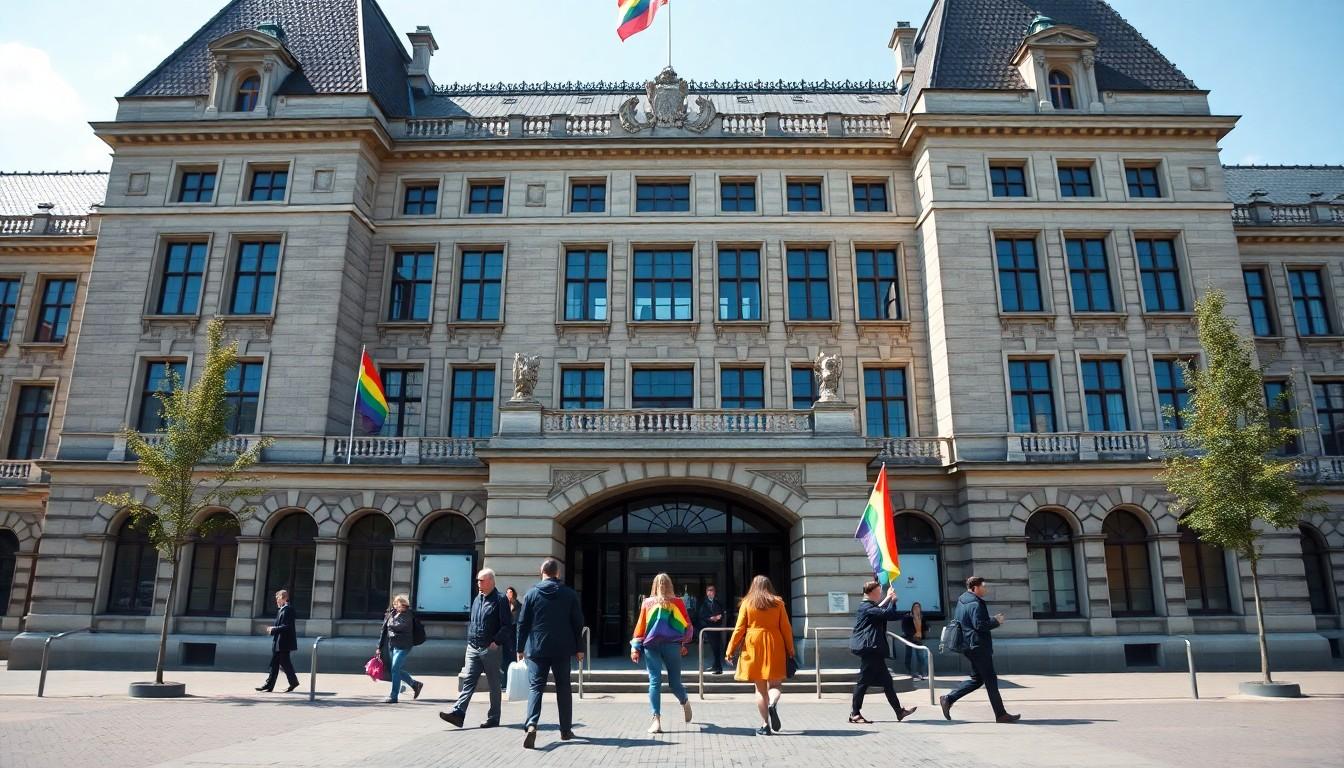
Dutch MPs have voted to fly the rainbow flag at parliament for the first time on Coming Out Day, while thousands of schools take part in Purple Friday. The decision highlights a sharper national debate over LGBTI acceptance, political symbolism and the role public institutions should play in making inclusion visible.
Essential Takeaways
- A clear parliamentary majority: MPs approved the rainbow flag by 90 votes to 36.
- A symbolic date: The flag will be displayed on Coming Out Day, which falls on Sunday.
- Schools are joining in: A record 3,130 schools have registered for Purple Friday.
- Acceptance is under pressure: Recent figures show a marked fall in positive attitudes among teenagers.
- The vote was contested: The SGP argued that the rainbow flag represents activism rather than a national symbol.
Parliament reverses course on the rainbow flag
The rainbow flag is set to fly above the Dutch parliament on Sunday, bringing a bright and highly visible symbol of LGBTI inclusion to the building for the first time. MPs voted 90 to 36 in favour of the display after parliament's management had initially abandoned the plan.
The reversal followed objections from Christian parties, with the orthodox Protestant SGP leading opposition to the proposal. DutchNews reported that SGP MP Diederik van Dijk described the flag as a symbol of interest groups and activism, rather than a national emblem.
That disagreement turned a small ceremonial decision into a much bigger argument about representation. For supporters, the flag sends a straightforward message that LGBTI rights belong within the democratic institutions of the Netherlands. For critics, it crosses a line between public neutrality and political campaigning.
Why the vote became a late-night political drama
The motion was introduced by Kati Piri of opposition party Pro. It called on parliament to support the rights of the global LGBTI movement and maintain an inclusive workplace for parliamentary staff, according to DutchNews.
The subsequent roll-call vote added an unexpected twist. Because MPs had to state their positions individually, some who had already left The Hague returned to cast their votes. It gave the issue more visibility than a routine administrative decision might normally receive.
Most MPs from D66, the VVD, CDA, Pro, PvdD, SP, ChristenUnie, 50PLUS and Volt supported the motion. The PVV, Forum for Democracy, Denk and SGP opposed it, while JA21 and the Markuszower group were absent, NL Times reported.
Purple Friday brings the debate into classrooms
The parliamentary vote came just before Purple Friday, an annual school event focused on acceptance of LGBTI pupils. This year's event is taking place in October rather than December, following requests from schools, according to information from the event organisers.
Participation has reached a record 3,130 schools, including 2,130 primary schools. That represents an increase from 2,890 schools the previous year, suggesting that many teachers and school communities see the event as a useful way to make conversations about identity and belonging more visible.
In practice, Purple Friday can be deliberately simple: pupils and staff might wear purple, decorate classrooms or discuss respectful language. The appeal is partly its accessibility. It doesn't require a grand campaign, just a visible gesture that tells pupils they shouldn't have to hide who they are.
Teen attitudes add urgency to the message
The growing participation comes against worrying evidence about attitudes among young people. DutchNews reported that a recent survey found positive views of homosexuality had fallen sharply among secondary school pupils.
Only 22% of teenage boys and 51% of teenage girls now hold a positive view, compared with 40% and 78% respectively in 2021. Those figures help explain why campaigners have welcomed stronger participation in schools, even as some political parties question the symbolism attached to it.
The contrast is striking. More schools are signing up to an inclusion-focused event, yet acceptance among some teenagers appears to be weakening. That makes the rainbow flag more than a piece of coloured fabric: it becomes a public signal in a climate where some young people may be hearing increasingly hostile messages.
A visible gesture, but not the whole answer
Flying the flag won't resolve arguments over equality, nor will one school event change attitudes overnight. But symbols can still matter, particularly when they appear in places associated with public authority and shared civic life.
The Dutch vote also shows how quickly questions of inclusion can become politically charged. A display that supporters see as welcoming may be viewed by opponents as activism, while the underlying concern about safety and belonging remains very real for LGBTI people.
For schools, the most useful approach is likely to pair the colourful gestures with calm, age-appropriate discussion and clear anti-bullying policies. The flag may catch the eye, but everyday behaviour is what makes inclusion feel genuine.
It's a small flag with a much larger national conversation behind it.
Source Reference Map
Story idea inspired by: [1]
Sources by paragraph:
- Paragraph 1: [2], [3]
- Paragraph 2: [3], [4]
- Paragraph 3: [2], [3]
- Paragraph 4: [3], [4]
- Paragraph 5: [2], [3]
- Paragraph 6: [3], [4]
- Paragraph 7: [4], [5]
- Paragraph 8: [3], [4]
- Paragraph 9: [3], [5]
- Paragraph 10: [4], [6]
- Paragraph 11: [3], [7]
- Paragraph 12: [2], [4]
- Paragraph 13: [3], [5]
- Paragraph 14: [2], [6]
- Paragraph 15: [3], [7]