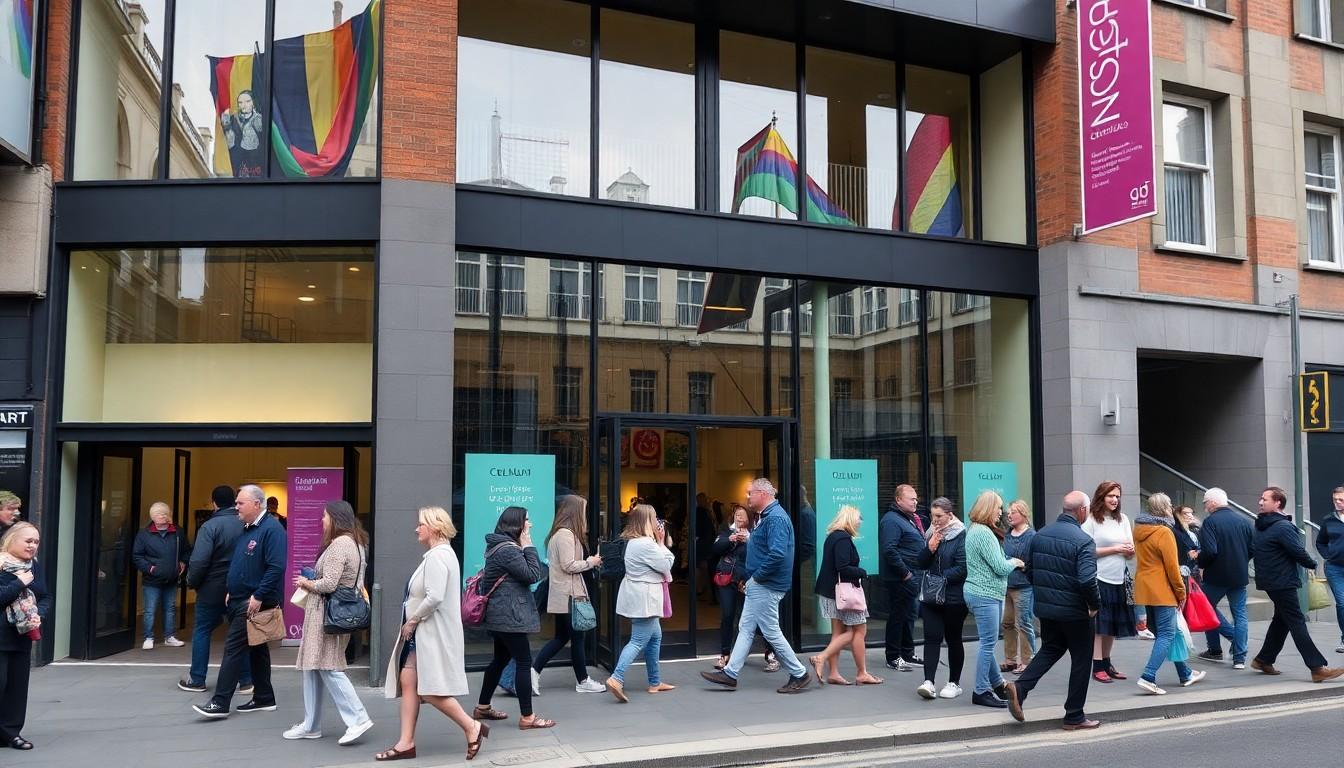
Festivalgoers can expect ten days of bold queer culture across Belfast and beyond this November, with Outburst 2026 bringing films, performances, workshops, conversations and archive-led art to Northern Ireland. Running from 12 to 21 November, the popular festival offers an affordable way to discover LGBTQ+ artists, ideas and stories in lively, unexpected settings.
Essential Takeaways
- Dates: Outburst runs from 12 to 21 November 2026 across Belfast and beyond.
- What to expect: The programme spans cinema, literature, sound, visual art, workshops and discussions.
- Standout screening: Portrait of a Lady on Fire will be shown with an introduction from director Céline Sciamma.
- Archive and history: DARKROOMS explores Irish queer club culture through photographs, zines and other materials.
- Tickets: Prices are being kept as low as possible, making the festival easier to access.
Belfast's queer arts festival returns with plenty to say
Outburst isn't the sort of festival that quietly fills a diary. It arrives with films, ideas and performances that ask audiences to look again at identity, history and the systems shaping everyday life.
The 2026 edition will take place from 12 to 21 November, with events in Belfast and further afield. Listings for the festival describe a broad programme designed for audiences who want more than a single night out, whether that means a thoughtful film, an energetic workshop or a conversation that lingers on the walk home.
Since launching in 2007, Outburst has presented more than 1,000 events. That long run gives the festival a useful sense of perspective, but the mood remains exploratory rather than nostalgic. As the festival's artistic direction has put it, the programme is interested in artists who challenge fixed ideas and imagine something better.
Film fans have two especially strong reasons to book
One of the most anticipated events is a screening of Portrait of a Lady on Fire on 15 November. Céline Sciamma will introduce the French film, which follows a painter and her subject through a tightly observed, quietly intense story of lesbian desire.
It's a film built on glances, silences and the charged atmosphere of a room, so seeing it as part of a queer arts festival feels particularly apt. The introduction also gives audiences a chance to hear directly from the director behind one of modern cinema's most admired depictions of intimacy.
On 18 November, the festival will screen Edhi Alice: Take, a documentary by Il-rhan Kim. The film connects the lives of Edhi, an LGBTQ+ counsellor, and Alice, an older trans woman in South Korea, offering a more intimate look at trans experience, support and allyship.
Archives, folklore and sound bring queer history into view
For a different kind of cultural deep dive, Anecdote As Evidence will tour DARKROOMS on 15 November. Led by Lyónn Wolf, the event explores Emma Wolf-Haugh's work and archives, including photographs, zines and exhibition material linked to Irish queer club culture.
That archival focus matters because nightlife can disappear quickly. The music fades, venues close and posters are thrown away, but scraps of visual culture can preserve how people found one another and built community. DARKROOMS promises to make that hidden history feel tangible rather than distant.
Literature lovers can also look forward to a 14 November celebration of Sacha Coward's As Folklore. The book examines queer heroes and villains across myth, fantasy and folklore, turning familiar stories into a doorway for discussing identity, power and belonging.
Workshops and conversations look beyond the stage
On 21 November, Synthesize_Her will host Transgressive Sound, a hands-on workshop exploring queer possibilities in listening and making. Participants will build and use contact microphones, turning surfaces and vibrations into part of the experience.
It's the kind of event that rewards curiosity more than specialist knowledge. Contact microphones can make ordinary objects sound strange and alive, which seems a fitting technique for a festival interested in unsettling the familiar.
The programme also includes a 20 November Q&A with writer and researcher Kevin Guyan, examining how categories and classifications influence the fight for LGBTQ+ rights and equality. Meanwhile, a 14 November discussion will focus on care for queer artists and creators, bringing together Craig Manson, Jack Thompson, Dayna Ash and Chris Snow.
How to choose from the Outburst 2026 programme
With events spread across different formats and dates, the easiest approach is to decide what kind of evening you want. Choose the Sciamma screening for cinematic romance, DARKROOMS for queer history, As Folklore for storytelling, or Transgressive Sound for something more participatory and experimental.
It’s also worth checking whether an event is a workshop, screening, tour or discussion before booking. A talk may suit a reflective afternoon, while a practical session could be better for anyone keen to meet people and get involved rather than simply sit in an audience.
Tickets are priced with affordability in mind, which should make it possible to build a small festival itinerary without turning the whole weekend into a financial drama. The full programme is the best place to check timings, venues and availability as plans develop.
A festival that keeps queer culture moving
Outburst's strength lies in its range. It can move from a celebrated film to an archive of club culture, then on to folklore, sound art or a practical conversation about sustaining creative lives.
That variety also reflects how queer culture works in practice. It isn't confined to one venue or art form, and it rarely stays still for long. For audiences in Belfast and beyond, November 2026 looks set to offer a lively reminder that the most interesting stories are often the ones still being made.
Explore the programme and find the events that speak to you.
Source Reference Map
Story idea inspired by: [1]
Sources by paragraph:
- Paragraph 1: [2], [3]
- Paragraph 2: [4], [5]
- Paragraph 3: [2], [3]
- Paragraph 4: [6]
- Paragraph 5: [5], [6]
- Paragraph 6: [2], [4]
- Paragraph 7: [1], [6]
- Paragraph 8: [1], [5]
- Paragraph 9: [1], [7]
- Paragraph 10: [1], [3]
- Paragraph 11: [1], [5]
- Paragraph 12: [1], [2]
- Paragraph 13: [1], [4]
- Paragraph 14: [1], [3]
- Paragraph 15: [2], [5]
- Paragraph 16: [1], [4]
- Paragraph 17: [1], [3]