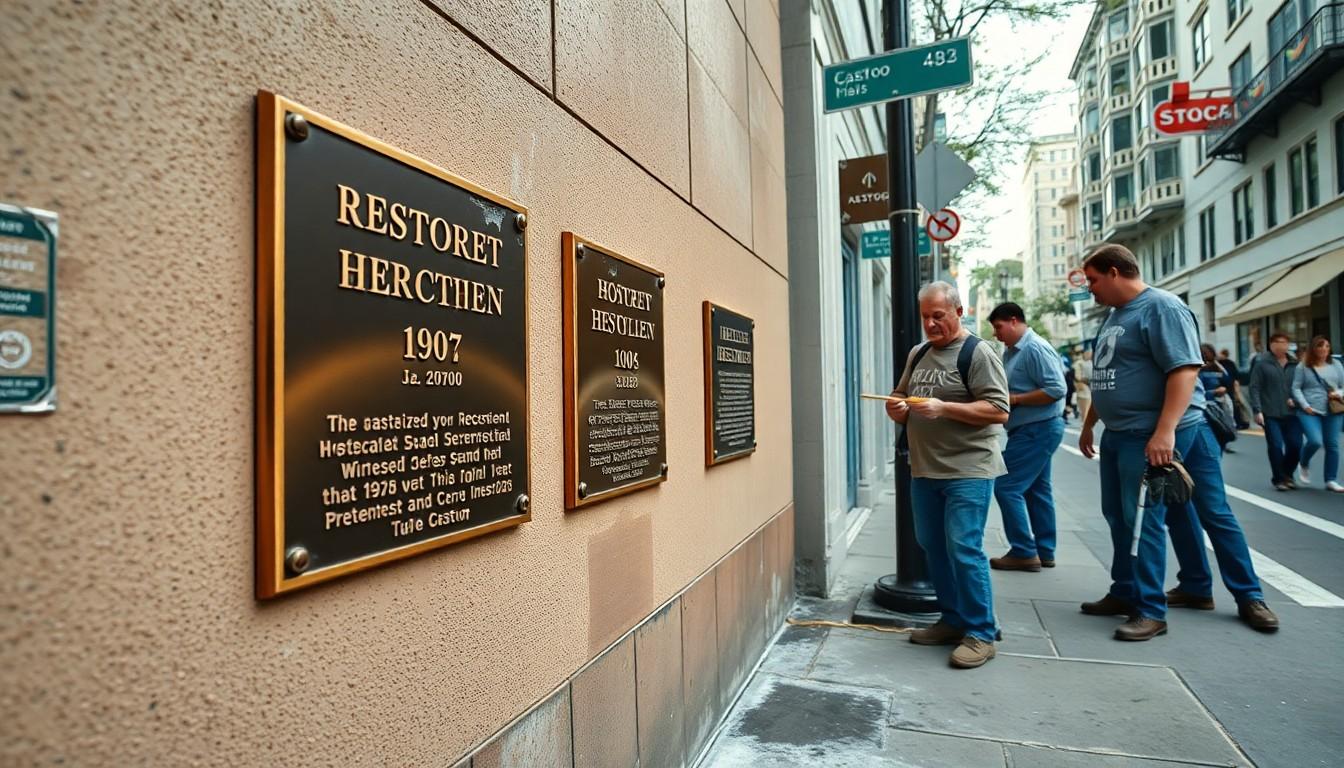
Visitors to San Francisco’s Castro neighbourhood are seeing a familiar stretch of pavement brought back to life, as the Rainbow Honor Walk restores plaques celebrating LGBTQ pioneers. The project is repairing weathered markers, adding protective coatings and preparing to honour three more activists during LGBTQ History Month. It’s a small urban detail with a remarkably powerful story.
Essential Takeaways
- Plaques are being refreshed: Existing Rainbow Honor Walk markers are being returned to their original condition.
- Protection matters: A new non-slip coating should help guard the plaques against tarnishing and everyday wear.
- Artists are involved: Board members are working with queer artist Juan Carmona on the restoration.
- More names are coming: October installations will honour Marsha P. Johnson, Phyllis Lyon and Mario Mieli.
- The setting is part of the experience: Visitors can explore the markers throughout San Francisco’s Castro district.
A familiar pavement, given fresh life
Underfoot in the Castro, history isn't confined to a museum wall. The Rainbow Honor Walk’s plaques sit in the pavement, where visitors can encounter names such as Harry Hay while walking to a cafe, shop or bar. Now, those markers are receiving careful attention after years of exposure to footsteps, rain and the general bustle of city life.
According to the Bay Area Reporter, the restoration is intended to return the plaques to their original condition rather than replace their character with something entirely new. That approach feels fitting: these are public memorials, and their everyday setting is part of what makes them so affecting.
Why the Rainbow Honor Walk matters
The Rainbow Honor Walk was created to recognise LGBTQ people whose work shaped social movements, culture and public life. Its plaques turn the Castro into an open-air record of queer history, making remembrance part of an ordinary neighbourhood stroll.
Harry Hay, a co-founder of the Mattachine Society, is among the figures represented. His plaque offers a direct link to the early gay rights movement, while the walk as a whole makes clear that LGBTQ history was built by organisers, artists, writers and activists with very different experiences and ambitions.
Restoration with a practical purpose
The work isn't simply cosmetic. The project includes a non-slip coating designed to improve safety while helping protect the plaques from tarnish and further wear. That matters in a place where people encounter the markers at street level, often without consciously planning to visit a memorial.
Queer artist Juan Carmona is working with Rainbow Honor Walk board members on the refresh, the Bay Area Reporter reported. The collaboration adds a creative and community-led dimension to what could otherwise look like routine maintenance. Even heritage needs a little care, especially when it's exposed to thousands of passing shoes.
Three more LGBTQ pioneers will join the route
October, recognised as LGBTQ History Month, is set to bring three additional plaques to the Castro. The new honourees are trans activist Marsha P. Johnson, lesbian pioneer Phyllis Lyon and Italian gay activist Mario Mieli.
Their inclusion broadens the story told by the walk. Johnson is remembered for her role in New York’s LGBTQ liberation movement, Lyon helped build the modern lesbian rights movement in the United States, and Mieli was an influential figure in Italian gay activism. Together, they underline how queer history crosses borders, identities and generations.
How to explore the plaques in San Francisco
The Rainbow Honor Walk is best approached at a leisurely pace. Visitors can look down as they move through the Castro, pause to read each marker and then spend a few minutes learning about the person behind the name. It’s an easy addition to a neighbourhood visit, but the experience rewards curiosity.
For a more meaningful walk, choose one or two honourees to research beforehand, then notice how their lives connect to wider LGBTQ movements. The Rainbow Honor Walk website provides further information, while local businesses and community venues offer plenty of places to reflect afterwards.
As the plaques are restored and new ones appear, the route continues to grow into a living record rather than a finished monument. That feels especially valuable in a city where public space can still make history feel immediate, tactile and shared.
A safer, brighter plaque can keep a vital name visible for many more years.
Source Reference Map
Story idea inspired by: [1]
Sources by paragraph: